
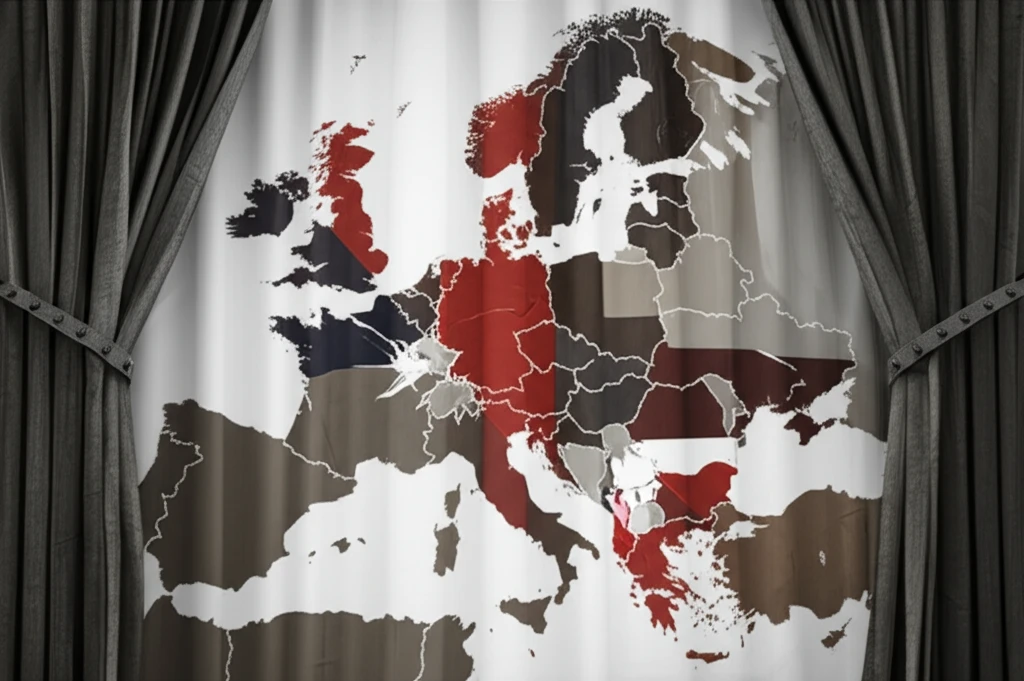
Trading Places: How the Cold War's Economic Divide Still Echoes Today

"Uncover the surprising economic consequences of the Iron Curtain and its lasting impact on global trade and prosperity."
The Cold War, a period defined by ideological clashes and geopolitical tension, left an undeniable mark on the world. Beyond the political and military standoffs, the era's economic consequences continue to ripple through global trade and prosperity. At the heart of this economic division was the Iron Curtain, a barrier that not only separated East and West but also profoundly impacted the flow of goods, services, and ideas.
While the dramatic images of the Berlin Wall are etched in our collective memory, the Iron Curtain's economic story is often overlooked. It wasn't simply about restricted trade; it was a complex system of policies that evolved over time, creating winners and losers on both sides of the divide. Understanding these economic legacies is crucial, especially as the world grapples with new forms of geopolitical fragmentation.
This article delves into the economic consequences of the Iron Curtain, drawing upon new research to quantify its impact on trade, welfare, and economic integration. By examining historical trade data and employing advanced economic models, we'll uncover the surprising ways this period of division continues to shape our world.
The Common Cold's Widespread Impact
The common cold is an infection of the upper respiratory tract that affects millions of people worldwide each year. Coronaviruses are among the viruses known to cause the common cold, recognizable by their crown-like appearance under electron microscopy. The infection typically affects the nose, throat, sinuses, and windpipe, with symptoms generally resolving within a week to 10 days without medical intervention.
Standard Treatments and Their Limitations
The standard approach to managing the common cold focuses primarily on symptom relief rather than cure, as antibiotics are ineffective against viral infections. Over-the-counter medications can help alleviate symptoms like congestion, sore throat, and coughing. However, these treatments only provide temporary relief and do not shorten the duration of the illness significantly.
Historical Understanding of the Common Cold
Understanding of the common cold has evolved significantly over the past century, though much remains unknown about its full complexity. Early research identified various viral agents responsible for cold symptoms, laying groundwork for modern virology. While significant progress has been made in identifying pathogens and understanding transmission, developing effective prevention and treatment methods remains challenging.
How Did the Iron Curtain Impact Global Trade?
The Iron Curtain didn't just represent a physical barrier; it was a complex web of trade restrictions that significantly impeded the flow of goods and services between the Eastern and Western blocs. New research quantifies these trade barriers, revealing that at its peak, the Iron Curtain acted as a tariff equivalent of nearly 50%. Imagine an extra 50% tax on every item traded between East and West – that's the scale of the economic obstacle.
- Trade Reduction: East-West trade flows were roughly halved.
- Welfare Losses: Eastern bloc countries suffered substantial economic disadvantages.
- Intra-Bloc Boost: Trade within each bloc increased, particularly in the Eastern bloc, outpacing Western European integration.
Current Research Trends
Contemporary research into the common cold continues to explore viral mechanisms, immune response patterns, and potential therapeutic targets. Scientists are investigating how different viruses cause similar symptoms and why some individuals are more susceptible than others. While advances in understanding viral behavior have been promising, translating this knowledge into effective treatments remains an ongoing challenge.
Limitations in Cold Research
Despite decades of research, the common cold continues to evade effective prevention and treatment strategies. Some researchers argue that the diversity of viruses causing cold symptoms makes a universal solution unlikely. Previous attempts at vaccines and antiviral treatments have largely failed to gain traction due to the sheer number of viral variants involved.
Comparative Perspectives on Cold Management
Different healthcare systems and cultures approach common cold management in varying ways, from aggressive symptom treatment to minimal intervention. Research suggests that the body's natural immune response often proves more effective than pharmaceutical interventions for most cold cases. These differences highlight ongoing debates about the balance between medical intervention and natural healing processes.
Lessons from the Divide: What Can We Learn?
The economic history of the Cold War offers valuable lessons for today's interconnected world. As new forms of geopolitical fragmentation emerge, understanding the long-term consequences of trade barriers and economic isolation is more critical than ever. By studying the past, we can better navigate the challenges of the present and build a more resilient and prosperous future for all.
Expert Perspectives on Cold Management
Medical experts generally agree that prevention through good hygiene practices remains the most effective strategy against the common cold. While no cure exists, understanding individual risk factors can help people take appropriate precautions. The consensus among specialists emphasizes the importance of realistic expectations about cold treatment outcomes.
Future Directions in Cold Research
Future research may focus on personalized medicine approaches to cold prevention and treatment, considering individual immune system variations. Advances in viral genetics could potentially lead to more targeted interventions against specific cold-causing viruses. However, the economic and practical challenges of developing treatments for such a common, usually self-limiting illness remain significant barriers.
Systemic Challenges in Addressing the Common Cold
The common cold represents a significant public health burden despite its generally mild nature, affecting productivity and healthcare resources globally. Healthcare systems face challenges in balancing resources between common cold management and more serious medical conditions. The economic impact of lost productivity due to colds often exceeds direct medical treatment costs, though these figures vary by region and industry.
Personal and Societal Impact
Beyond the physical symptoms, the common cold affects quality of life, work attendance, and school participation across all demographics. Vulnerable populations including the elderly, young children, and immunocompromised individuals may experience more severe complications from what is typically a mild illness. The cumulative effect of colds on society underscores the importance of continued research despite the condition's common perception as minor.