
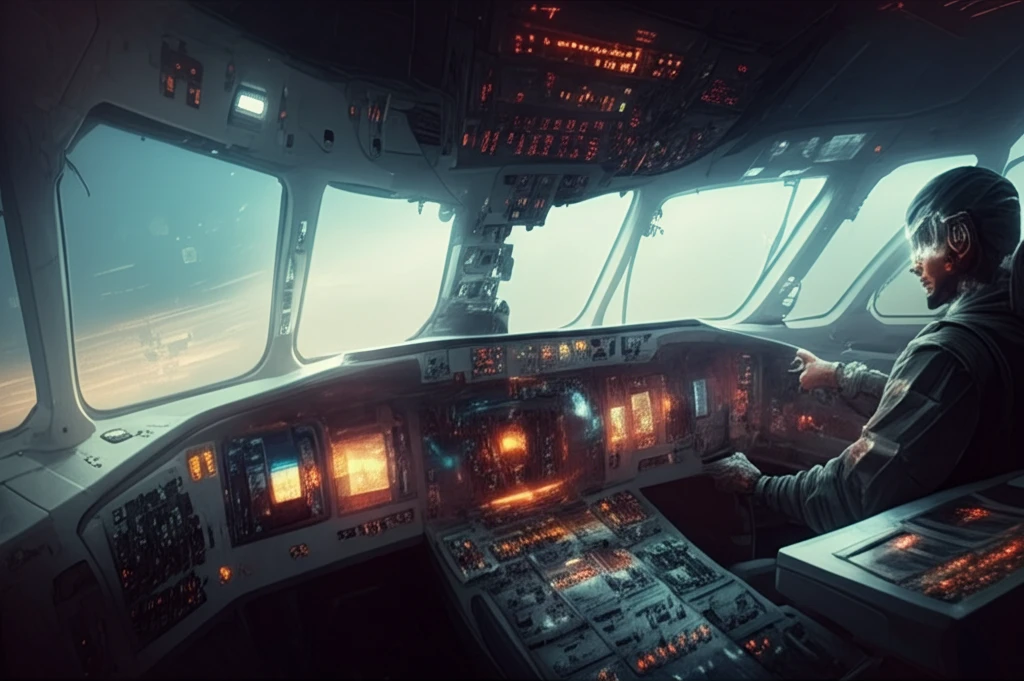
Touchscreen Revolution: How Gulfstream Reinvented the Flight Deck

"Explore the groundbreaking integration of touchscreen technology in the Gulfstream G500 and G600, setting a new standard in aviation user interface design."
For decades, touchscreen technology lingered on the periphery of aircraft avionics, overshadowed by traditional knobs and buttons. But times have changed. Smartphones and tablets have conditioned us to expect intuitive touch interfaces in every aspect of our lives. Now, that expectation is soaring into the skies.
Gulfstream Aerospace has spearheaded this transformation, boldly integrating ten touchscreens into the advanced Symmetry™ flight deck of the G500 and G600 aircraft. This leap replaces numerous physical switches and offers pilots a dynamic, software-driven interface.
This article explores Gulfstream’s journey, examining the design considerations, challenges overcome, and the future implications of this revolutionary shift. How did Gulfstream balance innovation with the stringent demands of aviation safety? What are the benefits for pilots, and what does this mean for the future of flight deck design?
Touchscreen Displays Becoming the New Standard
Touchscreen flight deck displays are becoming a standard feature in next-generation aircraft, driven by their intuitive interfaces and real-time data visualization capabilities. Garmin's G3000 touchscreen flight deck, for example, uses GTC touchscreen controllers paired with GDU displays to manage system architecture across multiple aircraft types. Research is still needed to fully understand how turbulence affects touchscreen task performance, an area of growing importance as adoption rises.
Designing Flight Decks with Touchscreens
Avionics manufacturers are exploring future flight deck concepts using touch screen displays, applying mixed method approaches to their design frameworks. The Cirrus TRAC10 trainer illustrates the current accepted approach: it comes standard with dual 11.6-inch touchscreen displays, each configurable as a primary flight display or multi-function display, with the Engine Indication System always visible. This flexible configuration represents the emerging baseline for how touchscreens are integrated into modern cockpits.
From Military Roots to Civilian Touchscreens
Boeing selected Rockwell Collins to provide multi-touch flight displays for all five positions on the 777X flight deck, marking a milestone for touchscreen adoption in large commercial aircraft. The displays support multi-touch input, allowing two pilots to interact with the same screen simultaneously. Garmin has also expanded touchscreen flight deck upgrades to numerous aircraft models, including several Cessna Citation jets, the Pilatus PC-12, and the Daher TBM 850, broadening the technology's reach across the industry.
A New Era of Flight Deck Interaction
Why embrace touchscreens in the high-stakes environment of a flight deck? The answer lies in improved efficiency and adaptability. Physical controls, once the standard, are increasingly seen as outdated. Modern system developers recognize the immense flexibility of software-driven interfaces, which can be refined and updated throughout the development cycle.
- Reduced Pilot Workload: Direct manipulation via touch streamlines tasks, reducing the time and effort associated with traditional cursor control devices.
- Enhanced Redundancy: Software-based controls can be easily replicated across multiple displays, providing critical redundancy in emergency situations.
- Improved Reliability: Modern touchscreen technology offers exceptional reliability, overcoming the limitations of earlier interfaces.
Ongoing Research and Emerging Findings
Research into touchscreen flight deck performance continues to evolve, with studies examining how human-machine interface design and task type affect pilot workload and outcomes. The field remains active, with new findings expected to refine best practices as more aircraft adopt touchscreen systems. While comprehensive reviews are still forthcoming, early evidence suggests that thoughtful HMI design is critical to realizing the benefits of touchscreen technology in the cockpit.
Skepticism and Persistent Limitations
Some aviation professionals remain skeptical about touchscreen reliability in turbulent conditions, though proponents point out that military aircraft have operated touchscreens successfully without issue in far more demanding flight environments. Despite this, touchscreens have not yet become standard for primary and multifunction displays in many cockpit designs, remaining a slower-adopting feature compared to other avionics advances. The tension between proven military use and cautious civilian adoption highlights unresolved questions about when and where touchscreens belong on the flight deck.
Task Complexity and Interface Design Trade-offs
Research into touchscreen use within the flight deck has yielded mixed results, with evidence suggesting that both the HMI design and the nature of the task being performed significantly affect pilot workload and performance. Studies on subjective measures of task complexity using touchscreens in flight operations underscore that not all tasks benefit equally from touchscreen interfaces. These findings suggest that a one-size-fits-all approach to touchscreen implementation may not be appropriate, and task-specific design considerations remain important.
The Future of Flight is at Your Fingertips
Gulfstream's pioneering work with touchscreen technology has set a new standard for aviation, paving the way for further innovation and a more intuitive, safer, and efficient flying experience. As touch technology continues to evolve, we can expect even more sophisticated flight decks that seamlessly blend human expertise with cutting-edge technology.
Touchscreens Proven Across Multiple Platforms
The Pro Line Fusion flight deck, featuring a touchscreen interface, was operational on 18 forward-fit and five aftermarket aircraft models as of mid-2017, including the AW609 tiltrotor, King Airs, CJ3, and the Challenger 604 retrofit. This breadth of deployment demonstrates that touchscreen technology has moved beyond experimental status into widespread operational use across diverse aircraft categories. The experience gained across these platforms provides a foundation for continued refinement of touchscreen cockpit interfaces.
Human-Centered Design and Single-Pilot Operations
Researchers are investigating touchscreen controls as part of a broader push to simplify future flight deck design based on human-centered design principles. A key conclusion from ongoing studies is that touchscreen flight controls may have the potential to facilitate single-pilot operations by reducing workload and streamlining task management. This represents a significant shift in how flight decks could be designed, with touchscreens serving as an enabler for reduced crew configurations.
Industry-Wide Adoption and Integration Challenges
Boeing's selection of Rockwell Collins for multi-touch displays on all five 777X flight deck positions signals major OEM commitment to touchscreen technology at the highest tiers of commercial aviation. Garmin's expanding portfolio, including the G500H TXi touchscreen displays for helicopters and the G3000 integrated flight deck with its GTC touchscreen controller, shows adoption spreading across fixed-wing, rotorcraft, experimental, and certified aircraft. However, integrating these systems reliably across such diverse platforms and ensuring seamless performance remains a systemic challenge for the industry.
Transforming Flight Training with Touchscreens
Cirrus Aircraft unveiled the Perspective Core Flight Deck for the TRAC10 trainer, pairing dual 11.6-inch touchscreens with Garmin AXIS avionics to modernize flight training. The system is designed to transform how student pilots interact with cockpit technology from the earliest stages of their training. By introducing touchscreen interfaces in a training aircraft, Cirrus is shaping the expectations and habits of the next generation of pilots.