
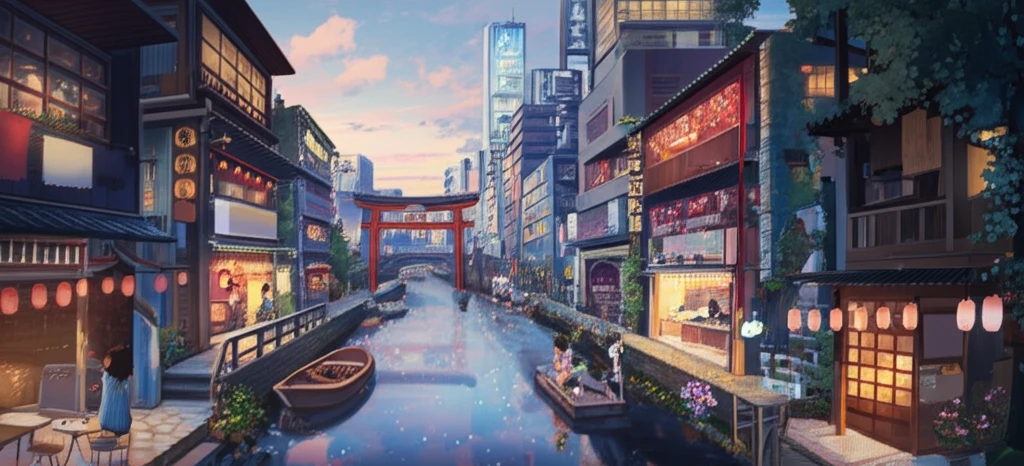
Tokyo's Canals: How Public Access is Shaping the Waterfront Renaissance

"Discover how relaxed regulations are transforming Tokyo's canals into vibrant public spaces, fostering community and commerce in the heart of the city."
In recent years, there's been a growing focus on involving various administrative bodies, NPOs, and local residents in managing coastal areas. The "Canal Renaissance Project," launched by the Tokyo Metropolitan Government's Bureau of Port and Harbor in 2005, aims to revitalize Tokyo's waterfront by easing restrictions on canal spaces. This initiative has paved the way for local organizations to develop commercial and recreational activities along these waterways.
A recent study explored the effects of the Canal Renaissance Project across five regions of Tokyo's waterfront. The research examined how these canal spaces are used, how different organizations collaborate, and what challenges arise when local groups try to use these areas. Through field research and interviews with managers and business owners, the study revealed key insights into the transformation of Tokyo's canals.
The findings indicate that easing regulations on water area usage has opened doors for local businesses, store associations, and NPOs to utilize canals in exciting new ways. Floating restaurants and piers are popping up, transforming waterfront areas while respecting the unique spatial structure and surrounding environment of each canal region. This blend of commerce and community is reshaping how Tokyo residents interact with their urban waterways.
Tokyo's Hidden Waterway Network
Tokyo's network of rivers, canals, and moats is a legacy from when the city was known as Edo, supporting commerce, transport, and defense in earlier centuries. Prior to World War II, central Tokyo was dominated by moats and canals that had been shaped during the Edo era, forming a vital urban infrastructure. These waterways largely disappeared from public view after the war, buried beneath the expanding modern city. Today, Tokyo is built on top of this system of former rivers, canals, and streams, many of which remain hidden beneath concrete and neon.
Challenges in Studying Urban Waterways
Research on submerged or hidden urban waterway systems such as Tokyo's presents methodological difficulties, as correlational research methods — while widely used — carry well-documented strengths and weaknesses in establishing causal relationships. Investigating how cities interact with their buried canal infrastructure requires interdisciplinary approaches that span hydrology, urban planning, and history. A single methodology is rarely sufficient to capture the full picture of a waterway system that has been both a living infrastructure and a forgotten relic. The complexity of these hidden networks means that accepted research methods must be adapted carefully to avoid oversimplification.
The Edo-Era Canal Legacy
Before World War II, central Tokyo was defined by an intricate system of moats and canals shaped during the Edo era, which served as arteries of trade and urban organization. These waterways were not mere decorative features; they were foundational to how the city functioned as a commercial and defensive hub. The war and subsequent postwar reconstruction led to the largely disappearance of these waterways from public life, as they were paved over or built upon. Understanding this historical foundation is essential to any discussion of Tokyo's modern waterfront renaissance, as the canals were once the backbone of the city's spatial logic.
Unlocking the Potential of Tokyo's Canals
The Canal Renaissance Project has sparked diverse interactions between organizations, leading to the creation of committees composed of local businesses and residents in each area. These committees play a vital role in shaping the development and usage of canal spaces, ensuring that projects align with the needs and desires of the local community. The result is a unique blend of commercial and recreational opportunities that cater to the specific character of each waterfront district.
- A 'local coordinator' is missing to reconcile different opinions.
- Assistance is needed with the process of water area usage permission.
- Maintenance of facilities and managing new participants needs to be addressed.
- There is a lack of inter-regional cooperation.
Canals as Urban Livability Assets
Tokyo's canals are increasingly recognized as sustainable urban infrastructure, with historical dock designs featuring towpaths, willow trees, and traditional storehouses offering models for modern public space. Areas like Nakameguro demonstrate the canal's power as a draw for residents and visitors alike, with cherry blossom-lined banks creating iconic seasonal scenes that attract crowds every spring. The Nakameguro canal illustrates how waterways can anchor neighborhood identity and drive foot traffic, functioning as communal gathering spaces rather than purely utilitarian corridors. These examples suggest that Tokyo's canal revival is driven not only by engineering but by cultural and aesthetic appreciation of the waterfront.
Aging Canal Infrastructure Under Threat
While Tokyo's canals represent urban renewal potential, the reality of aging canal infrastructure elsewhere reveals the risks of deferred maintenance and underinvestment. Irrigation and waterway systems that were critical to regional economies have faced catastrophic failure when damaged by natural disasters such as wildfire, threatening to devastate entire valleys. The lesson for Tokyo is that canal revitalization efforts must be paired with long-term structural investment, or the systems risk becoming liabilities rather than assets. Failure to maintain these waterways could undo decades of progress in integrating canals back into urban life.
Global Canal Comparisons: A Narrow Lens
Comparisons between major global canals such as the Panama and Suez focus on design, engineering, and shipping capacity — dimensions that are less directly applicable to Tokyo's smaller urban waterways. The operational and economic scale of interoceanic canals is fundamentally different from city canals designed for local commerce, defense, and transit. This gap in comparative frameworks means that Tokyo's canal system is often evaluated on metrics ill-suited to its historical and urban context. A more nuanced comparison would weigh urban livability, cultural heritage, and public access alongside traditional engineering benchmarks.
Looking Ahead: Ensuring Sustainable Canal Utilization
The ongoing success of Tokyo's Canal Renaissance Project hinges on addressing the challenges of inter-regional cooperation, committee complications, and the need for a local coordinator. By streamlining processes, fostering collaboration, and empowering local communities, Tokyo can ensure that its canals continue to thrive as vibrant public spaces that contribute to the city's unique character and quality of life.
Why Tokyo Turned Its Back on Water
More than 100 rivers and canals flow beneath Tokyo's surface, yet from street level they are largely invisible to the city's inhabitants. Experts and urban observers have questioned why a city so thoroughly built on water has chosen to obscure its waterways rather than celebrate them. The postwar prioritization of road infrastructure and land reclamation drove these waterways underground or beneath concrete, severing the public's connection to the city's aquatic heritage. This disconnect between the city's watery foundations and its surface-level identity is central to understanding the push for waterfront public access today.
Urban Waterway Revival as a Global Trend
International development discourse increasingly frames sustainable urban infrastructure as a priority for cities worldwide, with waterway restoration emerging as a key component of resilient urban design. The broader economic and policy outlook suggests that investments in waterfront public space will be shaped by evolving standards for inclusive growth and environmental sustainability. Tokyo's canal projects sit within this global context, where the challenge is to balance heritage preservation with modern demands for accessible, climate-resilient public infrastructure. The coming decade will test whether Tokyo can lead this shift or whether its canals will remain largely hidden from public life.
ESG and Urban Water Systems
Environmental, social, and governance frameworks are increasingly shaping how cities approach infrastructure projects, including the restoration and maintenance of urban waterways. ESG considerations push planners to evaluate not just the engineering feasibility of canal projects, but their social impact and environmental sustainability over the long term. This systemic lens is essential for Tokyo, where canal revitalization intersects with questions of public access, ecological health, and community benefit. Without integrating ESG principles into canal planning, projects risk prioritizing aesthetics over genuine systemic improvement.
Community Connection to Hidden Waterways
The psychological dimension of how people form habits and relationships with urban spaces, including waterfronts, is a growing area of research that informs how canal access should be designed. Studies on habit formation in real-world settings suggest that consistent, repeated exposure to public spaces is critical for building lasting community attachment. For Tokyo's canals, this means that simply opening waterfront access may be insufficient — the spaces must be designed to encourage regular, sustained use. The human experience of these waterways, not just their physical restoration, will determine whether the waterfront renaissance succeeds.