
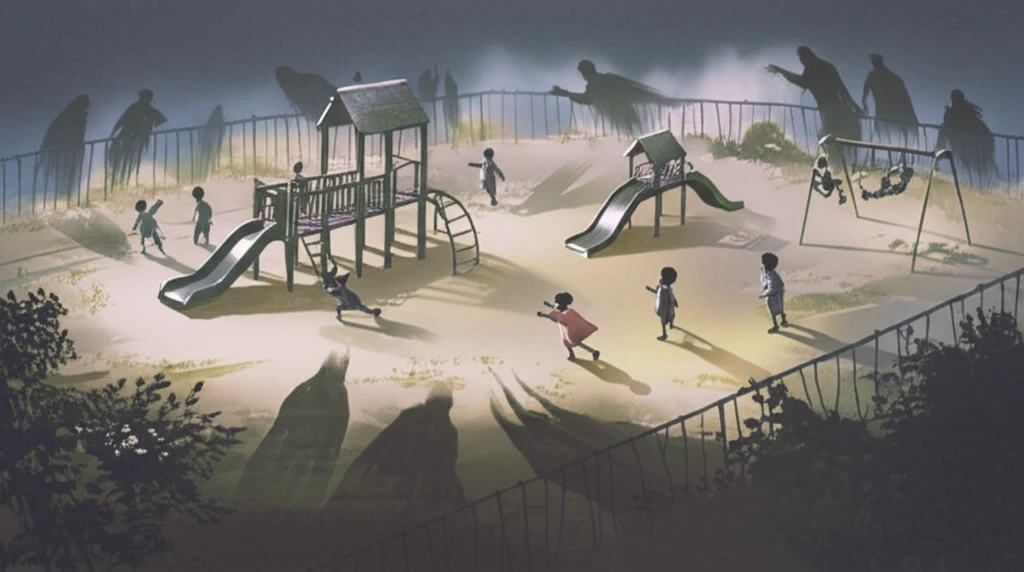
The Shadow Side of Free Love: Unpacking 1970s Child Welfare, Abuse, and the Pedophilia Debate

"Exploring the dark undercurrents of a seemingly progressive era, revealing the complex realities behind calls for sexual liberation and the vulnerabilities of children."
The 1970s, often romanticized as a decade of liberation and social change, saw a radical shift in societal norms, particularly concerning sexuality. Terms like free love dominated discussions, challenging traditional values and advocating for individual freedoms. However, lurking beneath this progressive veneer were unsettling realities, especially concerning child welfare and the rising debate around pedophilia.
While progressive thinkers advocated for sexual liberation, particularly in the context of traditional education and care systems, cracks began to emerge. Reports of violence, neglect, and abuse within residential child homes painted a grim picture, a stark contrast to the utopian ideals of free love. This essay explores this paradox, examining how calls for sexual liberation intertwined with the harsh realities faced by vulnerable children in the care system. It investigates the complex interplay of advocacy for sexual freedom, the critique of institutional violence, and the disturbing rise of the pedophilia debate.
The stage was set on June 1979, during the 18th Evangelical Church Congress in Nuremberg. Amidst the crowd of mostly younger visitors, a small group gained particular attention. Members of the Nuremberg "Indianerkommune" were on hunger strike in front of St. Lorenz Church for almost 2 weeks, demanding more children's rights. They also included the 'legalization of all tender sexual relationships between adults and children that are non-violent and based on free agreement,' i.e., the decriminalization of pedosexual acts.
The Numbers Behind Child Protection
The Annie E. Casey Foundation's KIDS COUNT Data Center tracks the latest child welfare statistics in the United States, with a strong focus on foster care numbers, and is described as a robust source of the best available data on child well-being in the nation. In Finland, statistical data on open care in child welfare has been collected as aggregated (non-client-specific) data obligating wellbeing services counties since 2008, with wellbeing services counties (previously municipalities) as the producers of the data. In New York City, the Center for New York City Affairs conducts a seven-year statistical survey monitoring the city's child welfare system, including the report "Watching the Numbers 2020" on Covid-19's effects on the child welfare system. These national and municipal efforts illustrate how child welfare statistics are gathered at different scales of government.
From Dichotomous Measures to Dialogue
Researchers studying welfare's long-term effects have often relied on a standard dichotomous measure of welfare participation, an approach that newer work advances by instead measuring the proportion of time spent on welfare during both childhood and adulthood (drawing on Gottschalk and Moffitt 1994). One study using this frame examines the relationship between participating in welfare programs during childhood and experiencing depression during young adulthood, reflecting wider interest in welfare participation, child poverty, and the social determinants of health. Critics note that if standardized child welfare were possible without reflection and dialogue, it would be more efficient to leave the work to bureaucrats and clerks who could execute standard procedures. In this view, the amount of bureaucracy in child welfare is itself an indication of the limits of standardized, top-down approaches.
A Legacy of Protection and Harm
The American child welfare system was created to protect children from abuse and neglect at the hands of their biological parents or guardians, and throughout American history child welfare legislation has been part of the political landscape. In Canada, the Sixties Scoop—spanning the late 1950s to the early 1980s—saw the child welfare system remove Indigenous children from their families and communities in large numbers and place them in non-Indigenous foster homes or adoptive families. In Australia, the history of child welfare has been constructed within the context of empire, though British child-welfare history has paid little attention to Australia. Together these accounts show that child welfare systems have at times inflicted harm even as they were organized to protect children.
The Harsh Realities of Child Welfare in the 1970s
The 1960s and 70s witnessed increasing scrutiny of the child welfare system, particularly concerning residential care facilities. Reform-minded experts critiqued the system's focus on obedience and control, highlighting instances of violence, neglect, and psychological manipulation. Terms like "total institutions" were used to describe the oppressive environments within these homes, where children were often subjected to strict rules, harsh punishments, and a lack of individual attention.
- Overcrowding and understaffing led to neglect and inadequate supervision.
- Punitive disciplinary measures included physical punishment, isolation, and denial of basic necessities.
- Lack of emotional support and individual attention hindered healthy development.
- Limited opportunities for education, recreation, and personal growth stifled children's potential.
New Findings, New Frameworks
Researchers at the University of Toronto's Youth Wellness Lab say they have identified key policies and practices that are contributing to the over-representation of Black children and families in Ontario's child welfare system. Recent research and state and federal laws increasingly recognize that advancing child well-being requires financial provisions, services, and supports for children and caregivers, a position reflected in a scoping review on prenatal substance exposure. Allan E. Barsky has examined the legal and ethical context for knowing and using the latest child welfare research in the journal Child Welfare. Separately, a review of research published in the Journal of Family and Economic Issues from 2010 to 2019 assessed economic influences on family matters, including how children in two-parent families (cohabiting and married) fare in the post-welfare-reform era.
When Protection Fails the Child
Children do not experience their protection as a series of decisions but as a series of transitions, with responsibility changing hands among adults while the child's relationships, routines, and basic expectations all change. Critics contend that child welfare seems to be moving apart from social work, and that a narrow definition of child welfare as a specialized field focused on the protection of children may exacerbate that separation. Some critical analyses go further, arguing that child welfare work is inherently oppressive, with those in power creating standards the oppressed must abide by. At the same time, the claim that "welfare makes people lazy" has been challenged, with welfare reframed as a critical investment in the health and future careers of low-income children.
Contrasting Systems, Divergent Outcomes
Research on the choice of paid childcare, welfare, and the labor supply of single mothers compares a Swedish child-care fee reform with an alternative reform of increased child benefits, finding that children's number of years of schooling are relatively unresponsive to mothers' work and welfare participation choices. Because earnings penalties from childhood welfare exposure may be more pronounced given longer periods of observation in adulthood, one analysis compares results for adulthood measured from age 19 to 30 with those measured from 19 to 34. Other comparative work theorizes a "Third Space" of Indian child welfare, examining how Indigenous nations simultaneously engage and disrupt settler legal systems while building sovereign, care-based alternatives. Past studies have compared children of mothers who exited welfare with children of mothers currently receiving welfare, though little research has compared them to children of mothers who never received welfare.
A Disturbing Legacy
The debates and failures surrounding child welfare in the 1970s serve as a chilling reminder of the dangers of unchecked ideologies and the vulnerability of children within institutional settings. While discussions around sexual liberation may have held progressive ideals, they also created space for harmful discourses and practices that prioritized adult desires over the safety and well-being of children. Examining this complex history is crucial for understanding the ongoing challenges in child protection and the importance of safeguarding vulnerable populations from abuse and exploitation.
Voices From the Front Line
The most recent child welfare data show that 20 percent of the nearly 370,000 children in foster care have been in the system for three or more years, meaning children spend more time without the love of an adoptive family. In Manitoba, at a time when child welfare workers were all but ignoring Phoenix Sinclair and her family's descent into dangerous chaos, the province was spending $140 million on child protection. Advocacy organizations such as Children's Rights use litigation or the threat of litigation in conjunction with national and local policy analysts, experts, and government officials to implement realistic, long-term solutions. Child welfare experts also note that some Native Americans are not able or approved to accept foster children because they have low incomes or live in crowded or subpar housing.
Prevention as the Next Frontier
Child maltreatment prevention efforts have grown and changed substantially over the last half century, and prevention is now discussed as a critical component of the nation's child protection system. The nexus between child welfare and Below Poverty Line (BPL) policies is a critical area of focus for governments and social organizations worldwide, representing a complex interplay of economic, social, and legal factors that collectively impact the most vulnerable children. The published literature also points to future challenges and opportunities in child welfare, including trends related to group homes. The welfare of children has likewise been identified as a key question for millions of global parents confronting the spread of COVID-19, underscoring how crisis conditions reshape attention to children's wellbeing.
Systemic Bias and Lasting Harm
In the early months of the coronavirus pandemic, governments imposed widespread social distancing measures, and while pandemic lockdown traumas were temporary, child welfare traumas have lasting effects. Child welfare decision-making is deeply affected by negative stereotypes of Black maternal unfitness and devaluation of Black mothers' bonds with their children, with studies finding that it takes less risk of maltreatment for a Black child to be removed from the home compared to a white child. Childhood separation due to mental illness or incarceration also impacts children, revealing trauma, systemic bias, and the urgent need for reform. Interviews with Sandra Van Empel and Naomi Shann highlight the challenges faced by vulnerable women in the child welfare system and issues around lacking parental support.
Families, Practice, and Measured Impact
The Children's Welfare Social Impact Bond in Finland aims to improve the wellbeing of children, young people, and families in five municipalities in the country. Motivational Interviewing is described as a powerful, evidence-based approach that strengthens collaboration with families and supports positive outcomes in child welfare, with reimagined training including authentic practice and collaborative learning aided by technology such as Lyssn's AI providing targeted feedback for MI practice. Research on welfare-to-work effects on children found that children whose families received welfare for less time tended to fare worse under welfare-to-work requirements than children of long-term recipients in some studies, while two pre-PRWORA studies found minimal impacts on young children.