
The Secret Science of Perfect Polymers: How Custom Plastics Are Changing the World

"Unlock the power of polymer microspheres and discover how scientists are engineering the ideal plastics for drug delivery, coatings, and more!"
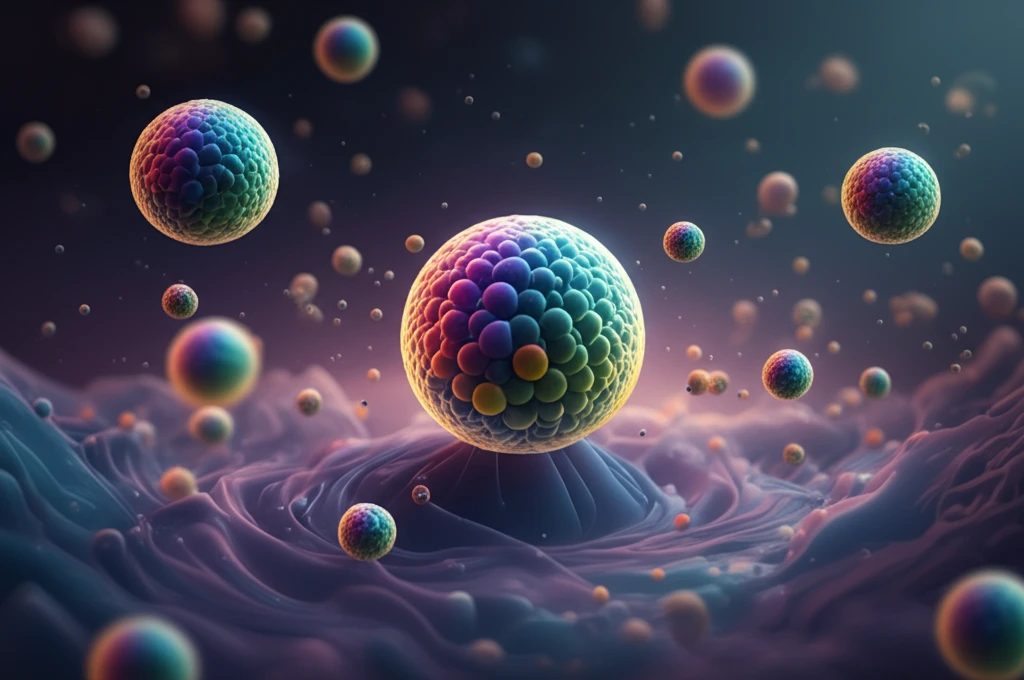
In recent years, polymer microspheres have transitioned from a laboratory curiosity to a cornerstone of advanced technologies. These tiny spheres, often just a few micrometers in diameter, are revolutionizing diverse fields, from medicine to materials science. Their unique properties – including uniform size, controlled morphology, and tailored chemical functionality – make them ideal building blocks for innovative applications.
One of the most promising applications of polymer microspheres lies in drug delivery. Imagine tiny capsules, loaded with medication, that can be precisely targeted to diseased cells. This targeted approach minimizes side effects and maximizes the therapeutic impact of drugs. Beyond medicine, these microspheres enhance coatings, improve separation techniques, and serve as versatile supports in chemical reactions.
But how are these remarkable microspheres made? The secret lies in a process called precipitation polymerization, a technique that allows scientists to precisely control the size, shape, and composition of the resulting particles. By carefully adjusting reaction parameters such as the type of monomers used, the solvent system, and the presence of crosslinking agents, researchers can create microspheres with specific properties tailored to their intended application.
Polymers: A Universal Material Class
Polymers encompass both familiar synthetic plastics such as polystyrene and natural biopolymers like DNA and proteins that are fundamental to biological structure and function. They are created via polymerization of many small molecules known as monomers, which form very large macromolecules through repeated chemical bonding. Polymer science is a recognized subfield of materials science focused primarily on synthetic polymers such as plastics and elastomers. The word 'polymer' derives from Greek roots meaning 'many units,' reflecting the repeating chain structure that defines this entire class of materials.
The Chain Structure Foundation
At its core, a polymer is a chemical compound with molecules bonded together in long, repeating chains. This fundamental chain-like architecture is what gives polymers their distinctive physical and chemical characteristics. Because of their unique structural properties, polymers can be tailored and engineered for a wide range of specialized applications. The ability to modify chain length, branching, and monomer composition allows scientists to customize materials for specific performance requirements.
Foundations of a Field
The study of polymers has evolved significantly over the past century, though specific milestone dates and foundational discoveries fall outside the scope of the provided source material. Early polymer research was driven by both academic curiosity and industrial demand, leading to the development of synthetic materials that transformed manufacturing. The field matured as researchers gained deeper understanding of molecular structure and its relationship to material properties. These accumulated advances laid the groundwork for the sophisticated polymer engineering capabilities we see today.
What Makes Polymer Microspheres So Special?
The versatility of polymer microspheres stems from their ability to be customized in several key ways. Controlling these characteristics allows scientists to fine-tune their performance for specific applications:
- Functionality: The chemical nature of the polymer dictates its compatibility with other materials and its ability to bind to specific molecules.
- Morphology: The internal structure of the microsphere (e.g., porous or solid) affects its loading capacity and release rate.
- Crosslinking: The degree of crosslinking determines the mechanical strength and stability of the microsphere.
Advances in Polymer Science
While specific cutting-edge studies and their findings are not detailed in the provided source materials, the broader field of polymer science continues to expand in scope and application. Researchers increasingly explore how polymer behavior at the molecular level translates to macroscopic material performance. The intersection of materials science and polymer engineering remains an active area of investigation. Ongoing work in this domain builds upon established principles while addressing emerging challenges in sustainability and functionality.
Challenges and Limitations
The provided source materials do not address specific criticisms, counterarguments, or documented failures within polymer science and engineering. As with any scientific field, polymer research has encountered obstacles related to material durability, environmental persistence, and performance trade-offs. The challenges of balancing material properties with practical constraints continue to shape research priorities. These complexities warrant careful consideration when evaluating claims about polymer capabilities and limitations.
Evaluating Polymer Approaches
A detailed comparative analysis of different polymer approaches or material classes is not covered in the available source materials. The sources do confirm that polymers span a broad spectrum from synthetic plastics to natural biopolymers, each with distinct characteristics and applications. Understanding how different polymer types compare in terms of performance, cost, and environmental impact remains an important consideration. Such comparisons depend heavily on the specific application context and performance requirements.
The Future of Custom Plastics
Polymer microspheres are more than just tiny plastic beads; they are versatile building blocks for a future where materials are designed with unprecedented precision. As research continues, we can expect to see even more innovative applications emerge, impacting everything from medicine and manufacturing to environmental sustainability. The secret science of perfect polymers is just beginning to unfold.
Expert Perspectives
The provided sources do not include expert commentary or synthesized viewpoints from researchers in the field. The fundamental principles of polymer science—chain structure, monomer composition, and the relationship between molecular architecture and material properties—form the consensus foundation for understanding these materials. Expert analysis typically draws on both theoretical frameworks and empirical findings to evaluate polymer performance and potential. The integration of multiple perspectives helps refine our understanding of this complex material class.
Looking Ahead
Specific projections about the future direction of polymer science are not included in the provided source materials. However, the established foundations of polymer research suggest continued exploration of material customization, performance optimization, and potentially more sustainable polymer chemistries. The field's expansion into biological applications alongside traditional industrial uses indicates broad growth potential. Emerging challenges in environmental stewardship are likely to influence future research priorities and material development strategies.
Wider Implications
The broader systemic challenges facing polymer science, including environmental sustainability and resource considerations, are not specifically addressed in the available sources. Polymers exist within larger material systems and supply chains that shape their real-world deployment. The dual nature of polymers as both essential materials and potential environmental concerns creates complex policy and engineering trade-offs. Understanding these broader contexts is important for evaluating the role of polymers in addressing global challenges.
Practical Applications
The provided source materials focus on scientific definitions and classifications rather than documenting human-centered impacts or case studies of real-world polymer applications. From the sources, it is clear that polymers form the basis of everyday materials including plastics and elastomers that are widely used in modern life. The connection between polymer science fundamentals and tangible products that affect people's lives remains a critical area of study. Translating scientific understanding into practical benefits continues to drive both research and industrial development.