
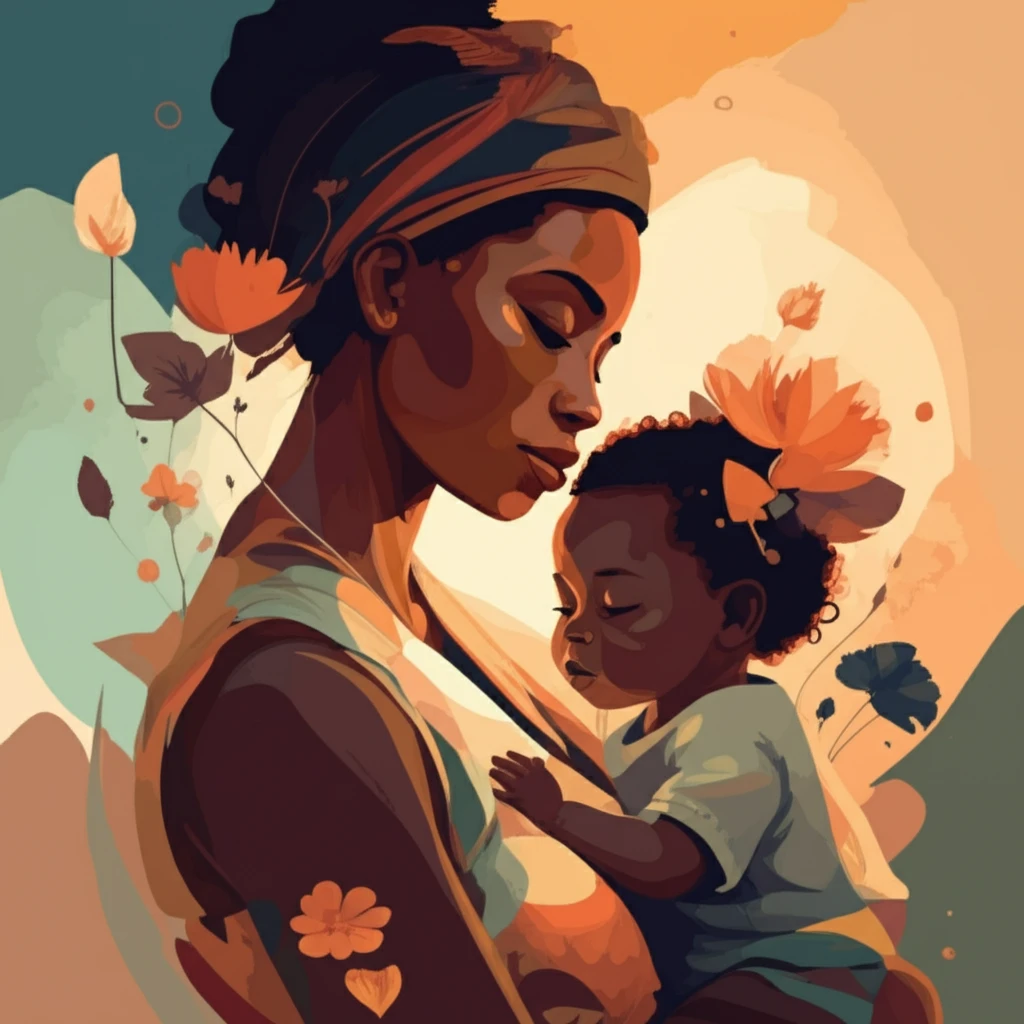
The Motherhood Maze: Unpacking Zambia's Sweet and Sour Experiences

"Exploring the Complex Emotions and Realities of Motherhood in Zambia: A Journey Beyond the Ideal."
Motherhood: a universal experience, yet deeply personal and culturally shaped. While often portrayed as a time of pure joy, the reality is far more nuanced. In Zambia, as in many societies, motherhood is a complex tapestry woven with threads of happiness, pride, uncertainty, and vulnerability.
Traditional Zambian culture places significant emphasis on the role of a mother. A woman's identity often becomes intertwined with her maternal status, and she assumes primary responsibility for childcare. This societal expectation, coupled with economic and health challenges, creates a unique landscape for the experience of motherhood.
This article explores the findings of a descriptive study conducted in Zambia, shedding light on the multifaceted realities of motherhood. By understanding the lived experiences of Zambian women, we can move beyond idealized notions and gain a more profound appreciation for the sweet and sour taste of motherhood.
Births and Maternal Ambivalence in Zambia
The 2024 Zambia Demographic and Health Survey was implemented by the Zambia Statistics Agency in partnership with the Ministry of Health and several research and academic institutions. A UNICEF profile reports that approximately 645,000 babies were born in Zambia in 2015—around 1,800 per day—and that 31 percent of women aged 20–24 had given birth by age 18. Separately, research on motherhood in Zambia describes maternal ambivalence as the coexistence of positive and negative experiences, reflecting opposing feelings and emotions.
Making Room for Mixed Feelings
The listed sources frame maternal ambivalence as simultaneous or mixed feelings about motherhood, rather than as an experience that must fit an idealized image of maternal joy. One source argues for normalizing ambivalence in individual, social, and political contexts and treating it as a potentially enabling and creative part of mother love. The article’s overview likewise recommends open conversations and accessible resources to help women navigate motherhood’s complexity. These sources advocate acceptance and support, but do not provide an evaluation of specific methods or evidence about their effectiveness.
Zambia in a Maternal Health Index
The Sage Reference entry reports that Save the Children placed Zambia in Tier III, its category for least developed countries. In the Women's Index cited there, Zambia ranked 19th out of 33 countries. The index considers factors including life expectancy, maternal mortality, and availability of modern contraception and maternity services.
The Two Sides of Motherhood: Positive and Negative Experiences
The study reveals that Zambian women experience motherhood as an ambivalent journey, marked by both positive and negative emotions. These experiences often coexist, creating a complex emotional landscape for mothers.
- Prestige: Gaining respect and recognition within the community.
- Future Investment: Seeing children as a source of security and support in old age.
- Cementing Relationships: Strengthening marital bonds and family unity.
Contrasting Emotions in First-Time Motherhood
A qualitative analysis of first-time mothers’ experiences reports that mothers described a range of contrasting and fluctuating emotions while carrying out daily care. Its abstract says this finding is consistent with earlier research, including studies by Chapman and Gubi, Lonia and colleagues, and Lupton. A separate source on women prisoners in Africa highlights research in Zambia linking male partners’ behaviour with stress and abuse faced by women, sometimes resulting in imprisonment. These sources address different contexts and do not establish that the prison-related findings apply to mothers generally.
Ambivalence as Connection
A Psychology Today article characterizes maternal ambivalence as a distinctive form of ambivalence, rooted in what it calls an immutable, primal mother-child bond. It says ambivalence is often misunderstood as negative, while arguing that it can connect rather than split relationships. The source presents this as a general account of maternal ambivalence, not as a comparison based on Zambia-specific data.
Embracing the Complexity: A Balanced Perspective on Motherhood
The experiences of Zambian women underscore the importance of recognizing the full spectrum of emotions associated with motherhood. By acknowledging both the joys and the challenges, we can create a more supportive and understanding environment for mothers.
Community Support Through Safe Motherhood Action Groups
A realist evaluation of Zambia’s Safe Motherhood Action Groups (SMAGs) reports that less than half of pregnant women complete the continuum of maternal health care. It describes community engagement initiatives such as SMAGs as a way to mobilise communities and support maternal and newborn health. The source identifies community support as part of the response, without claiming in the supplied material that it alone resolves gaps in care.
Building on Maternal Health Progress
A Zambia advocacy brief reports that over the past two decades the country has cut maternal and under-five child deaths by 75 percent and reduced neonatal mortality by more than half. It attributes these gains to political will and investments in essential health services, while noting that many mothers, newborns, and young children still die every day. A separate synthesis of UN estimates reports that Zambia’s maternal mortality ratio (MMR) decreased from 2000 to 2003, stagnated between 2000 and 2002, rose by 10 percent between 2007 and 2009, and then followed a decreasing trend from 2010 to 2020; the supplied account includes overlapping periods, so the sequence is reported as stated rather than reconciled.
Motherhood, Ambivalence, and Schooling
A descriptive cross-sectional study explored women’s experiences of motherhood in Zambia through focus group discussions. A separate study examines how teenage mothers in Lusaka District negotiate the demands of schooling and motherhood within school and community settings. Its source notes that teenage mothers’ re-entry into formal education in Zambia remains under-examined and places the issue within a wider sub-Saharan African context, where an estimated six million pregnant and parenting girls are out of school.
Maternal ambivalence is a normal and natural part of the motherhood journey. It's crucial to move beyond idealized notions and embrace the complexity of this transformative experience.
By fostering open conversations and providing accessible resources, we can empower women to navigate the 'motherhood maze' with greater confidence and resilience. This begins with acknowledging the sweet and sour tastes, and finding strength in the shared experiences of mothers across Zambia and beyond.