
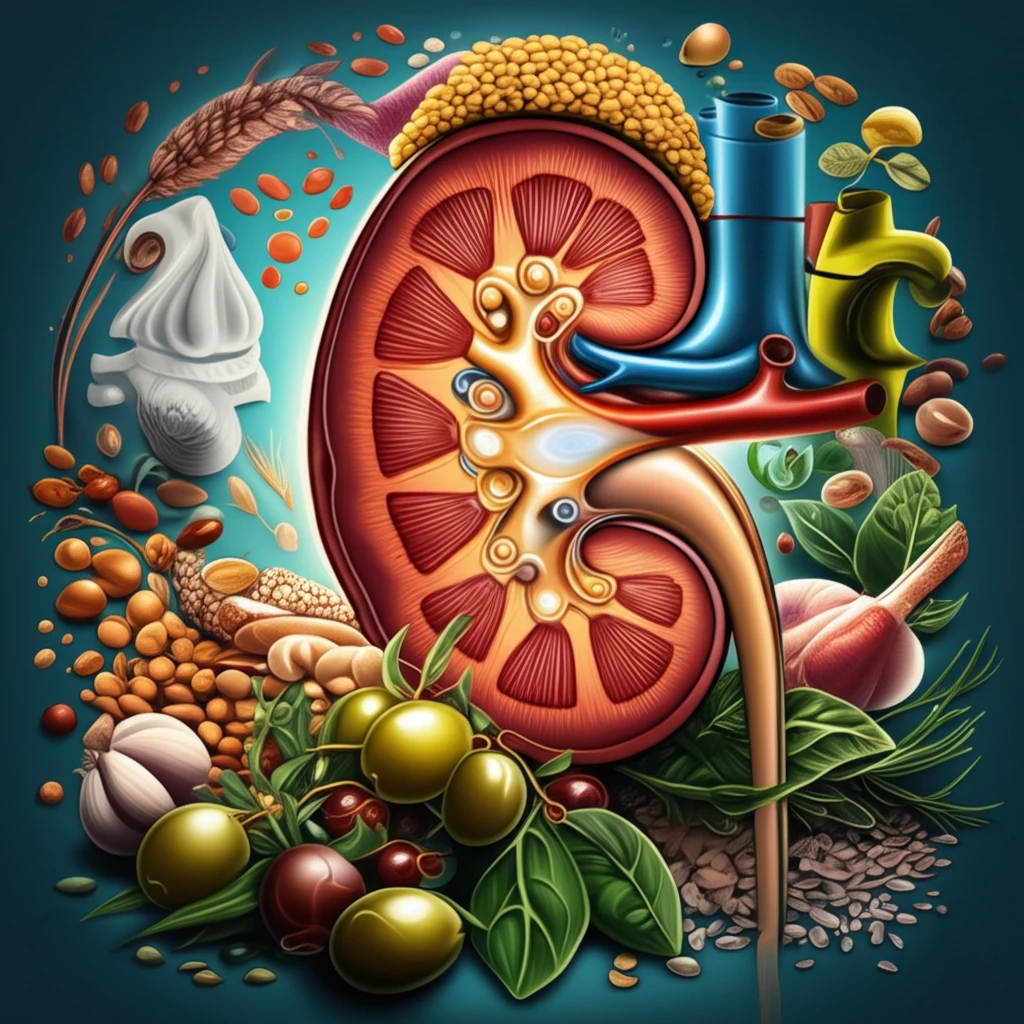
The Mediterranean Diet: Your Delicious Defense Against Chronic Kidney Disease

"Discover how this vibrant dietary pattern can help manage CKD, protect your kidneys, and enhance your overall well-being."
For years, managing chronic kidney disease (CKD) has primarily focused on strict limitations: limiting energy and protein intake, and meticulously controlling individual micronutrients. While these restrictions are important, they often overshadow the power of a well-rounded, high-quality dietary pattern. Now, clinical guidelines are shifting to incorporate more plant-based diets, lower in processed meats, sodium, and refined sugars, and richer in whole grains and fiber.
Enter the Mediterranean Diet (MD), a vibrant and flavorful dietary pattern lauded for its heart-healthy benefits. Observational and interventional studies have consistently linked the MD to a reduced risk of cardiovascular disease. But its benefits don't stop there. Research suggests the MD can also positively impact other chronic conditions like diabetes, obesity, and even cognitive health.
But can the MD truly benefit individuals with CKD? This article delves into the classical components of the MD, evaluating their suitability for managing CKD and addressing common concerns like potential hyperkalemia. We'll explore how the MD's emphasis on whole foods, healthy fats, and plant-based protein can support kidney health and overall well-being.
Measuring Mediterranean Diet Adherence Worldwide
Multiple research efforts have focused on quantifying adherence to the Mediterranean diet across diverse populations. Studies spanning databases from PubMed to Embase and Web of Science have systematically examined dietary compliance patterns, with research dating back as far as 1966. Investigations into determinants of adherence have identified socioeconomic factors as significant influences on how closely adults follow the diet. Research from institutions including Maastricht University and the University of Bristol has further explored the association between Mediterranean diet adherence and outcomes such as obesity-linked cancer risk.
No Single Standard Mediterranean Diet
The term Mediterranean diet is a generic descriptor based on the traditional eating habits of countries bordering the Mediterranean Sea, but there is no one standard version, as at least 16 nations border that sea. The American Heart Association emphasizes this variability, noting that the diet reflects diverse cultural food traditions rather than a single prescriptive plan. WebMD notes that the diet generally recommends limiting red meat, and its principles have been adapted for specific medical conditions, such as a Mediterranean renal diet for chronic kidney disease that features less protein and lower salt. Healthline further highlights a key limitation: many staple Mediterranean foods may be difficult to access outside the region, prompting interest in culturally adapted versions such as a Caribbean take on the diet.
Centuries of Culinary Heritage
The origins of the Mediterranean diet are deeply rooted in history, with one 2013 study noting that its beginnings are 'lost in time' because they sink into the eating habits of the Middle Ages. Botanical Online describes the diet as a dietary pattern and lifestyle shaped throughout centuries through the crossroads of cultures occurring in Mediterranean countries. UNESCO has formally recognized the Mediterranean diet as an Intangible Cultural Heritage of Humanity, with seven emblematic communities — Croatia, Cyprus, Greece, Italy, Morocco, Portugal, and Spain — supporting and promoting it. The diet's evolution continued through milestones such as the introduction of New World foods and the industrial revolution.
Unlocking the Power of the Mediterranean Diet for CKD
The Mediterranean Diet isn't just about individual nutrients; it's about a holistic dietary pattern. It emphasizes a high consumption of fruits, vegetables, whole grains, legumes, nuts, and seeds. Extra virgin olive oil serves as the primary source of monounsaturated fats, while dairy, fish, and poultry are enjoyed in moderation. Red meat and sweets are reserved for special occasions, and wine is consumed in moderation with meals. The MD provides an overall eating approach which promotes healthy living.
- High in Antioxidants: Abundant fruits, vegetables, and olive oil provide a wealth of antioxidants to combat inflammation and oxidative stress, common concerns in CKD.
- Fiber-Rich: Whole grains and legumes promote gut health and can help manage blood sugar levels.
- Healthy Fats: Olive oil and nuts offer monounsaturated fats, known for their cardioprotective benefits.
- Plant-Based Protein: Emphasizes plant-based sources like legumes and nuts, reducing the burden on the kidneys compared to high-meat diets.
Modern Research Highlights Broad Protective Effects
A 2026 report from Phys.org notes that while today's Mediterranean diet emphasizes olive oil, vegetables, and fish, most ancient Mediterraneans relied primarily on cereals for the bulk of their calories, with pulses, oil, fruit, and fish varying by region and season. Research compiled by The Independent suggests that Mediterranean diets may help prevent depression, and that those with high Western diet scores did not show the same lower heart event rates as those with high Mediterranean diet adherence. ScienceGate documents indicate the diet has been proposed as a healthy dietary pattern with protective effects against several chronic diseases, including breast cancer. US News continues to rank the Mediterranean diet among the top diets evaluated by expert nutritionalists and dietitians.
Competing Diet Philosophies and Emerging Critiques
The paleo diet, based on Stone Age ancestor eating patterns, emphasizes lean meat and fresh foods as an alternative to Mediterranean-style eating. Forbes Health notes that competing high-fat diets like keto carry their own health risks, including nutritional deficiencies from limited fruits and vegetables, as well as potential kidney and liver problems from increased fat intake — concerns that contrast with the Mediterranean diet's more balanced approach. However, the Mediterranean diet itself faces critiques from unexpected directions; a Springer study explored the relationship between attitudes towards artificial intelligence and adherence to the Mediterranean diet, suggesting the diet's cultural and behavioral dimensions extend into modern technological contexts. The landscape of dietary competition remains complex, with multiple frameworks vying for public and clinical attention.
How the Mediterranean Diet Stacks Up
UniversityNutrition.org provides a general overview comparing the Mediterranean diet to contemporary alternatives, examining the main nutritional components that modulate both gut microbiota and the immune system across different eating patterns. Medium comparisons note that the Mediterranean diet is frequently evaluated against the keto diet, which focuses on high-fat, adequate-protein, and low-carbohydrate intake, as well as other popular frameworks. UniversityNutrition.org further describes the diet as one whose effects are increasingly understood in the context of immune system modulation alongside gut microbiome health. TikTok-based discussions, while less formal, reflect growing public interest in comparing the Mediterranean diet to whole-foods-based approaches and evaluating long-term health outcomes.
Embracing the Mediterranean Diet for Kidney Health: A Promising Path Forward
The Mediterranean Diet presents a compelling dietary approach for individuals with CKD. Its emphasis on plant-based foods, healthy fats, and whole grains aligns with current recommendations for chronic disease prevention and management. While concerns about potassium intake are valid, careful food selection, potassium monitoring, and potentially the use of potassium binders can help mitigate these risks. By embracing the MD, individuals with CKD may experience a reduced risk of cardiovascular complications, improved metabolic control, and enhanced overall well-being.
Expert Consensus and Ratings
US News provides expert reviews on the Mediterranean diet, rating it across 11 categories including weight loss, foods, and overall effectiveness on a scale of 1 to 5. Forbes Health features expert advice on how to follow what it describes as the healthiest diet of the year, offering practical guidance grounded in professional nutritional expertise. HuffPost Life reports that experts with careers devoted to dietary research would naturally recommend a Mediterranean diet for cardiac risk mitigation, noting agreement among specialists on subordinate dietary details. The Mediterranean Dish adds perspective from expert contributors based in the Mediterranean region and around the world, sharing authentic recipes designed to help people follow the diet regardless of their geographic location.
Evolving Trends and Future Directions
Future Fit reports that the weight loss and weight management diet market was valued at $192.2 billion in 2019 globally, with the Mediterranean diet remaining a prominent part of evolving nutrition trends throughout the decade. AOL highlights that newcomers to the Mediterranean diet can begin with accessible staples including fish, vegetables, legumes, lean proteins, and whole grains. A study covered by Scroll.in found that the Mediterranean diet reduces stroke risk in women but not in men, representing what researchers believe is the first study investigating the diet's relevance across different cardiovascular disease risk levels. Italian Traditions points to an emerging frontier in which Western chefs, scientists, and nutritionists are exploring seaweed, jellyfish, and insects as potential future foods that could complement Mediterranean dietary traditions.
Systemic Inflammation and Nutritional Labeling Debates
Research published in PMC indicates that consumption of a Mediterranean diet can positively impact both maternal and offspring health, potentially mediated through beneficial effects on inflammatory pathways. A News-Medical study found that seniors who adhered to the Mediterranean diet, particularly through olive oil and vegetable consumption, demonstrated lower levels of systemic inflammation. Archyde describes the diet as acting as a metabolic modulator that reduces chronic low-grade inflammation often preceding chronic disease, suggesting benefits extending well beyond heart health. However, Columnist24 raises a systemic challenge: while the Mediterranean diet's cultural and nutritional value is not in question, the Nutri-Score labeling system used to rate foods is described as deeply flawed and failing consumers on multiple levels.
Real Lives and Lived Experience
ABC News reports on research showing that a traditional Mediterranean diet rich in fruits, vegetables, nuts, and extra-virgin olive oil, while limiting meat and added sugars, can significantly cut diabetes risk, particularly when combined with exercise. HelpGuide.org emphasizes that the real Mediterranean diet is about more than fresh, wholesome food, encompassing behavioral and lifestyle effects including improvements in mood and cognitive performance observed in pilot studies. Dr. Aseem Malhotra, a British cardiologist, has collaborated with filmmaker Donal O'Neill to uncover and translate the real Mediterranean diet through the Pioppi Protocol documentary project. ABC News Australia further notes that the diet made famous by groundbreaking health studies dating back to the 1960s was fundamentally a peasant-style, largely vegetarian way of eating — in the words of nutrition experts, 'a poor man's diet' with profound health implications.