
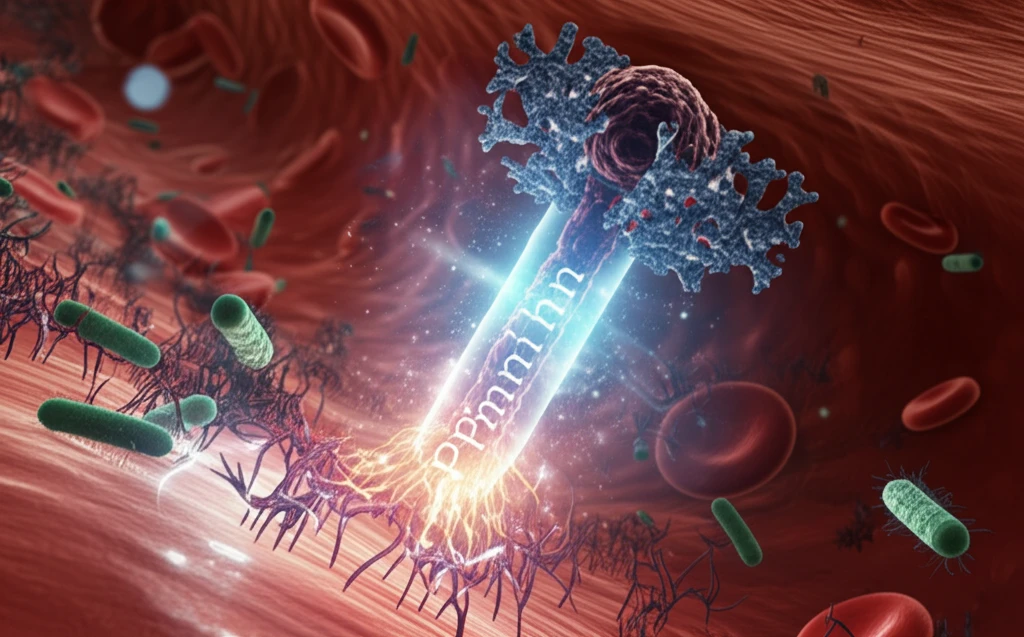
The Future of Antibiotics: How Polymer Conjugates Could Combat Resistance

"Scientists are exploring innovative solutions using poly(2-oxazoline) conjugates to revive the effectiveness of penicillin antibiotics and tackle growing antimicrobial resistance."
The rise of antibiotic-resistant bacteria is one of the most pressing threats to global health. As existing antibiotics become less effective, once-treatable infections can become deadly. Traditional solutions aren't keeping pace, and the world desperately needs new strategies to combat this growing crisis.
One promising approach involves tweaking existing antibiotics by attaching them to polymers. This method, known as polymer conjugation, can alter an antibiotic's properties, potentially making it more effective against resistant strains. While still in its early stages, this research offers a beacon of hope in the fight against antimicrobial resistance.
Scientists have been exploring polymer antibiotic conjugates (PACs) that show higher activity, improved efficiency against biofilms, and increased stability. Unlike conventional methods that use antibiotics as backbones for complex structures, newer approaches focus on attaching a single antibiotic group to each polymer, potentially reducing the overall drug load and minimizing the development of resistance. This novel strategy could lead to a new generation of antibiotics that are both powerful and environmentally conscious.
The Rising Tide of Antibiotic Resistance
Antibiotic resistance represents one of the most pressing public health crises of our time, with comprehensive data aggregated from peer-reviewed studies and official statistics confirming its accelerating trajectory. The World Health Organization's Global Antimicrobial Resistance and Use Surveillance System (GLASS) has documented a worldwide increase in resistant infections, generating standardized data to guide public health interventions. Verified statistics from multiple independent databases indicate that the economic burden of antibiotic resistance is soaring, with costs mounting across healthcare systems globally. Better stewardship and regulation have been identified as key strategies to reduce antibiotic misuse and mitigate hospital-level impacts.
How Standard Antibiotics Work and Where They Fall Short
Standard antibiotics function by killing bacteria or inhibiting their growth, but antibiotic resistance occurs when bacteria change and can resist these effects, allowing them to continue growing unchecked. These resistant infections are caused by bacteria that have evolved mechanisms to survive drug exposure, rendering once-effective treatments powerless. The One Health approach recognizes that antimicrobial resistance is a multifaceted problem spanning human, animal, and environmental health, yet the rapid global spread of multidrug-resistant bacteria continues to outpace current antimicrobial solutions. Many of these resistant germs have spread worldwide, creating a crisis that standard pharmaceutical approaches alone cannot contain.
From Penicillin to Resistance: A Brief History
The danger of antibiotic resistance became apparent soon after antibiotics became widely available during World War II, when British and American researchers developed mass production of penicillin to treat battlefield infections. Within a decade of antibiotics entering widespread use, concerns had already shifted from Gram-positive bacteria to emerging threats such as methicillin-resistant Staphylococcus aureus (MRSA) and vancomycin-resistant Enterococcus species. Although antibiotic resistance occurs naturally over time, the misuse and overuse of antibiotics in both human medicine and livestock production have dramatically accelerated the evolutionary process. This historical trajectory demonstrates that each new antibiotic has been met with corresponding resistance, establishing a pattern that continues to challenge modern medicine.
Polymer Conjugates: A Novel Approach to Antibiotic Resistance
Researchers have successfully synthesized polymer conjugates using penicillin antibiotics, attaching them to water-soluble poly(2-oxazoline)s (POx). This conjugation process occurs via the carboxylic acid function of the antibiotics, creating an ester bond that proves surprisingly stable. Tests reveal that this ester bond is more resistant to hydrolysis than the vulnerable beta-lactam ring of penicillin itself.
- Increased Stability: Polymer conjugation protects the antibiotic's structure.
- Enhanced Activity: Conjugates remain effective against resistant strains.
- Synergistic Effects: Combining antibiotics with polymers boosts overall performance.
- Reduced Resistance Potential: Lower antibiotic loads minimize the risk of new resistances.
Cutting-Edge Approaches to Combating Resistance
Recent scientific developments include innovative technologies such as infrared-activated hydrogels that employ lysozyme 'nets' to physically trap and combat resistant bacteria, representing a departure from traditional chemical approaches. Research published through major scientific platforms continues to explore novel mechanisms for overcoming bacterial defenses, with particular attention to mitigating antimicrobial resistance across the animal industry and livestock-environment interface. Healthcare providers, agricultural stakeholders, and pharmaceutical companies are increasingly being urged to collaborate on integrated strategies to eliminate the threat of antibiotic resistance, recognizing that isolated efforts have proven insufficient.
Why Current Strategies Are Losing Ground
Leading scientists and public health experts have characterized antibiotic resistance as an 'apocalyptic' threat to human health, warning that society faces 'nightmare bacteria' in what has been described as a war we are losing. The language of crisis permeates the scientific community, with editorial voices describing the situation as demanding immediate and decisive action to avert an antibiotics apocalypse. This alarming rhetoric reflects deep frustration with the pace of response, as resistance patterns continue to worsen despite decades of awareness campaigns and policy interventions.
Comparing Global Responses to Antibiotic Resistance
Different nations have adopted varying strategies to combat antibiotic resistance, with Japan implementing measures such as co-payments as low as five dollars to discourage unnecessary antibiotic prescriptions in outpatient pediatric settings. In contrast, the United States faces systemic factors beyond biology that drive antibiotic overuse, including time pressures during medical consultations where doctors have roughly 800 seconds for a typical sick visit. These structural differences highlight how cultural, economic, and healthcare system design factors influence antibiotic prescribing patterns and resistance outcomes across countries.
A Promising Path Forward
While these findings are encouraging, further research is needed to fully understand the potential of polymer-antibiotic conjugates. These innovative compounds offer a powerful new approach to combating antibiotic resistance and could pave the way for the development of more effective and sustainable treatments for bacterial infections in the future. As the crisis of antibiotic resistance continues to escalate, these creative solutions may be our best hope for staying ahead of the curve.
Expert Assessments of the Resistance Crisis
Clinical and economic analyses of bacterial resistance reveal a substantial burden on healthcare systems, with experts calling for diverse approaches to address the multifaceted challenge. Research has identified antibiotic resistance as a model problem of potentially catastrophic proportions, with independent genetic events driving the spread of resistance traits such as fluoroquinolone resistance and extended-spectrum beta-lactamase production across bacterial sublineages. The societal impact extends beyond direct healthcare costs, affecting productivity, quality of life, and global health equity in ways that demand comprehensive expert-guided interventions.
Emerging Strategies and the Path Forward
Current research focuses on antibiotic resistance breakers, which represent a new pharmacological approach designed to restore the efficacy of existing antibiotics against resistant bacteria. Bacterial resistance mechanisms include both intrinsic resistance always expressed in a species and induced resistance that emerges only after antibiotic exposure, creating complex challenges for drug development. Perhaps most alarmingly, soil bacteria from the 1960s and 1970s have been found to resist antibiotics that did not exist until decades later, suggesting that resistance potential may predate our ability to detect it. Meanwhile, market analysts note that increasing prevalence of antibiotic-resistant bacteria poses significant challenges for established drug classes including cephalosporins.
Systemic Barriers and Emerging Alternatives
The rapid global escalation of multi-drug resistant infections, from localized chronic MRSA-infected wounds to systemic CRE-induced sepsis, has necessitated urgent development of innovative antimicrobial potentiators that go beyond traditional antibiotics. While efforts to tackle antibiotic resistance have largely focused on hospitals and clinics where antibiotic use is highest, research in South Africa reveals that resistant bacteria are spreading through water systems, demonstrating the problem extends well beyond healthcare settings. Microbiome therapeutics are emerging as potential replacements for traditional broad-spectrum antibiotics, with the National Institutes of Health heavily funding clinical trials investigating the direct link between gut flora and systemic autoimmune disorders. Organizations like MSF have been working on antibiotic resistance in collaboration with national health ministries, revealing areas that require further investigation.
The Human Cost of Antibiotic Resistance
Antimicrobial resistance is responsible for an estimated 1.27 million deaths directly and nearly five million associated deaths annually as of 2019, according to the World Health Organization, which designates AMR as one of the top global public health threats. Projections suggest that without significant intervention, antibiotic-resistant bacteria could kill approximately 10 million people per year by 2050, up from current estimates of around 700,000 annual deaths. The World Economic Forum has described antimicrobial resistance as a 'quiet pandemic,' with UK envoys arguing that post-COVID global pandemic treaties must also encompass AMR. Research has also revealed surprising connections, such as findings that common painkillers may inadvertently fuel the development of deadly superbugs that resist antibiotics.