
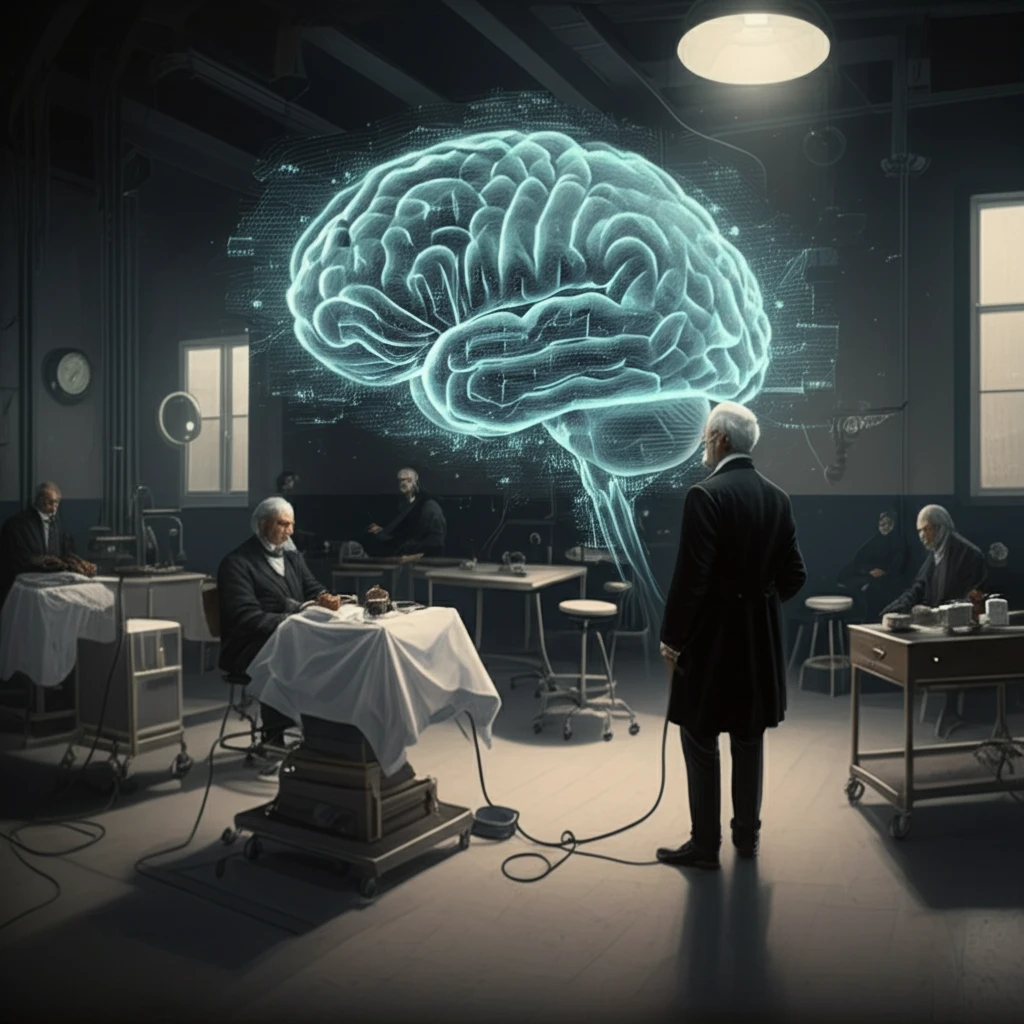
The Enduring Legacy of William Osler: How One Doctor Shaped Modern Medicine

"Discover the profound influence of Sir William Osler, a medical pioneer whose innovative approaches to education and patient care continue to resonate today."
William Osler, born in 1849, wasn't just a doctor; he was a transformative figure in medicine. His name remains synonymous with clinical excellence and compassionate patient care, even decades after his death. Osler's impact extends far beyond his time, shaping how doctors are trained and how patients are treated worldwide.
Osler's journey began in Bond Head, Ontario, leading him through the University of Toronto and ultimately to a medical degree from McGill University in 1872. Further studies in Europe refined his skills, but it was his return to McGill as a faculty member that ignited his passion for teaching and mentorship.
More than just a brilliant physician, Osler was a gifted educator who emphasized empathy and bedside manner. His leadership within medical organizations and his influential writings established a new standard for physician behavior, one that continues to inspire healthcare professionals today.
A Legacy Still Measured
More than a century after his death, William Osler's influence remains visible across modern healthcare, from bedside teaching to residency training. Precise metrics of that influence are difficult to quantify, but historians of medicine widely regard him as one of the most consequential figures in the profession's history. Institutions ranging from medical schools to professional societies continue to invoke his name and principles.
How Medicine Is Taught Today
Medical education today largely follows the model Osler helped establish: students learn directly from patients rather than relying solely on lectures and textbooks. Clerkships, ward rounds, and residency programs all trace their lineage to these reforms. Even so, modern educators acknowledge ongoing limitations, including time pressures and technology that can draw attention away from the patient.
Milestones in Osler's Career
Osler's career included pivotal posts in North America and Britain, with his time at Johns Hopkins widely viewed as the turning point in which his textbook and teaching methods set new standards for clinical training. His approach emphasized hands-on learning at the bedside over classroom recitation. Together, these milestones marked a decisive shift toward patient-centered medical education.
Osler's Innovations: From Bedside Teaching to Neurological Insights
Osler's move to Philadelphia in 1885 marked a turning point. Appointed as the official pathologist at Blockley Hospital, he quickly rose to prominence. His subsequent role as head of medicine at Johns Hopkins Hospital in Baltimore solidified his legacy. It was during this time that he penned “The Principles and Practice of Medicine,” a textbook that revolutionized medical education.
- Bedside Teaching: Osler moved medical education from the lecture hall to the patient's bedside, fostering direct observation and clinical reasoning.
- Medical Residency: He established the residency model, providing structured, supervised training for young doctors.
- Holistic Patient Care: Osler stressed the importance of treating the patient as a whole person, not just focusing on their disease.
Osler in Contemporary Scholarship
Recent commentary continues to revisit Osler's writings and teaching philosophy, often asking how they apply to present-day practice. Reviewers frequently weigh his humanistic ideals against an era of electronic records and protocol-driven care. Such discussions tend to treat his work as a living reference point rather than a closed historical chapter.
Critiques of the Oslerian Ideal
Not everyone embraces the Oslerian legacy uncritically. Some observers argue that romanticizing bedside teaching overlooks its practical limits in busy, technology-heavy hospitals, while others question whether early twentieth-century ideals fit a diverse, data-driven profession. These critiques do not erase his contributions, but they complicate any simple narrative of unbroken progress.
Osler's Era Versus Modern Practice
Comparing medicine in Osler's time with today reveals both dramatic change and striking continuity. Diagnostics, therapeutics, and information systems have been transformed almost beyond recognition since the early twentieth century. Yet the core structure he championed, learning from patients under experienced supervision, remains recognizable in clinical training around the world.
Osler's Enduring Impact on Medicine
Osler's influence transcends his specific medical discoveries. His emphasis on compassionate patient care, rigorous clinical training, and lifelong learning continues to shape the medical profession. As a mentor to future giants like Harvey Cushing and Wilder Penfield, Osler's legacy lives on through the countless physicians he inspired and the patients they serve.
What Experts Take Away
Commentators on Osler's life tend to converge on a single theme: he combined scientific rigor with humane care at a moment when medicine was becoming truly professionalized. Many describe his example as a standard against which modern practice is still measured. Assessments differ in emphasis, but few dispute his formative role in how physicians are trained.
Carrying the Legacy Forward
Looking ahead, educators face the challenge of preserving Oslerian values amid simulation-based learning, artificial intelligence, and growing subspecialization. Whether bedside teaching can remain central in that landscape is an open question. Many in academic medicine contend that his emphasis on carefully observing the patient will grow only more important as technology advances.
A System Built on Osler's Foundations
In the early twentieth century, Sir William Osler, often called the father of modern medicine, revolutionized clinical practice and medical teaching by refocusing them on the patient; one assessment holds that no other person has exerted so much constructive influence on modern medicine or done more to develop the system by which it is taught. His approach drew partly on the emerging German concept of innere Krankheiten, or "internal diseases," which distinguished internal conditions from diseases of the skin and helped shape internal medicine as a discipline. Later commentators observe that the physician-patient relationship Osler prized now faces tests we cannot totally foresee, given systemic and technological change. Sustaining his model within modern health systems therefore remains both a structural challenge and an enduring aspiration.
Impact on Patients and Practitioners
Beyond institutional reforms, Osler's legacy is often described in personal terms: generations of clinicians credit his example with shaping how they listen to and care for patients. Accounts of his bedside manner continue to circulate in medical culture as informal models of professionalism. While such impact resists measurement, many practitioners regard it as the most durable part of his contribution.