
Tariff Wars: Are We Actually Hurting Ourselves?

"New research reveals the hidden dangers of protectionism and how tariffs can backfire spectacularly"
In an increasingly interconnected world, the concept of tariffs has resurfaced as a tool for governments seeking to protect domestic industries, boost employment, and secure economic advantages. However, beneath the surface of these seemingly straightforward measures lies a complex web of economic interactions that can lead to unintended and often detrimental consequences. Recent research sheds light on the often-overlooked 'spillover effects' of tariffs, revealing how these trade barriers can backfire, inflicting greater harm on the tariff-imposing economies than on their intended targets.
The study, "Tariff Barriers and Industrial Spillover Effects," challenges conventional wisdom by demonstrating that tariffs, far from being simple protective measures, can trigger a cascade of indirect impacts through industrial forward and backward linkages. These linkages, which represent the intricate supply chains that crisscross the globe, mean that tariffs in one sector can ripple outwards, affecting numerous other sectors both domestically and internationally. Understanding these spillover effects is crucial for policymakers seeking to make informed decisions about trade policy.
As we delve into the findings of this research, we'll explore how tariffs can ironically undermine the competitiveness of domestic industries, disrupt established trade relationships, and ultimately lead to greater economic losses. This analysis will not only equip you with a deeper understanding of the complexities of global trade but also empower you to critically evaluate the claims and promises made by proponents of protectionist policies.
Current Statistics & Impact
Recent trade tensions have led to widespread tariff implementation across major economies, affecting global supply chains and consumer prices. The scale and scope of these measures represent a significant shift in international trade policy, though comprehensive aggregate statistics remain difficult to compile due to the evolving nature of bilateral negotiations and retaliatory actions.
Standard Approach, Accepted Methods & Their Limitations
Economic analysis of tariff effects typically relies on computable general equilibrium models and partial equilibrium frameworks to estimate welfare impacts. These approaches often assume perfect competition and full employment, which may not capture real-world dynamics like supply chain rigidities, strategic industry considerations, or political economy factors that influence tariff design and persistence.
Historical Perspective, Milestones, Foundational Discoveries
U.S. trade policy history can be divided into three eras, with revenue considerations paramount from 1790 to 1860 when import duties raised about 90 percent of federal government receipts. Throughout history, tariffs have served as economic tools, political weapons, and trade negotiators, evolving from mercantilist policies to modern free trade agreements. Countries impose tariffs to apply pressure on trading partners and encourage domestic sourcing, with the ongoing U.S.-China trade war representing a prime contemporary example. Understanding this historical trajectory helps contextualize current tariff implementation within broader patterns of globalization and trade negotiation.
How Tariffs Trigger Unexpected Chain Reactions
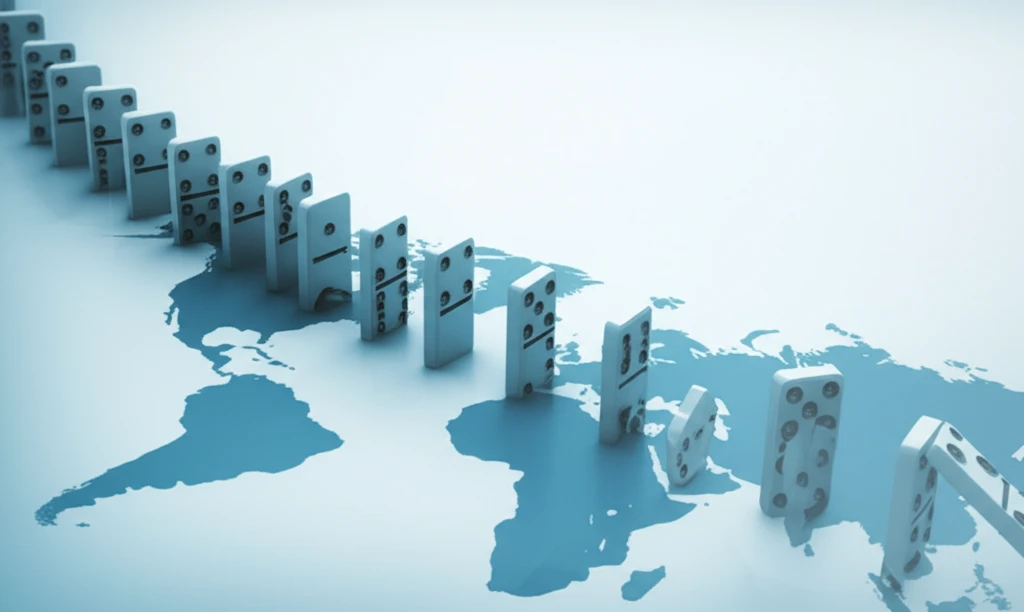
The core argument presented in the research is that tariffs, designed to protect specific sectors, set off a series of indirect consequences that extend far beyond the initial target. These consequences stem from the intricate nature of modern supply chains, where goods and services often cross borders multiple times during the production process. A tariff on imported steel, for example, might initially seem beneficial to domestic steel producers. However, it can increase the cost of manufacturing for industries that rely on steel, such as the automotive or construction sectors.
- Forward Linkages: When a tariff increases the cost of inputs for downstream industries, reducing their competitiveness.
- Backward Linkages: When a tariff reduces demand for intermediate goods, hurting upstream suppliers.
Latest Research and Reviews
Recent theoretical work on trade wars is grounded in optimal tariff theory and noncooperative Nash equilibria, though this treatment remains relatively narrow. Empirical tracking of recent U.S. tariffs shows significant effects on the economy, government revenue, and taxpayers, with specific measures like Section 301 tariffs on Brazil increasing rates from 14% to 20%. Expert analysis emphasizes the wide-reaching effects on global trade and economic growth, highlighting the need for strategies to mitigate risks and navigate economic changes.
Counter Arguments and Failures
Critics of tariff-based trade policies argue that protectionist measures often fail to achieve their stated objectives while generating unintended consequences for domestic consumers and industries. Historical episodes suggest that retaliatory cycles can escalate beyond initial strategic calculations, and the distributional effects of tariffs may concentrate benefits in narrow sectors while dispersing costs broadly across the economy.
Comparative Analysis
Different economies employ varying tariff structures and retaliatory strategies, reflecting distinct political economies and trade dependencies. Comparative assessment reveals that the effectiveness of tariff policies depends heavily on factors such as market size, supply chain integration, availability of substitute goods, and the credibility of commitment to sustained trade restrictions.
The Big Picture: Rethinking Protectionism in a Globalized World
The implications of this research are clear: tariffs are a far more complex and risky policy tool than often portrayed. In a globalized economy, where supply chains are deeply intertwined, protectionist measures can easily backfire, undermining the competitiveness of domestic industries and harming the overall economy. As policymakers grapple with the challenges of trade imbalances and unfair competition, it is crucial to consider the full range of potential consequences before imposing tariffs. A more nuanced approach, focused on fostering innovation, improving infrastructure, and investing in education, may be more effective in promoting long-term economic prosperity than resorting to protectionist measures.
Synthesis & Expert Commentary
Expert assessments converge on the complexity of evaluating tariff impacts, which operate through multiple channels including price effects, supply chain reorganization, investment uncertainty, and geopolitical realignment. The net welfare consequences depend critically on policy design, duration, and the strategic responses of trading partners, making definitive judgments inherently contingent on evolving circumstances.
Future Outlook & Next Frontiers
The global tariff war of 2025–2026 represents the most significant upheaval in international trade policy since World War II, raising consumer prices, disrupting supply chains, and reshaping trade flows across every major economy. Forces beyond the tariff war itself—including legal rulings, energy trade disruptions, and shifting supply chain strategies—are cascading through shipping costs and consumer demand worldwide. Ten key trends are shaping global trade in 2026, requiring new policies and actions to help countries navigate change. Economic research institutions are actively tracking these developments to provide forward-looking insights on trade, tariffs, and import taxes.
Broader Context & Systemic Challenges
Tariff conflicts intersect with deeper structural challenges including climate policy, technological competition, demographic shifts, and evolving global governance frameworks. These systemic forces may amplify or mitigate tariff effects in ways that transcend traditional trade policy analysis, suggesting the need for integrated policy approaches that account for multiple overlapping transitions.
The Human Element & Real-World Impact
Beyond aggregate economic indicators, tariff policies affect households through changes in purchasing power, employment patterns in trade-exposed sectors, and regional economic disparities. Small businesses and import-dependent industries often face disproportionate adjustment costs, while the political salience of trade policy reflects lived experiences that may diverge from national-level welfare calculations.