
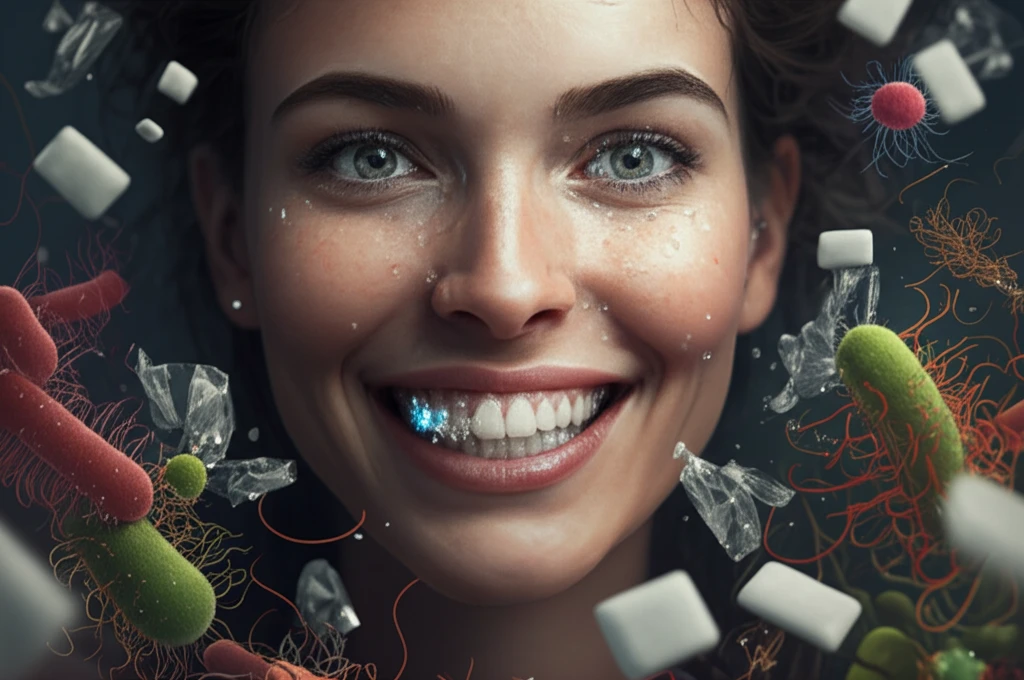
Sweet News for Your Smile: Can Xylitol Gum Really Boost Your Oral Health?

"Discover the surprising science behind xylitol-containing chewing gum and how it can help maintain a healthy mouth, even when you can't brush."
Maintaining good oral hygiene is a daily challenge. We brush, floss, and try to avoid sugary treats, but what happens when life gets in the way? Whether you're traveling, facing a busy day at work, or dealing with unexpected circumstances, sticking to your regular dental routine can be tough. That's where xylitol-containing chewing gum comes in as a surprisingly effective tool for supporting your oral health.
Xylitol, a naturally occurring sugar alcohol, is found in many products, including chewing gum. Unlike regular sugar, xylitol doesn't break down and feed harmful bacteria in your mouth. In fact, it does just the opposite! Research suggests that xylitol can actually help reduce the amount of bacteria in saliva, contributing to healthier teeth and gums.
A recent study published in the "Journal of Oral Science" investigated the short-term effects of xylitol-containing chewing gum on the oral microbiota. The results offer compelling insights into how this simple habit can impact your oral health, especially when you can't brush.
A Common Problem with a Sugar-Free Answer
Dental caries remains the most common chronic disease in both children and adults, according to research in the Journal of International Oral Health. In a study of geriatric bedridden patients, both xylitol dissolving chewable tablets and xylitol chewing gum showed potent antibacterial effects and enhanced salivary pH. The same pattern appears in everyday use: xylitol fights the harmful bacteria that can damage enamel, disrupting the conditions they need to thrive and supporting a cleaner, more balanced oral environment. Longer-term work with orthodontic patients has compared xylitol gum, dissolvable xylitol tablets, and a no-xylitol control, with plaque and saliva samples collected at baseline and at 3, 6, and subsequent months.
Chewing Protocols and Delivery Formats
The most common approach is chewing xylitol gum several times a day; in a registered trial in geriatric bedridden patients, the active comparator used Trident original gum three times per day. Popular formulations advertise the mechanism behind this routine: xylitol helps raise the pH in the mouth to neutralize the acid attacks that cause enamel erosion, and it starves cavity-causing Streptococcus mutans bacteria. Delivery format varies, with dissolving chewable tablets used alongside gum in clinical settings. The routine may extend beyond the mouth, as one review reports that chewing gum containing 0.86 g of xylitol three times a day after elective proctectomy shortened time to first flatus by about 6.9 hours and time to first stool by about 12.3 hours compared with a control.
From a Finnish Classic to a Global Staple
The world's first xylitol gum hit stores in 1975, when Finland's Jenkki Original Peppermint — the classic blue gum — launched and remains an all-time favorite in the country. Today the product carries a recommendation from the Finnish Dental Association. Over two decades later, in 1997, a flavored xylitol chewing gum was launched in Japan, marketed as good for users of all ages and offered in lime mint, blueberry, and mint versions. What began as a niche northern European product has since grown into a mainstream sugar-free choice for oral health and cavity prevention.
The Science Behind the Sweetness: How Xylitol Gum Works
The study, led by Kenji Takeuchi and colleagues, involved 70 healthy adult men who participated in a two-day training exercise. The participants were divided into two groups: one group chewed two pieces of xylitol-containing gum seven times a day, while the other group did not. Researchers collected saliva samples before and after the training period to analyze the composition of the oral microbiota.
- Reduces Bacterial Load: Xylitol helps decrease the total amount of harmful bacteria in your saliva.
- Maintains Microbial Balance: It doesn't disrupt the natural balance of your oral microbiota.
- Supports Oral Hygiene: Chewing xylitol gum can be a convenient way to maintain oral health when regular brushing isn't possible.
- Prevents Cavities: By inhibiting bacterial growth and polysaccharide production, xylitol helps prevent tooth decay.
Clinical Trials Compare Gum, Tablets, and Beyond
Recent clinical work has focused on delivery format. A randomized trial in geriatric bedridden patients compared dissolving xylitol chewable tablets with xylitol chewing gum as an alternative to toothbrushing and mouth rinsing, measuring bacterial counts in saliva. A separate double-blind, randomized controlled trial in children compared xylitol chewing gum with a combination IgY/xylitol chewable tablet on salivary Streptococcus mutans counts. Both lines of work rest on the same biochemical basis: xylitol is nonfermentable by S. mutans, which is why it is widely used in chewing gums, toothpastes, and oral rinses, and chewing gum adds mechanical cleansing and salivary stimulation on top of xylitol's antibacterial effects.
Cautious Evidence and Unanswered Questions
Not every xylitol promise is fully settled. In maternal health, experts caution that whether recommending xylitol chewing gum to pregnant women would lower preterm birth rates in other countries is unclear, noting the intervention would most plausibly help populations with high rates of periodontal disease or other preterm birth risk factors. Meanwhile, the core dental claim has held up in controlled studies, with Brazilian researchers concluding that regular use of xylitol chewing gum reduces the count of mutans streptococci. Taken together, the evidence suggests benefits are clearest where baseline risk is highest, and that broader generalization still needs more research.
Gum Versus Alternatives, and Benefits Beyond Teeth
Comparisons in the marketplace pit xylitol gum against other products, such as remineralizing gums, with consumers weighing cavity protection and enamel support when choosing between them. Beyond the oral-care aisle, xylitol gum has been studied for effects far from the teeth. Research reported by Gastroenterology Advisor found that chewing xylitol gum after cesarean delivery is an efficient way to promote earlier bowel function. In practice, xylitol gum is therefore compared both against competing oral-care products and, increasingly, against clinical interventions in entirely different fields.
A Sweet Conclusion: Integrating Xylitol Gum into Your Routine
While xylitol-containing chewing gum is not a substitute for regular brushing and flossing, it can be a valuable addition to your oral hygiene toolkit. It’s particularly useful in situations where you can’t maintain your usual routine. Chewing xylitol gum after meals or snacks can help reduce bacterial buildup and keep your mouth feeling fresh. Consider adding this simple habit to your daily life and enjoy the sweet benefits of a healthier smile!
The Bottom Line on Xylitol Gum
Across the available evidence, xylitol gum appears to offer genuine but modest oral health benefits, most consistently a reduction in cavity-causing bacteria and a more favorable environment in the mouth. It is easy to incorporate into a daily routine and is generally well tolerated, yet it is best understood as one component of a broader oral care habit rather than a replacement for brushing, flossing, and professional dental care. Much of the strongest data comes from specific populations, such as geriatric, orthodontic, or pregnant patients, so results may vary from person to person. As with any health product, consistency of use and individual circumstances matter at least as much as the ingredient itself.
Medicated Gums and a Growing Market
The future outlook for the xylitol chewing gum market is considered highly promising, with projections of sustained growth driven by rising consumer health awareness and regulatory support for sugar substitutes. Technology is also expanding what gum can do: researchers using robot jaws to simulate chewing have explored medicated chewing gum as a future delivery system. In those experiments, the greatest release of xylitol occurred during the first five minutes of chewing, and after about 20 minutes only a low amount of xylitol remained in the gum bolus, regardless of the chewing method used. That finding suggests formulation and release timing will be central to the next generation of functional gums.
Socioeconomic and Public-Health Dimensions
Xylitol use is not evenly distributed, and researchers have examined the socioeconomic factors associated with who actually uses it. Among young Finns, xylitol-based chewing gum has long been one of the primary ways the compound is consumed, and the systemic use of polyol-based chewing gums reduces caries rates in young individuals. Making such products available and affordable is therefore as much a public-health question as a dental one, since population-wide benefits depend on broad, consistent use.
From Sugar Substitute to a Tool for Better Births
Xylitol is a naturally occurring sugar alcohol often used as a sweetener, and it has been shown to reduce tooth decay and gum disease — and even reverse tooth decay over time, according to the Ontario Dental Hygienists' Association. Its real-world reach now extends to pregnancy: one large study followed nearly 9,670 participants who were available for contact, with participants given xylitol chewing gum and instructed to chew it for 10 minutes once a day, ideally twice, throughout pregnancy, with follow-up over up to six years. The findings, covered by outlets including Newsweek and EurekAlert!, point to a modest reduction in preterm births among the gum-chewing group. For expectant mothers, a simple daily habit may carry meaningful consequences.