
Spider Bite SOS: How to Spot Loxoscelism Before It Spots You

"A Valencia case study reveals the sneaky symptoms and what to do when a harmless itch turns sinister."
That tickle on your skin could be more than just a bug bite. In some parts of the world, a seemingly innocent spider bite can lead to a condition known as loxoscelism, a potentially serious reaction to the venom of recluse spiders. While not every spider bite is cause for alarm, knowing the signs of loxoscelism is crucial for timely intervention and minimizing long-term damage.
Loxoscelism occurs when a recluse spider, primarily of the Loxosceles genus, injects venom into the skin. These spiders, often found in dark, undisturbed places, aren't typically aggressive but will bite if threatened. The venom contains toxins that can cause a range of symptoms, from localized skin damage to systemic complications.
This article breaks down a case study from Valencia, Spain, detailing how a seemingly mild itch turned into a confirmed case of loxoscelism. Use this to get familiar with recognizing the warning signs, understand the diagnostic process, and know the available treatment options for this condition.
Global Fatality Rates
Spider bite fatalities are exceptionally rare globally, with confirmed deaths approaching zero each year. In the United States, data suggests an average of fewer than seven deaths annually are attributed to spider bites, though this figure is often debated by experts. This low mortality rate indicates that fears of spider bites are largely disproportionate to the actual risk posed. Understanding these statistics helps contextualize the medical significance of spider envenomation.
Clinical Diagnosis and Treatment
Most spider bites result in only minor local irritation, yet medical practitioners must remain vigilant as certain species can cause significant morbidity and rarely mortality. A major challenge is accurate diagnosis; patients often confuse spider bites with other insect bites, and in nonendemic areas, a brown spider bite should not be presumed without identification. Treatment approaches differ by spider type: pressure bandage with immobilisation is recommended for funnel-web spider bites, while redback spider bites are managed symptomatically, as pressure bandages can exacerbate pain. For all other spider bites, symptomatic treatment suffices, and simple preventive measures can minimize exposure risk.
Evolution and Diagnostic History
Spiders have existed for at least 380 million years, evolving from aquatic chelicerate ancestors and developing book lungs as a key adaptation. Despite this long history, accurate diagnosis of spider bites remains a challenge; a 2016 review found that 78% of 134 published medical case studies of supposed spider bites did not meet verification criteria. This highlights the historical difficulty in confirming spider bites clinically. Foundational research continues to refine our understanding of spider biology and envenomation.
The Case from Valencia: A Spider Bite Unmasked
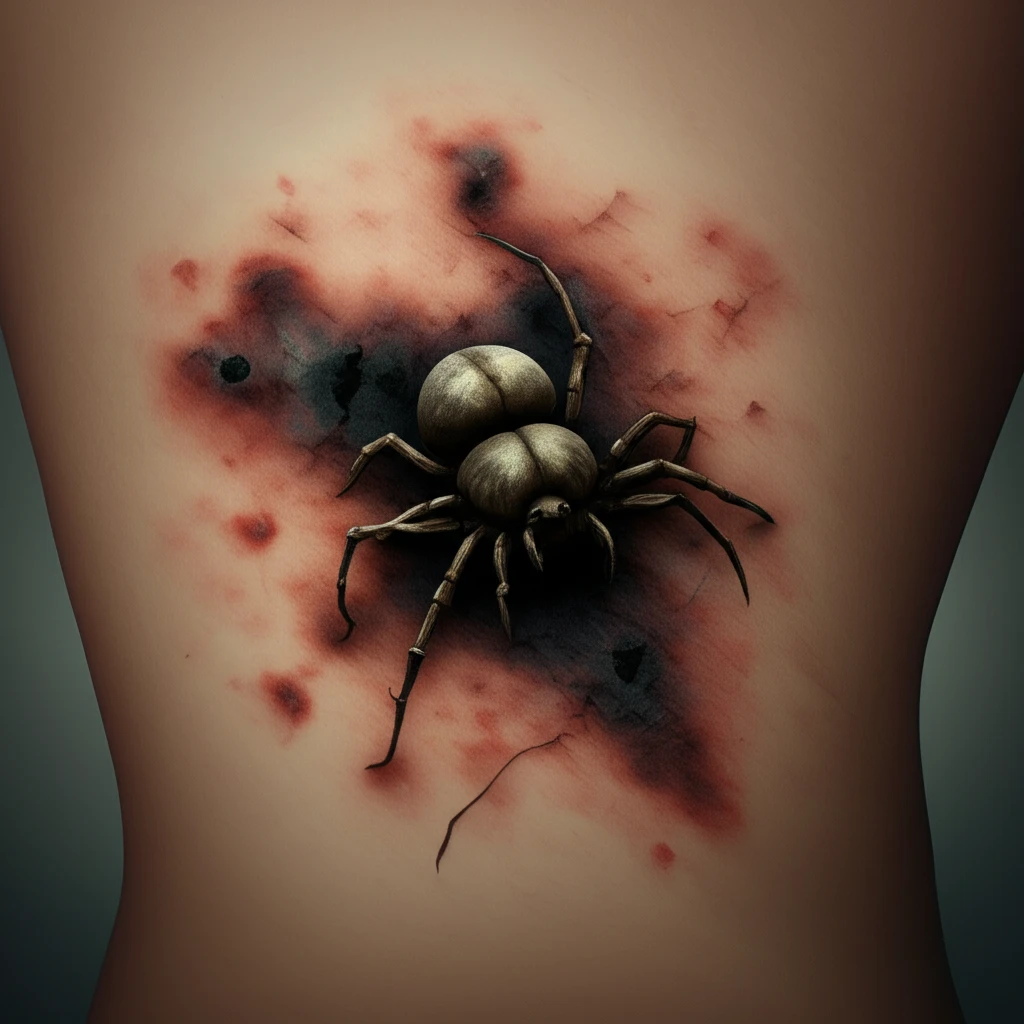
In Campolivar, Valencia, a 25-year-old woman's morning routine took a turn when she noticed an itch on her right thigh. Initially dismissed, the discomfort quickly escalated into a painful, indurated area marked by localized erythema (redness) and ecchymosis (bruising). Thinking it was a simple skin infection, she consulted an orthopedic surgeon. She was misdiagnosed and received oral cefuroxime, omeprazole, naproxen, and a topical betamethasone/gentamycin cream. Nothing worked.
- Increasing pain and skin darkening
- Occasional headaches and nausea (without vomiting)
- A central hemorrhagic blister surrounded by a pale halo and extensive erythema
- Failure to respond to antibiotics
Advances in Spider Bite Science
Recent research emphasizes that effective intervention against venomous spider bites requires integration across pharmaceutical development, community outreach, and education. A five-year study on recluse spiders in Florida has helped bust myths about their behavior and bite propensity. Advances in understanding loxoscelism include new therapeutic strategies based on its pathophysiology, along with comprehensive reviews of wound care options such as alginate dressings. These studies collectively improve diagnostic accuracy and treatment approaches.
Severe Outcomes and Risk Realities
While most spider bites are mild, documented cases demonstrate that even common spiders can pose serious risks; a 16-year-old athlete developed kidney failure and speech loss following a seemingly minor bite. Certain spider bites, such as those from the brown recluse, may carry toxins that lead to serious complications, primarily driven by the body's immune response. It is crucial to distinguish between myths and medical science when evaluating long-term consequences of spider bites. Investigating documented cases and the latest research helps clarify the actual risks posed by these injuries.
Spider Bites vs. Other Injuries
Distinguishing spider bites from other insect bites requires attention to specific symptoms and appearance. Spider bites often present with localized pain, swelling, and redness, whereas mosquito bites typically cause itching and minimal pain. Unlike staph infections, which are bacterial and require antibiotics, spider bites are venomous and usually managed with basic first aid. Warning signs that necessitate medical attention include severe pain, systemic symptoms, or worsening conditions.
Preventative Measures and What to Do Next
Spider bites can be scary, but staying informed is key. If you suspect a recluse spider bite, seek medical attention immediately. Early diagnosis and proper wound care can minimize the severity of loxoscelism and promote healing.
Media Influence and Clinical Trends
An expert-curated global database analyzing online newspaper coverage of human-spider encounters from 2010 to 2020 highlights the media's role in shaping public perception. In England, hospital admissions for spider bites are rising, with experts attributing the increase to noble false widow spiders. This trend underscores the importance of accurate reporting and public education. Combining data from media and clinical sources provides a comprehensive view of spider bite impacts.
Emerging Research Directions
Future research will likely focus on advancing antivenom development and improving diagnostic tools for spider bites. Integrating genomic and proteomic approaches may yield new insights into venom composition and therapeutic targets. Public health initiatives could enhance prevention and education, reducing the burden of spider envenomation. Collaborative efforts across disciplines will be essential to address remaining challenges.
Systemic and Long-Term Consequences
Spider bites encompass a broad spectrum of severity, from minor reactions to severe systemic symptoms and full-thickness skin necrosis requiring hospitalization. Long-term consequences can include chronic scarring, ulcers, persistent skin sensitivity, and neuropathic pain. Loxoscelism, a venom-induced systemic syndrome, may not manifest until 24 to 72 hours post-bite and is more prevalent in children and adolescents. These systemic challenges highlight the need for timely diagnosis and comprehensive management.
Case Studies and Complications
Real-world cases illustrate the severe impact spider bites can have beyond the immediate injury. A case study of two university students revealed that spider bites can lead to secondary infections like MRSA, with varying outcomes despite similar initial conditions. In rare instances, spider bites can facilitate opportunistic infections such as cutaneous mucormycosis, especially in immunocompromised individuals. Advanced wound care techniques, including decellularized dermal allografts, are being utilized to manage complex wounds resulting from severe bites.