
Smart Sensors, Smarter Savings: How New Tech Can Cut Your Energy Bill

"Discover how innovative energy-efficient networks and strategic clustering protocols can revolutionize your home energy management and save you money."
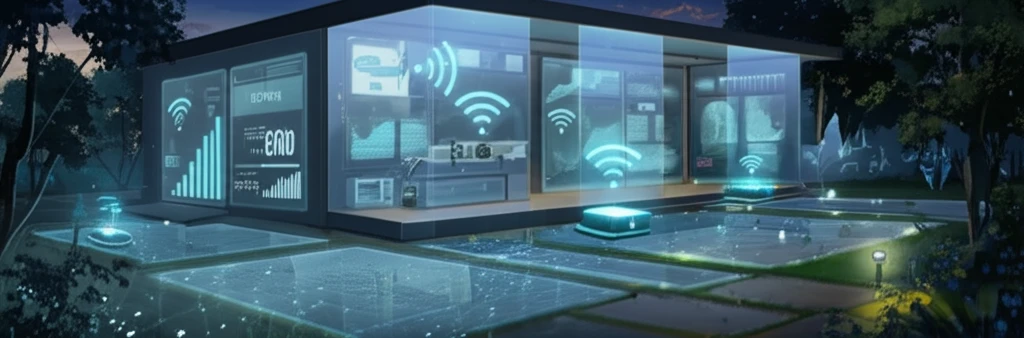
Imagine a world where your home anticipates your energy needs and adjusts consumption automatically, saving you money and reducing your carbon footprint. This isn't science fiction; it's the promise of wireless sensor networks (WSNs) combined with advanced clustering techniques.
WSNs, which consist of numerous interconnected sensor nodes, are increasingly used to monitor and manage energy in homes and buildings. These networks collect data on temperature, lighting, and appliance usage, providing crucial insights that can lead to significant energy savings. However, the efficiency of these networks depends on how well they are organized and managed.
One of the most effective strategies for improving WSN efficiency is clustering. By dividing a network into smaller, more manageable clusters, energy consumption can be optimized, and the lifespan of the network extended. This article explores how cutting-edge clustering protocols are revolutionizing energy management and how you can benefit from these advancements in your own home.
Energy Use in Industry
Energy is a fundamental concept in science and engineering, with its study spanning mechanical engineering and thermal sciences. The U.S. Energy Information Administration tracks energy use across various sectors, including industry, to understand consumption patterns. Research published in academic journals focuses on integrated energy systems, energy planning, and energy management as key areas of study. Understanding these patterns is essential for identifying opportunities to reduce consumption through technological innovation.
Conventional Energy Management
Traditional approaches to managing energy consumption in homes and businesses have relied on manual monitoring and periodic assessments. While effective to a degree, these methods often lack the real-time visibility needed to identify inefficiencies as they occur. Current best practices are generally well-established, though their specific limitations vary depending on the context of implementation. As technology continues to evolve, new tools are emerging that may address some of these constraints.
Defining Energy
Energy is defined as the ability to do work, a concept that is fundamental to both science and engineering. Examples of energy include electrical, nuclear, and chemical forms, each playing distinct roles in various systems. This foundational understanding of energy has been key to advances in science and engineering over time. The concept continues to underpin modern research into more efficient energy use and technological innovation.
How Does Clustering Make Wireless Sensor Networks More Efficient?
Clustering involves organizing sensor nodes into groups, each managed by a cluster head (CH). The CH is responsible for collecting data from the member nodes within its cluster and transmitting this data to a central base station (BS). This hierarchical approach offers several key advantages:
- Improved Network Lifetime: Distributing the workload among different CHs and rotating the CH role helps to balance energy consumption across the network. This prevents any single node from being overworked and draining its battery quickly, extending the overall lifespan of the WSN.
- Enhanced Scalability: Clustering makes it easier to manage large networks with many nodes. Instead of dealing with a flat, unstructured network, the hierarchical structure allows for more efficient data aggregation and transmission.
- Better Data Aggregation: CHs can aggregate data from their member nodes before transmitting it to the BS. This reduces the amount of redundant data being transmitted, further saving energy and bandwidth.
Emerging Trends in Energy Tech
Research into energy efficiency continues to evolve, though specific findings in this area are still being explored. Various approaches are being studied to better understand how technology can optimize energy consumption. As the field develops, new insights are expected to inform practical applications for reducing energy use. The pace of innovation suggests that meaningful advances may be on the horizon, though concrete results are still pending.
Challenges and Limitations
While technology offers promising solutions for energy savings, there are arguments and limitations that must be considered. The effectiveness of new tools depends on factors such as implementation, user adoption, and system design. Some approaches may not deliver expected results in all contexts, highlighting the need for careful evaluation. Understanding these challenges is important for setting realistic expectations about energy-saving technologies.
Evaluating Approaches
Different methods for managing energy consumption vary in their effectiveness and practicality. Some approaches offer more immediate results, while others may provide longer-term benefits. The best choice depends on specific circumstances, including the type of building, available resources, and user preferences. Comparing these options helps identify which solutions are most suitable for different situations.
The Future of Energy-Efficient Homes
The advancements in WSNs and clustering protocols represent a significant step toward creating more energy-efficient homes and buildings. By strategically organizing sensor networks and optimizing data transmission, these technologies can dramatically reduce energy consumption and lower utility bills. As the technology continues to evolve, we can expect even more sophisticated and effective solutions for managing energy in our daily lives, leading to a more sustainable and cost-effective future.
Integrating Insights
Bringing together various perspectives on energy management reveals both opportunities and complexities. Experts emphasize the importance of considering multiple factors when evaluating new technologies. While progress is being made, a balanced approach that accounts for different viewpoints is often recommended. This synthesis can help guide more informed decisions about energy-saving strategies.
Looking Ahead
The future of energy management is likely to be shaped by ongoing technological developments. As new tools and methods emerge, they may offer improved ways to reduce consumption and increase efficiency. While specific predictions are difficult, the general trend suggests continued innovation in this area. Staying informed about these advances will be important for anyone looking to optimize their energy use.
Wider Considerations
Energy management exists within a broader context that includes economic, environmental, and social factors. Systemic challenges such as infrastructure limitations and policy considerations can influence how effectively new technologies are adopted. Addressing these issues requires a holistic approach that goes beyond individual solutions. Understanding this wider context is essential for developing sustainable energy strategies.
Practical Applications
Ultimately, the success of any energy-saving technology depends on how well it integrates into daily life. User behavior, convenience, and accessibility play significant roles in determining real-world effectiveness. Solutions that are easy to use and understand are more likely to be adopted and sustained over time. Considering the human element is therefore critical when evaluating the potential impact of new energy technologies.