
Smart Homes, Smarter Communities: How Grouping Buildings Can Save Energy and Money

"Discover the innovative strategies for optimizing energy use in residential areas, turning neighborhoods into eco-friendly powerhouses and reducing your bills."
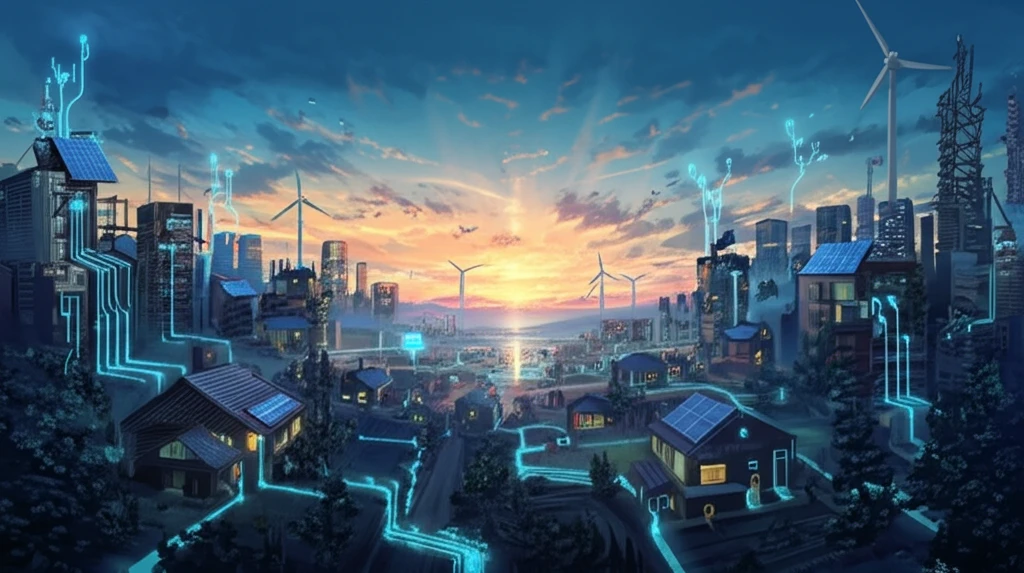
Imagine a neighborhood where every home produces as much energy as it uses, a concept known as nearly zero energy buildings (nZEBs). While individual nZEBs are a great start, the real magic happens when these homes work together. By forming communities that share renewable energy, these buildings can achieve even greater energy efficiency and cost savings.
But how do you decide which buildings should team up? Grouping similar buildings might seem logical, but the most significant benefits come from pairing buildings with diverse energy needs. For example, an office building that uses most of its energy during the day could share surplus solar power with residential homes that use more energy in the evenings.
This is where a smart grouping strategy comes in. A new approach uses advanced algorithms to identify buildings with complementary energy profiles, creating communities that maximize energy sharing and minimize waste. Let’s dive into how this works and how it can transform our neighborhoods into sustainable energy hubs.
Energy Efficiency Investment and Metrics
The IEA's Energy Efficient Communities Program will deliver $40 million in grants to help businesses and community groups lower their energy bills and reduce emissions. While energy consumption volume reflects the scale of energy use, it does not directly measure energy efficiency, economic productivity, or emissions intensity. Research on energy efficient communities emphasizes that models are for insights rather than precise numbers, and discussions about methods and data acquisition must be continuous.
Methods and Consumer Acceptance
Research indicates that 31% of homebuyers believe the use of latest materials and methods are important reasons for choosing a new home. Community programs like Auckland Council's Energy Efficient Communities project offer iSmart hot water controllers and grants for insulation and other energy efficient interventions. The Annex 22 report emphasizes that mental standards can be set for energy systems and allows implementation of cost-benefit analysis in community planning.
Zero Energy Buildings and District Design
Zero energy buildings produce enough renewable energy to offset or even exceed the energy they consume, marking a significant milestone in sustainable construction. Heating and cooling are the biggest energy uses in buildings, and district design strategies can address these loads more efficiently than individual building solutions. Case studies and guidelines for energy efficient communities provide a comprehensive guidebook on successful urban energy planning for practitioners.
The Science of Smart Grouping
The key to effective energy sharing lies in understanding the energy characteristics of each building. This involves analyzing their power mismatch curves (PMCs), which show the difference between energy production and consumption over time. Buildings with similar PMCs don't have much to offer each other, but those with diverse PMCs can create a balanced energy ecosystem.
- Clustering PMCs: Buildings are grouped based on their energy usage patterns using algorithms like K-means clustering.
- Finding Optimal Groupings: The algorithm explores various combinations of building groups to find the arrangement that maximizes energy sharing.
- Validating Performance: The chosen grouping is compared against scenarios where buildings aren't grouped or are randomly grouped to prove its effectiveness.
Sustainable Communities and Planning Methodologies
Research explores how sustainable living and energy-efficient communities use renewable energy, green building materials, and smart design to benefit residents. In many EU countries, multi-family dwellings represent the dominant residential solution, making them a key focus for energy efficiency improvements. A System Dynamics approach has been proposed as an effective and comprehensive methodology for sustainable Community Energy Planning.
Limitations of Current Solutions
Marine energy projects currently generate an estimated 500 megawatts of power, which is less than one percent of all renewables, though the potential is far greater. The cost of effectively solving pollution problems will be high and a great deal of energy will be required. The technical community should implement solutions now while low-cost energy remains available and the economy is relatively strong.
Comparing Energy Options and Housing Alternatives
Comparison platforms like Versus.com and Energy Made Easy allow consumers to compare energy options side-by-side with detailed specifications and filters. Tiny homes offer financial efficiencies that enable many homeowners to adopt alternative incomes such as remote work, freelancing, or gig economy jobs. These financial benefits demonstrate how different housing approaches can support sustainable lifestyles.
The Future is Collaborative
As we move towards a more sustainable future, collaborative energy solutions like smart building communities will become increasingly important. By using data-driven insights to group buildings effectively, we can unlock significant energy savings, reduce our reliance on the grid, and create greener, more resilient neighborhoods. Whether you're a homeowner, a building manager, or a city planner, now is the time to explore how smart grouping can transform your community.
Expert Perspectives on Energy Efficiency
Amory Lovins, nicknamed the "Einstein of energy efficiency", has been one of the world's leading advocates and innovators of energy conservation for 50 years. He serves as an adjunct professor of civil and environmental engineering at Stanford University. IESVE software enables design and operation of high-performing, energy-efficient communities through renewable optimization and local energy network analysis.
Market Trends and Technological Advancements
The U.S. Energy Information Administration expects continued growth in renewable energy capacity additions to sustain trends through 2027. Energy efficient homes may be more costly initially, but people are willing to pay the difference, with green build homes selling for almost $34,000 more than conventional homes. Technological advancements such as smart glass and self-tinting glass are revolutionizing the energy-efficient window glass market with innovative solutions.
Energy Poverty and Community Resilience
Energy efficiency in buildings is an important tool for reducing energy poverty, particularly in Armenia where much of the Soviet-era housing stock is energy inefficient, leading to high household energy use and utility costs. Advanced energy systems can reduce dependence on the national grid while supporting local use of renewables to cut carbon and boost self-sufficiency. Being a responsible financial provider means understanding the broader challenges communities face, including financial exclusion and the impact of climate change.
Practical Implementations and Case Studies
Case studies demonstrate the transformative power of energy efficiency measures, such as a mid-century home in Oregon retrofitted with sandwich panels featuring glass wool cores. Insulated roof panels are essential for energy-efficient homes, providing both comfort and efficiency gains in real-world applications. Energy efficiency programs in Alberta are making homes more energy efficient through municipal initiatives and community engagement.