
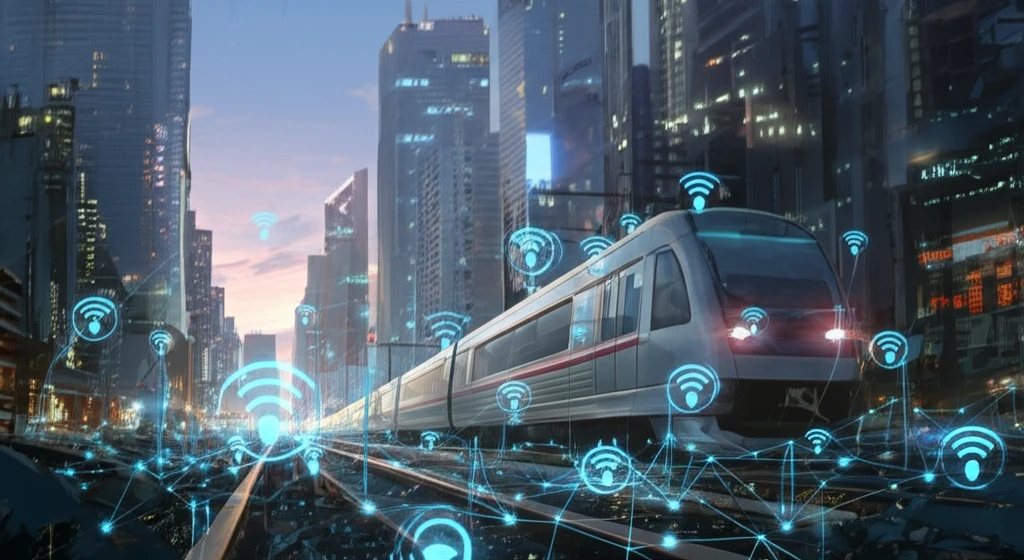
Safe Travels: How Active Safety Tech is Revolutionizing Rail

"Explore the cutting-edge technologies that are making train travel safer than ever before, from real-time monitoring to AI-driven risk assessment."
Train travel evokes a sense of nostalgia. Yet, behind the scenes, the rail industry is undergoing a high-tech revolution focused on one thing: safety. Active safety systems, which use real-time data and advanced analytics to prevent accidents, are transforming rail transportation, making it safer and more reliable than ever before. Forget the old image of trains relying solely on traditional safety measures; the future of rail is intelligent, responsive, and actively working to protect passengers and cargo.
Active safety assurance plays a pivotal role in complex large-scale engineering systems, and is a way to keep systems working properly. It's all about the system's ability to perceive its state and make controlled adjustments to reduce risk and prevent accidents. Essentially, it involves modeling, analyzing, and controlling the complex system activities. This proactive approach is increasingly essential not just in transportation, but also in power systems, the Internet, military operations, nuclear industries, and aerospace.
Let's dive into the key concepts driving this revolution and what they mean for the future of safe train travel.
Rail Safety in Global Context
In 2021, there were 1.35 million road traffic deaths globally, with public transportation accounting for 5% of these fatalities, highlighting the broader safety landscape rail operates within. Canadian rail safety data has come under scrutiny following several recent derailments, prompting parliamentary reviews regarding the transportation of dangerous goods. Federal investigations into grade crossing accidents have analyzed incidents resulting in injuries and fatalities, underscoring persistent safety challenges. These statistics frame the ongoing need for enhanced safety measures across all transportation modes.
Traditional Rail Safety Constraints
Rail transport faces inherent limitations including limited route availability, border customs delays, and significant infrastructure dependency that affect its operational flexibility. Building and maintaining railway lines requires high initial investment, representing a substantial barrier to network expansion. Approximately 16 million Americans live near oil-by-rail shipping lines, creating concentrated risk zones that traditional safety approaches must address. These constraints highlight the need for innovative solutions that work within rail's established operational framework while addressing its systemic vulnerabilities.
From Trackways to Modern Systems
The history of railroads spans from ancient trackways to contemporary hyperloop concepts, representing centuries of technological evolution. Athens' urban rail transport system showcases milestones in developing track-based transportation from early railways to modern networks. France's railway heritage includes the legendary Orient Express and the development of high-speed TGV services that transformed international travel. These historical developments established foundational principles that continue to influence modern rail safety and innovation approaches.
Decoding Active Safety: Concepts and Tech
The cornerstone of active safety in rail is the 'safety region' concept. Think of it as a virtual boundary that defines the safe and stable operating conditions for a train. This region is quantified using data related to the train's state – its speed, location, the condition of its equipment, and environmental factors. By monitoring these variables, the system can determine if the train is operating within acceptable limits. If a variable veers outside the safety region, the system triggers alerts and initiates corrective actions.
- Real-time monitoring of equipment health.
- Early warning systems that detect potential hazards before they escalate.
- Risk assessments that consider a multitude of factors impacting safety.
- Automated control measures to mitigate risks and ensure smooth operation.
Sensor Technology and Safety Management
Calgary's TRIG has developed the XLOAD™ electronic sensor that uses radar technology to enhance safety in rail transportation for workers and the environment. Transportation Safety Board recommendations emphasize reviewing emergency plan provisions to ensure dangerous goods transportation aligns with public risk. The Lac-Mégantic accident highlighted critical failures in transportation companies' safety risk management oversight. These developments represent a shift toward proactive monitoring systems and improved regulatory frameworks for rail safety.
Cascading Failures in Safety Systems
Safety-critical systems are often analyzed using the Swiss cheese model to show how multiple barrier failures can escalate to major accidents. Rail temperature monitoring failures can lead to rail breaks, buckles, and kinks during extreme temperature stress events. The Hatfield crash investigation revealed that Railtrack failed to effectively manage contractor work, contributing to the derailment that killed four people. Greece's Tempi train disaster prompted 17 urgent safety recommendations to strengthen supervisory capacity and overall railway system performance assessment.
Global Rail Network Comparisons
Singapore's Land Transport Authority manages multiple rail lines including the Circle Line, Downtown Line, and Thomson-East Coast Line, demonstrating integrated urban rail networks. The Dumbarton Rail Corridor proposal illustrates debates over transforming infrastructure for passenger rail versus other transportation uses. Unique rail transport solutions emerge globally, from Philippine railway trolleys to modified trucks traveling on rail tracks. These comparisons reveal how different regions adapt rail technology to local needs while addressing common safety and efficiency challenges.
The Future is Safe
Active safety systems represent a paradigm shift in rail transportation. By leveraging the power of data, AI, and advanced monitoring techniques, these systems are creating a safer, more efficient, and reliable rail network. As technology continues to evolve, we can expect even more sophisticated safety measures to be implemented, further minimizing risks and ensuring passenger peace of mind. These advanced technologies provide passengers the peace of mind that they will have safe travels.
Expert Approaches to Transportation Safety
Food transportation safety research employs expert opinion elicitation as a formal process to characterize risks across truck, rail, air, water, and intermodal transportation. Railway engineering expertise encompasses Condition-Based Maintenance and RAMS (Reliability, Availability, Maintainability, and Safety) standards for signal, overhead equipment, and rail vehicle performance. These methodological approaches combine subjective expert knowledge with systematic analysis to address complex safety challenges. The integration of expert judgment with empirical data represents a critical component of comprehensive transportation safety management.
Technological Innovation in Rail Systems
The North American rolling stock suspension market is experiencing transformation driven by technological innovations, increased demand for efficient rail transportation, and focus on safety and passenger comfort. The National Transportation Safety Board makes recommendations aimed at preventing future accidents based on investigative findings and special studies. Research into aerodynamic and aeroacoustic problems addresses environmental, operations, and public transportation challenges in rail systems. These developments point toward increasingly sophisticated safety and efficiency technologies in future rail systems.
Infrastructure and Climate Pressures
A freight train derailment near Paris, Ontario has drawn attention to Canada's rail infrastructure condition and challenges of operating long, heavy trains on busy main lines. Germany's recent heatwaves with temperatures over 35°C have exposed fragility in railway climate systems, threatening both operational safety and punctuality. Alstom positions itself as creating resilient, future-ready transport solutions with innovation focus on green and smart solutions. Stadler provides innovative solutions for rail vehicles, signaling technology, and services for sustainable and reliable mobility.
Operational Realities and Data Challenges
Railway safety protection of employees, passengers, goods, and infrastructure users constitutes a crucial criterion for service quality. Union Pacific transports over 400,000 rail cars originating or arriving in Oregon, illustrating the scale of freight operations affecting communities. The 'Amazonization' of logistics has created expectations for real-time tracking that now apply to rail transportation, highlighting visibility gaps. Rail operations in extreme environments like deserts require specialized approaches to manage challenges such as sand accumulation on tracks.