
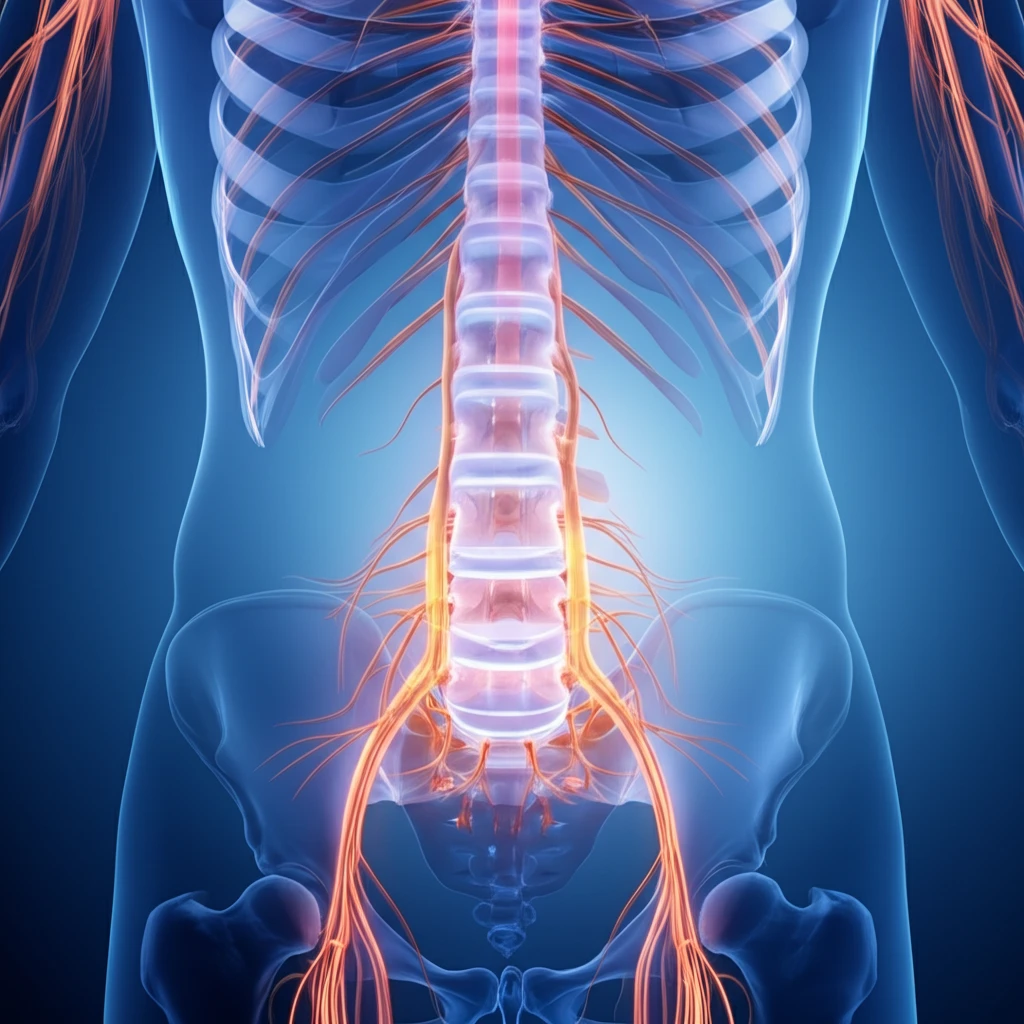
Sacral Nerve Stimulation: A New Hope for Pelvic Pain Relief?

"Exploring the anterograde sacral hiatus approach to alleviate chronic pelvic pain when traditional methods fall short."
Chronic pain can be a relentless adversary, significantly diminishing the quality of life for millions. Among the various types of chronic pain, pelvic pain stands out due to its complexity and the challenges it presents in diagnosis and treatment. Spinal cord stimulation (SCS) has emerged as a valuable tool in managing various chronic pain conditions since 1967, offering hope when other treatments prove ineffective.
Sacral nerve stimulation, a specialized form of SCS, has been utilized to address conditions like peroneal pain and irritable bowel syndrome through a retrograde approach. However, anatomical obstacles or prior surgeries can sometimes impede the successful advancement of leads using this method. In such cases, an alternative approach becomes necessary to provide effective pain relief.
This article delves into a promising technique: anterograde sacral nerve stimulation through the sacral hiatus. This method offers a new pathway to access the sacral nerves, potentially providing relief for individuals with intractable chronic pelvic pain when traditional approaches are not feasible. We will explore the procedure, its benefits, and its role in the evolving landscape of pain management.
A Minimally Invasive Option Gaining Ground
Sacral nerve stimulation involves placing a neurostimulator that sends mild electrical pulses to the sacral nerve to control bowel, rectum and bladder function. The procedure is considered minimally invasive: the basic evaluation placement requires no skin incisions, while the full implant involves only a small skin incision where the lead is placed. It can be performed as an outpatient procedure.
A Last Resort After Conservative Care
Sacral nerve stimulation is only considered for patients meeting specific criteria, and only after traditional treatment methods have been explored. Traditionally, pelvic pain treatments have consisted of pain management pills that come with terrible side effects. The technique itself is invasive, requiring sedation or general anaesthesia for implantation of a device following trial stimulation.
From Trial Stimulation to Full Implant
The current approach to sacral nerve stimulation is built around a two-stage process of trial stimulation followed by full device implantation. The basic evaluation placement requires no skin incisions, whereas the full implant has a small skin incision where the lead is placed. The device can be placed under the skin of the lower back to consistently exercise the muscles of the pelvic floor, bowel and bladder, and is considered a reversible surgery.
The Anterograde Sacral Hiatus Approach: A Step-by-Step Guide
The anterograde sacral nerve stimulation technique involves accessing the sacral nerves through the sacral hiatus, an opening at the lower end of the sacrum. This approach is performed with the patient in a prone position, allowing the physician to visualize the area using fluoroscopy, a type of real-time X-ray.
- Needle Insertion: A Tuohy needle is carefully inserted into the sacral hiatus under fluoroscopic guidance.
- Lead Placement: Percutaneous leads are then passed through the needle and advanced into the posterior sacral epidural space. The leads are positioned to target specific sacral nerve roots responsible for the patient's pain.
- Lead Anchoring: To secure the leads and prevent migration, a small incision is made, and the leads are anchored to the surrounding tissues.
- IPG Implantation: A rechargeable implantable pulse generator (IPG) is placed in a subcutaneous pocket, typically in the upper buttock area. The leads are then connected to the IPG, which delivers controlled electrical pulses to the sacral nerves.
A Promising Technique in Official Guidelines
The EAU Guidelines on Chronic Pelvic Pain describe sacral nerve stimulation as a promising option for management. The guidelines note that it is an invasive technique requiring sedation or general anaesthesia for implantation of a device following trial stimulation. Official guidelines point to SNS as one of the emerging management approaches under review.
Invasive Nature and Safety Considerations
Sacral nerve stimulation is an invasive technique that requires sedation or general anaesthesia for implantation. While the implant is considered a reversible surgery, patients must weigh the trade-offs, including recovery and safety considerations such as MRI compatibility. Understanding MRI safety with sacral nerve stimulators, including tips and precautions for patients who may need scans, is an important part of patient education.
Moving Beyond Pain Pills
Finding relief from pelvic pain can be a daunting journey with limited treatment options, and traditionally pelvic pain treatments have consisted of pain management pills with terrible side effects. Sacral nerve stimulation offers a device-based alternative that works by sending mild electrical pulses to the sacral nerve to control bowel, rectum and bladder function. Unlike routine medication-based care, this is an outpatient procedure that delivers a direct electrical intervention on the sacral nerve.
A Promising Alternative for Intractable Pelvic Pain
While the anterograde sacral nerve stimulation through the sacral hiatus presents some challenges, it offers a valuable alternative for patients with intractable chronic pelvic pain when traditional methods are not viable. Further research and refinement of this technique may expand its application and improve outcomes for individuals seeking relief from debilitating pelvic pain.
Expert Consensus: Cautious Promise
The EAU Guidelines on Chronic Pelvic Pain regard sacral nerve stimulation as a promising management technique, but with important caveats. SNS is only considered for patients meeting specific criteria, and only after traditional treatment methods have been explored. The requirement for trial stimulation before implantation reflects a careful, stepwise approach to care.
Refining Safety and Accessibility
As the technique evolves, attention is turning to patient safety, including MRI compatibility for those with implanted devices. Education about the safe use of sacral nerve stimulators during MRI scans, with tips and precautions, is an emerging area of patient support. The minimally invasive nature of placement, from a no-skin-incision evaluation to a small implant incision, suggests continued refinements in procedure design.
Nerves, Conditions, and Limited Options
Some diseases and conditions, including diabetes, multiple sclerosis, Parkinson's disease, Alzheimer's disease, and sleep apnea, can affect the nerves that communicate with the bladder. These nerve-related conditions help explain why electrical interventions on the sacral nerve are considered in the first place. Finding relief from pelvic pain remains a daunting journey with limited treatment options beyond traditional pain management pills.
Hope for Pediatric Patients
Sacral nerve stimulation has been reported as giving pediatric patients hope, though it is only considered for those meeting specific criteria after traditional treatments have been explored. Pelvic floor dysfunction is much more than incontinence, affecting patients in multiple ways. For patients who have exhausted conservative care, an implant placed under the skin of the lower back offers a reversible surgical route to more consistent exercise of the pelvic floor, bowel and bladder muscles.