
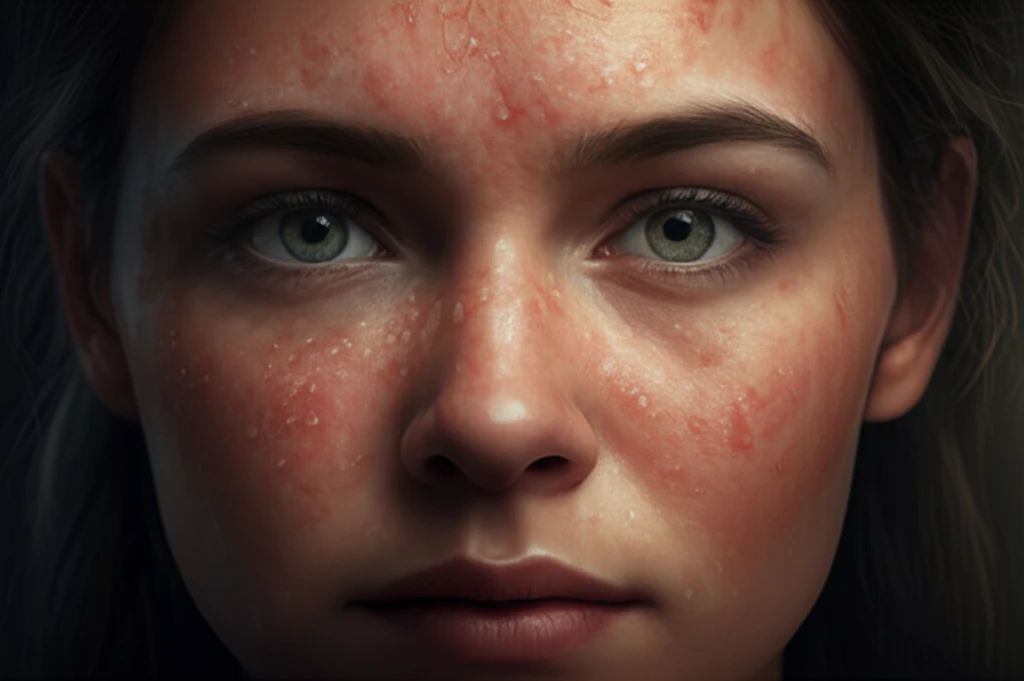
Rosacea and Psoriasis Breakthroughs: New Treatments Offer Hope

"Innovative approaches in managing rosacea and psoriasis are transforming patient care, providing clearer skin and improved quality of life."
Living with rosacea or psoriasis can feel like a constant battle, but recent advancements are changing the landscape of treatment and care. This article explores the newest approaches in managing these skin conditions, from patient-led support campaigns to innovative systemic therapies.
For those with rosacea, understanding the condition is the first step toward effective management. 'Aktiv gegen Rosacea,' a campaign active for eight years, focuses on educating patients about their skin health, encouraging them to seek regular consultations with dermatologists. Founded in 2010 by Galderma Laboratorium, in collaboration with the Berufsverband der Deutschen Dermatologen and Deutsche Rosazea Hilfe, this initiative offers a wealth of information, practical advice, and support through its website and app.
Meanwhile, significant strides are also being made in the treatment of psoriasis. New, targeted medications are offering hope for individuals with moderate to severe forms of the condition, promising rapid and complete reduction of skin symptoms. Let's delve into these breakthroughs and what they mean for those affected.
The Scale of Rosacea and Psoriasis
A systematic review and meta-analysis published in 2025 documents a global rosacea prevalence of 3.22%, describing the condition as common in many countries and comparable in frequency to other chronic inflammatory dermatoses such as psoriasis and atopic dermatitis. The same review notes that this figure is lower than the 5.46% prevalence previously reported by Gether and colleagues, illustrating how different study designs and inclusion criteria can shift estimates. While rosacea is characterized by facial flushing, lasting redness, acne-like breakouts, and visible blood vessels, psoriasis is reported by one market-data source to affect roughly 3% of the global population, underscoring how widespread both conditions are. Together these statistics make clear that rosacea and psoriasis represent a substantial and ongoing burden in dermatologic care worldwide.
From Subtypes to Phenotypes in Rosacea Care
Rosacea management has evolved substantially since 2002, when the National Rosacea Society (NRS) first proposed a diagnosis and subtype-based classification that became the foundation for subsequent research. By 2017, however, the National Rosacea Society Expert Committee recommended a shift toward a phenotype-based classification for therapy, reflecting recognition that the older subtype approach had been superseded by scientific progress and had notable limitations. Reviews of clinical practice identify monotherapies and multimodal approaches that span topical, systemic, laser and light, alternative, and combination therapies. The move to a phenotype-driven framework has improved the consistency of treatment recommendations by allowing clinicians to tailor therapy to an individual's specific signs and symptoms.
How Modern Understanding of Rosacea and Psoriasis Emerged
Both rosacea and psoriasis have long histories as recognized skin conditions, but our understanding of them has deepened considerably over recent decades as research clarified their chronic, inflammatory nature. Early clinical descriptions focused primarily on visible signs such as facial redness and scaly patches, while more modern work has emphasized underlying immune and vascular pathways. This evolution from descriptive observation to mechanism-focused science laid the groundwork for the phenotype-based treatment approaches and targeted therapies now under development. The full historical arc remains complex, however, and much of the foundational detail is still being consolidated in the medical literature.
Understanding 'Aktiv Gegen Rosacea': Empowering Patients Through Education
The 'Aktiv gegen Rosacea' campaign provides numerous resources, including a website (www.rosacea-info.de) offering a broad range of information on the causes, diagnosis, and therapy of rosacea. It also includes several free services such as a patient brochure or a Rosacea-logbook app for smartphones and practical tips for dealing with the disease.
- Comprehensive Information: Detailed resources on causes, diagnosis, and treatment options.
- Practical Tools: Patient brochures and a Rosacea-logbook app for smartphones.
- Community Support: Germany's largest Rosacea community on Facebook.
- Expert Collaboration: Partnership with leading dermatology organizations.
A Rapidly Evolving Treatment Landscape
Research into rosacea and psoriasis is advancing quickly, with ongoing work investigating new pharmacologic options and refinements to existing strategies. Emerging findings increasingly point toward targeted therapies that address the specific inflammatory pathways driving each condition. Because much of this research is early-stage and still being validated, results should be treated as promising developments rather than settled clinical consensus. Patients and clinicians can expect the evidence base to continue shifting as more trials and long-term data become available.
When the Two Conditions Are Confused
Despite sharing symptoms such as redness, rosacea and psoriasis are distinct conditions with different causes, appearances, and treatment strategies. Psoriasis can affect the entire body and produces thick, scaly patches, whereas rosacea is largely confined to the face and features flushing, visible blood vessels, and persistent redness. Both can stem from genetic and age-related factors, which contributes to confusion among patients trying to tell them apart. Because misdiagnosis can delay appropriate care, experts stress that these chronic skin conditions should be evaluated and treated by a doctor.
Shared Burdens, Distinct Mechanisms
Rosacea and psoriasis are both common chronic inflammatory skin conditions, and they share certain features, including redness and the potential for significant quality-of-life impact. However, they differ in their triggers, distribution on the body, and the pathways believed to drive them, which means treatment approaches are tailored separately for each. Given the breadth of clinical variation, meaningful comparison typically depends on individual patient characteristics and disease presentation. A comprehensive treatment plan therefore benefits from a dermatologist's assessment rather than a one-size-fits-all comparison.
Optimizing Wound Care: The Role of Tyrosur
The treatment of minor wounds also sees advancements. Tyrosur Wundheilgel has been used since the 1950s for superficial wounds with bacterial superinfection, such as tears, scratches, and abrasions. Its antimicrobial properties and ability to promote wound healing are crucial for optimal recovery. The gel creates an ideal moist environment, facilitating effective and sustainable healing.
Toward Clearer Treatment Targets
Expert consensus panels such as the Global Rosacea Consensus (ROSCO) group recommend aiming for complete clearance (IGA 0) in rosacea management, yet regulatory authorities and treatment guidelines typically evaluate success as 'clear' (IGA 0) or 'almost clear' (IGA 1) in clinical studies. This discrepancy means some patients who reach a study-defined treatment success may not achieve the full clearance that experts advise, pointing to a gap between guidance and real-world outcomes. Critical reviews of guidelines from bodies such as the American Acne and Rosacea Society and ROSCO highlight ongoing diagnostic and therapeutic gaps. Current management reflects a phenotype-driven approach to personalized regimens, while emerging agents targeting novel inflammatory and neurovascular pathways may improve tolerability and durability, though cost and evidence gaps still limit widespread adoption.
Precision Medicine on the Horizon
Forecasts for rosacea research point toward the integration of precision medicine approaches that link molecularly defined pathogenic mechanisms with standardized classification systems. Experts also observe that biologics and advanced targeted therapies for rosacea lag behind those available for conditions such as psoriasis and atopic dermatitis, suggesting room for significant growth. Despite progress, several unmet needs persist, prompting calls for therapies that are more durable and better tolerated. Forward-looking market analyses project continued expansion in epidemiology, drug utilization, and therapeutic uptake, even as these predictions remain inherently uncertain.
Inflammatory Conditions Beyond the Skin
Rosacea is increasingly recognized not only as a skin disorder but as a systemic disease process, with evidence linking it to cardiovascular disease, inflammatory bowel disease, and certain neurological conditions. Research continues to explore how rosacea relates to systemic inflammation, although significant gaps remain in understanding the underlying pathophysiologic mechanisms. In parallel, psoriasis affects roughly 3% of the global population and presents challenges that extend beyond physical symptoms to psychological and social dimensions. These findings emphasize the importance of comprehensive clinical care that addresses both the visible skin signs and the wider physical and emotional effects.
Measuring the Toll on Daily Life
Beyond clinical signs, rosacea and psoriasis impose substantial burdens on quality of life, as reflected in systematic reviews and meta-analyses of real-world data examining health-related quality of life in patients with rosacea. These studies draw on randomized controlled trials, cross-sectional surveys, and case series to capture the psychological and social effects of living with visible skin disease. For psoriasis, limited clinical data document complex cases, such as the first report of plaque psoriasis with arthritis successfully treated with a combination of two biologic agents. Such real-world evidence reinforces the need for treatment strategies that address not just symptoms but the human experience of living with a chronic skin condition.