
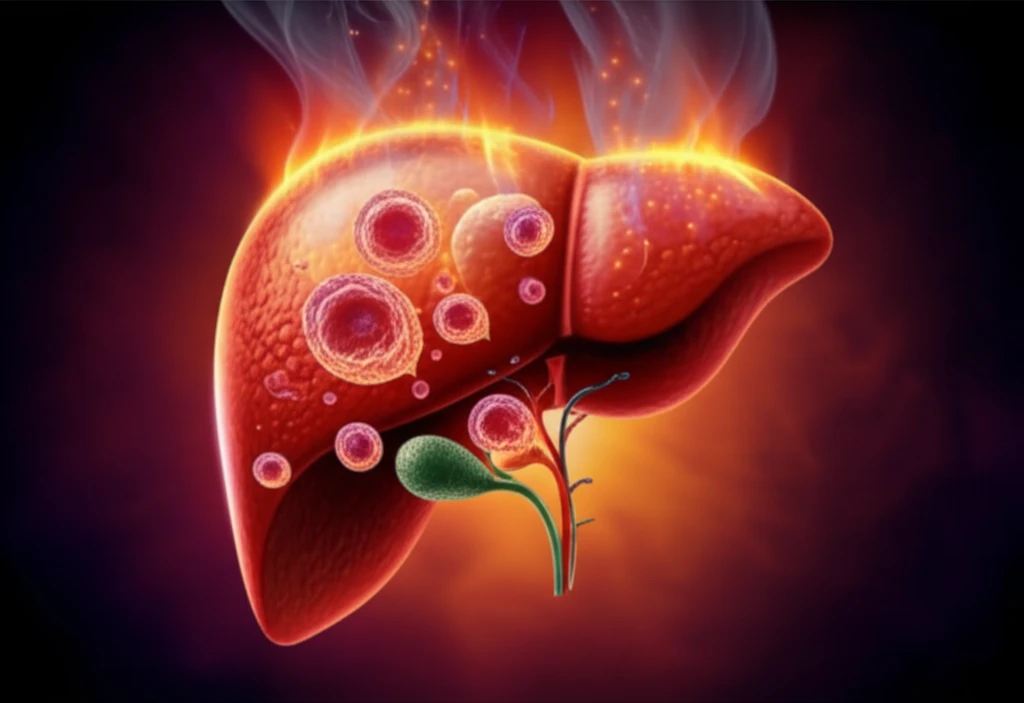
RFA: A Ray of Hope for Liver Metastasis from Gastric Cancer?

"Discover how Radiofrequency Ablation (RFA) offers new hope for treating liver metastasis originating from gastric cancer, potentially improving outcomes compared to traditional chemotherapy."
Gastric cancer remains a formidable global health challenge, ranking as the second most common cause of cancer-related deaths in Asia. The insidious nature of this disease often leads to metastasis, with the liver being a frequent site of secondary tumor development. In fact, recent data indicates that liver metastasis is the most common metastatic cancer in the north of Iran, underscoring the urgent need for effective treatment strategies.
Traditional approaches to managing liver metastasis from gastric cancer typically involve systemic chemotherapy, which aims to target cancer cells throughout the body. While chemotherapy can be effective in slowing disease progression, it often comes with significant side effects that can impact a patient's quality of life. Moreover, chemotherapy may not always be successful in eradicating liver tumors, particularly in cases where the lesions are resistant to treatment.
In light of these challenges, researchers have been exploring alternative treatment modalities for liver metastasis from gastric cancer. One promising approach is radiofrequency ablation (RFA), a minimally invasive technique that uses heat to destroy cancer cells. RFA has emerged as a potential alternative to traditional chemotherapy, offering the possibility of improved outcomes with fewer side effects. This article delves into a clinical trial investigating the efficacy of RFA in treating metastatic liver tumors originating from gastric cancer, shedding light on its potential as a valuable tool in the fight against this deadly disease.
Current Statistics & Impact
Gastric cancer remains a significant global health burden, with liver metastasis representing a common and challenging pattern of disease spread. While precise incidence figures vary across regions and populations, hepatic involvement typically signals advanced-stage disease and is associated with poorer prognoses. The impact on patients and healthcare systems is substantial, driving ongoing research into more effective therapeutic strategies. Epidemiological trends underscore the need for continued innovation in managing this complex clinical scenario.
Standard Approach, Accepted Methods & Their Limitations
The conventional management of gastric cancer with liver metastasis has historically centered on systemic chemotherapy, with surgical resection reserved for highly selected cases. Multidisciplinary evaluation determines eligibility for curative-intent approaches, though most patients present with unresectable disease. Limitations of standard therapies include modest response rates, cumulative toxicities, and the frequent inability to achieve durable local control of hepatic lesions. These constraints have motivated exploration of locoregional modalities as complementary or alternative options.
Historical Perspective, Milestones, Foundational Discoveries
Radiofrequency ablation emerged as a prominent liver-directed therapy in the early 2000s, building on earlier thermal ablation concepts and probe technology advances. By 2008, RFA had become the most widely practiced local treatment modality for hepatic tumors, encompassing both primary and metastatic disease. Early clinical databases documented its application for non-colorectal liver metastases, including gastric cancer, with treatment sessions recorded from 2002 onward. Systematic reviews beginning in the 2010s consolidated evidence on RFA and microwave ablation safety and efficacy, establishing foundational benchmarks for patient selection and technical parameters.
RFA vs. Chemotherapy: Which Treatment Offers Better Outcomes for Liver Metastasis?
A randomized clinical trial was conducted to evaluate the efficacy of radiofrequency ablation (RFA) in treating metastatic liver tumors originating from gastric cancer. The study enrolled 43 patients with metastatic lesions, ensuring that each lesion was less than 5 cm in size. These patients were then randomly assigned to two treatment groups: one receiving chemotherapy and RFA (group A), and the other receiving chemotherapy alone (group B). The primary endpoint was to assess changes in tumor size and contrast enhancement via MRI.
- Complete Lesion Clearance: The results revealed a significant difference in treatment outcomes between the two groups. In group A (chemotherapy and RFA), 14 out of 21 patients (66.6%) achieved complete lesion clearance, indicating successful eradication of liver tumors.
- Chemotherapy Alone Ineffective: In stark contrast, none of the patients in group B (chemotherapy alone) experienced complete lesion clearance, underscoring the limitations of chemotherapy as a standalone treatment for liver metastasis from gastric cancer.
- Size Matters: Further analysis revealed that lesions smaller than 3 cm in size responded more favorably to RFA treatment, suggesting that RFA may be particularly effective for smaller liver tumors.
Latest Research and Reviews
Recent literature continues to refine understanding of ablation's role in metastatic gastric cancer, with studies examining long-term outcomes, combination strategies, and technical refinements. Investigators are evaluating RFA alongside systemic therapies, exploring sequencing and patient selection criteria to optimize survival benefit. Emerging data from retrospective cohorts and prospective registries contribute to evolving consensus guidelines. However, high-level prospective evidence specifically for gastric cancer liver metastases remains limited compared to colorectal counterparts.
Counter Arguments and Failures
Critics note that ablation's efficacy diminishes with larger or multifocal lesions, proximity to major vessels, and extrahepatic disease burden. Local recurrence rates remain a concern, particularly for tumors exceeding 3 cm, where heat-sink effects and incomplete ablation margins compromise durability. Selection bias in published series may overestimate outcomes, as healthier patients with limited metastatic burden are preferentially offered ablative therapy. Comparative data against modern systemic regimens are sparse, leaving questions about relative benefit in the current therapeutic landscape.
Comparative Analysis
Direct comparisons between RFA, microwave ablation, and surgical resection for gastric cancer liver metastases are largely confined to retrospective studies with inherent selection biases. Microwave ablation offers theoretical advantages in larger lesions and perivascular locations due to higher intratumoral temperatures and reduced heat-sink effect. Surgical resection remains the gold standard for resectable disease but carries higher morbidity and excludes many patients. Emerging combination approaches—ablation plus systemic therapy or staged resection—seek to leverage complementary mechanisms, though prospective validation is lacking.
The Future of Liver Metastasis Treatment: RFA and Beyond
This study provides compelling evidence that RFA is a safe and effective treatment option for liver metastasis from gastric adenocarcinoma, especially when combined with chemotherapy. The therapeutic effect of chemotherapy in combination with RFA is more pronounced than systemic chemotherapy alone, particularly in lesions smaller than 3cm. As research continues to evolve, the integration of RFA into treatment protocols may offer hope for improved outcomes and enhanced quality of life for individuals battling this challenging condition.
Synthesis & Expert Commentary
Expert consensus increasingly views thermal ablation as a valuable component of multimodal management for oligometastatic gastric cancer to the liver, particularly when resection is precluded. Multidisciplinary tumor boards play a critical role in patient selection, balancing tumor biology, anatomic considerations, and systemic therapy response. Technical standardization and quality metrics are gaining attention to reduce outcome variability across centers. The evolving paradigm emphasizes personalized sequencing of local and systemic therapies rather than rigid algorithmic approaches.
Future Outlook & Next Frontiers
Bibliometric analyses reveal growing scholarly focus on ablation therapies for liver malignancies, with emerging research priorities including combination immunotherapies, image-guided navigational systems, and artificial intelligence–assisted treatment planning. Market projections identify liver cancer as the dominant application segment for tumor ablation technologies, reflecting expanding clinical adoption. Next-generation probes and hybrid modalities aim to overcome current size and location limitations. Prospective trials specifically addressing gastric cancer liver metastases are needed to define optimal integration with evolving systemic regimens.
Broader Context & Systemic Challenges
Access to advanced ablation techniques remains uneven globally, constrained by equipment costs, specialized training requirements, and infrastructure disparities. Health economic evaluations are sparse, complicating value-based adoption decisions in resource-limited settings. Regulatory pathways for novel ablation devices vary internationally, affecting timely patient access to innovations. Integration of ablation into standardized gastric cancer treatment algorithms requires stronger evidence generation and consensus guideline development across major oncology societies.
The Human Element & Real-World Impact
Clinical studies report that percutaneous RFA and MWA can achieve meaningful local control and survival extension in selected gastric cancer patients with liver metastases, with some series documenting long-term survivors. Retrospective comparisons suggest RFA may offer a viable alternative to hepatic resection for patients deemed poor surgical candidates, with comparable outcomes in matched cohorts. Case reports highlight durable responses even in challenging presentations, underscoring the potential for individualized curative-intent approaches. Patient-reported outcomes and quality-of-life data remain underrepresented in the literature, representing an important gap for future patient-centered research.