
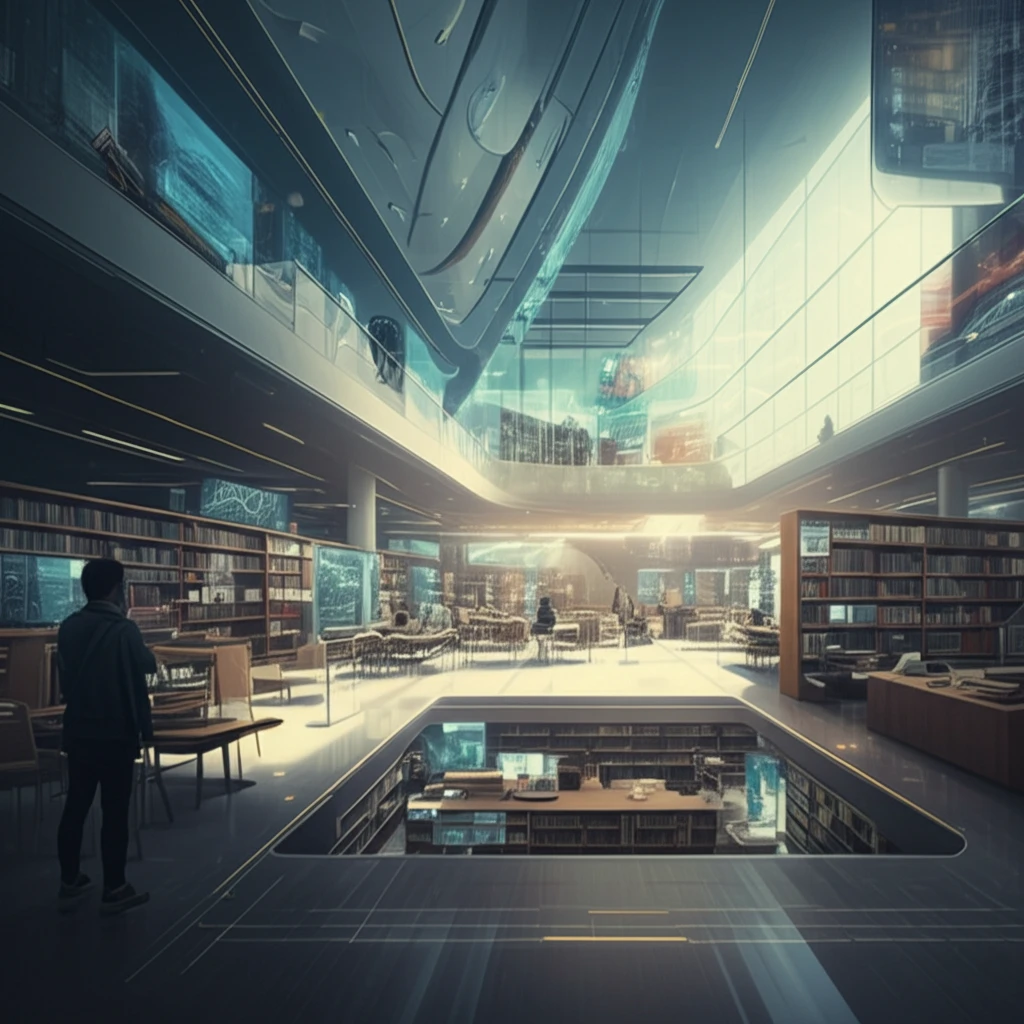
Reimagining Library Spaces: How UCSF Transformed Its Library for the 21st Century

"Discover the innovative strategies the University of California, San Francisco (UCSF) used to revitalize its library, adapting to the changing needs of students and faculty in the digital age."
Libraries are no longer just repositories of books; they're evolving into dynamic centers for learning and collaboration. Reports and surveys consistently show that students and faculty need library spaces that cater to modern academic needs. This transformation ensures libraries remain relevant and valuable within academic environments.
At the University of California, San Francisco (UCSF), a visionary project transformed the library into a Teaching and Learning Center (TLC). This initiative not only redesigned space for existing library functions but also fostered stronger alliances with various campus programs. The TLC emerged from years of careful planning and collaboration, addressing the critical need for expanded education programs and telemedicine training.
The result is a multipurpose facility that integrates clinical skills, simulation, and technology-enhanced education facilities on the second floor of the Parnassus campus library. This redesign optimizes the space, creating a state-of-the-art education and teaching environment.
The Evolving Demands on Academic Libraries
Current library services are inadequate to support the data needs of researchers, necessitating new models such as proposed data clinics that offer a wide range of data services. Library space use has been shaped significantly by service convergence, with libraries working more closely with other campus services to meet diverse needs. The COVID-19 pandemic has accelerated changes in academic librarianship, with managing data emerging as a key trending topic alongside adapting to global disruptions. Assessment goals for new library spaces extend beyond building use to include correlative metrics such as learning outcomes and user satisfaction.
Design Principles and Resource Constraints
One key point of successful library transformation is the appropriate design of physical space, which must emphasize knowledge creation to foster collaborative learning. Restructuring academic libraries entails designing new institutional arrangements and interdependent relationships, requiring a long-term reallocation of resources. Studies using mixed methods have examined the relationship between students' use, satisfaction, and productivity needs across different library locations. However, adapting architecture to accommodate these changes can be challenging when funds are not readily available to modify buildings and furniture accordingly.
From Book Storage to Learning Spaces
Academic libraries in the United States and abroad have generally been designed first and foremost as places to collect and store materials for over 200 years. After World War II, modular design began to be adopted by academic libraries, and by 1960 this architectural style had been fully accepted. The building boom for libraries began in the late 1940s and continued into the 1950s and 1960s, supported by federal grants from the Higher Education Act. In recent years, dramatic changes to academic work practices—including reading, writing, and communication—have fundamentally challenged these traditional design assumptions.
The Challenge: Limited Space, Evolving Needs
UCSF, an academic health sciences campus, faces the challenge of limited space in an urban setting. The library building, comprising 90,000 square feet, represents a significant real estate asset. Recognizing the need for modern teaching spaces, an initial plan proposed allocating 10,000 square feet of the library for this purpose. This proposal sparked a collaborative, campus-wide planning process to address space limitations and evolving educational demands.
- Classroom Shortage: Demand for small-group session space.
- Curriculum Changes: Moving away from traditional lectures.
- Simulation Needs: Requirements for clinical skills practice.
Pandemic-Driven Transformation and Student Engagement
Ongoing pandemic changes are leading to library practices that, in aggregate, present a transformation to a new model of service delivery. Library space design has emerged as a pivotal influence on student engagement, encompassing cognitive, emotional, and behavioural dimensions of academic life. The 2024 top trends in academic libraries review highlights continuing evolution in how libraries serve their communities. AI and digital transformation are reshaping academic library services through enhanced digital resource management and more sophisticated research assistance capabilities.
The Blurring Identity of Libraries in the Digital Age
In the digital era, the identity of the library has become blurred, raising fundamental questions about its core purpose and value proposition. The future library will be less about physical walls and more about digital access, innovation, and collaboration, suggesting that traditional space-heavy models may become less relevant. This perspective challenges the assumption that physical transformation alone can secure a library's future, pointing instead to digital infrastructure as the primary driver of continued relevance.
Designing the Future Academic Library
Designers are increasingly preparing to partner with campus leaders as they envision and build the academic library of the future. This collaborative approach recognizes that effective library design requires input from multiple stakeholders, including administrators, faculty, students, and design professionals. The process involves balancing competing priorities such as technology integration, flexible learning spaces, preservation of collections, and budget constraints. Successful projects demonstrate that forward-looking design can help libraries remain central to academic missions even as higher education undergoes rapid transformation.
Looking Ahead: The Future of Library Design
The UCSF TLC project highlights the importance of adaptability and strategic planning in library design. By embracing change and prioritizing collaboration, libraries can transform themselves into vibrant hubs that meet the evolving needs of their communities. As technology continues to advance and learning methodologies shift, libraries must remain proactive in reimagining their spaces to foster education, innovation, and connection. The project demonstrates how libraries can lead in creating inspiring environments that reflect a community’s vision and reinforce its connections.
Design Elements That Shape Learning Experiences
A questionnaire-based survey study identified seven key design elements that affect the learning experience of university library users. These elements encompass physical attributes such as lighting, acoustics, and spatial arrangement, as well as service-related factors. The findings provide evidence-based guidance for library administrators and designers seeking to optimize spaces for student success. By focusing on these specific design elements, libraries can make targeted improvements that directly impact user engagement and learning outcomes.
Smart Spaces and Creative Places
Academic library building design resources now offer over 100 ideas to inspire smart spaces and creative places, reflecting the growing sophistication of space planning approaches. The trend from book boxes to learning commons continues to evolve, with fewer long rows of shelves and more spaces intended to inspire new ways of learning. Future library design will increasingly prioritize flexibility, technology integration, and collaboration zones over traditional book storage. These resources provide practical guidance for libraries at any stage of their transformation journey.
From Me Spaces to We Spaces
College libraries are undergoing a fundamental transformation from solitary 'me' spaces designed for individual study into collaborative 'we' spaces that facilitate group work and community building. Eight key shifts are influencing this transformation as colleges themselves undergo rapid changes in mission, technology, and student demographics. These shifts include the integration of technology, emphasis on active learning, and recognition of libraries as social hubs. The broader context reveals that library space transformation is not an isolated phenomenon but part of systemic changes across higher education.
From Place to Platform
Transforming library space contributes to relevancy in an academic environment and addresses ongoing questions about the value of library and library space in modern institutions. The evolution from 'Library as Place' to 'Library as Platform' represents a paradigm shift in how libraries conceptualize their role, moving from passive repositories to active service delivery hubs. Case studies demonstrate how specific initiatives illustrate the changing role of library space in supporting research, learning, and community engagement. Real-time data and inclusive engagement strategies are transforming libraries into more innovative, student-centered spaces that respond dynamically to user needs.