
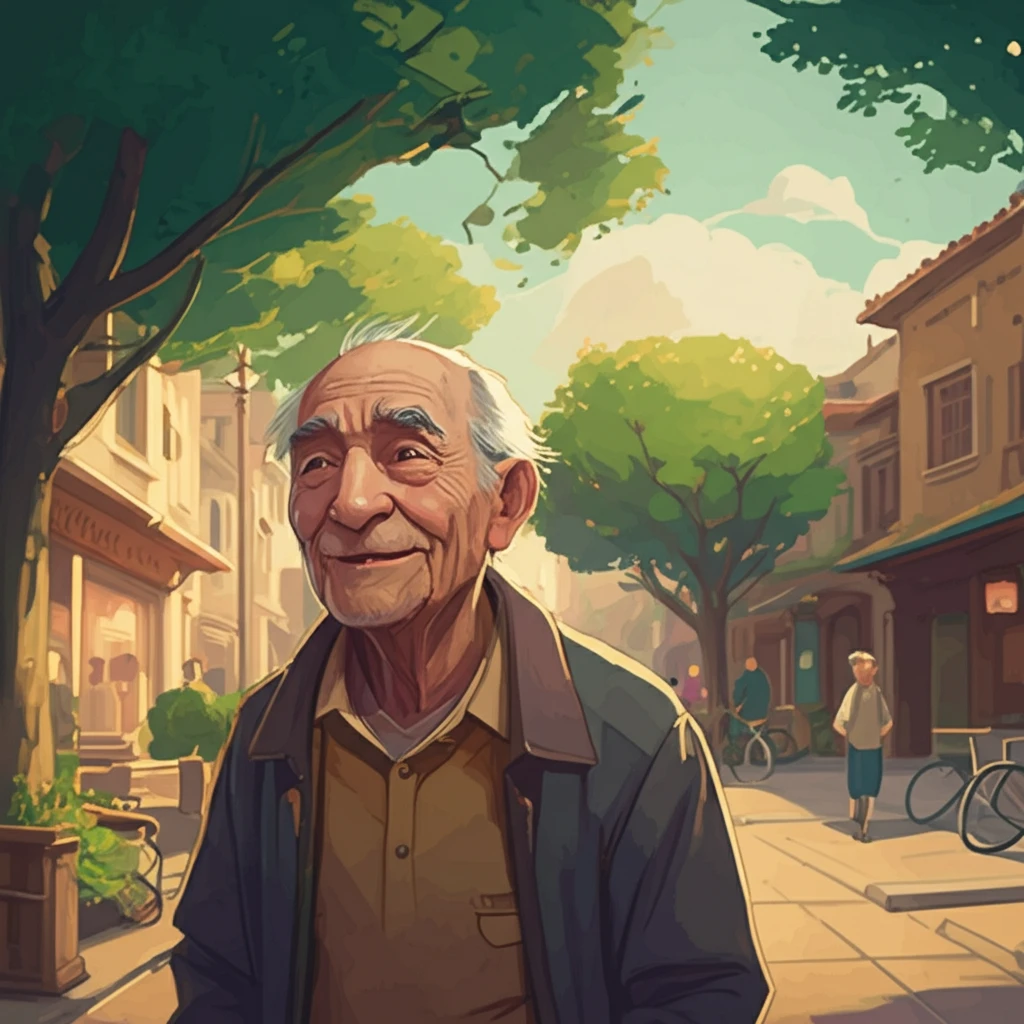
Reimagine Dementia Care: How Neighborhoods Hold the Key to Wellbeing

"Unlocking Social Health: Discover how understanding and engaging with local environments can dramatically improve the lives of people living with dementia."
In an era where aging societies face increasing rates of dementia, there's a growing need for innovative approaches to care that extend beyond traditional medical models. The 'Neighborhoods: our people, our places' project (N:OPOP), funded by the Economic and Social Research Council and the National Institute for Health Research (UK), represents a significant step in this direction. This initiative explores how individuals living with dementia interact with their neighborhoods, emphasizing the concepts of social health and citizenship.
Traditional definitions of health often focus on physical and mental wellbeing, but the N:OPOP project highlights the crucial role of social engagement and environmental support. It addresses how people with dementia experience their local environment and how this lived experience can enhance their capabilities, capacities, and competencies. The project aims to demonstrate that social engagement and environmental support are vital contributors to social health, particularly in the context of dementia care.
By examining the lived experiences of people with dementia in their neighborhoods, this research offers insights into how communities can be more supportive and inclusive. The ultimate goal is to inform the design and implementation of neighborhood-based interventions that improve the quality of life for individuals living with dementia, enabling them to remain active and engaged members of their communities.
A Global Syndrome on the Rise
Dementia is a syndrome, often associated with neurodegenerative diseases such as Alzheimer's, marked by a general decline in cognitive processes that erodes the ability to perform everyday activities. Global organizations that track the condition report that the number of people affected worldwide is increasing, alongside mounting costs of care, positioning dementia as a major public health priority. Yet translating research into treatment remains slow: one 2026 industry report notes that the Alzheimer's drug development pipeline has a failure rate of roughly 99.6 percent, underscoring how difficult it is to move findings from the laboratory into clinical use.
Guidelines, Standardization, and Their Gaps
The standard approach to dementia care is built on clinical guidelines and standardized assessment tools. The ESPEN 2024 update on nutrition and hydration, developed from literature searches of Medline, Embase, and the Cochrane Library, recommends a nutritional care concept and standardized operating procedures to support persons with dementia. NICE guidance similarly advises a personalized multicomponent sleep management approach for people with sleep problems, combining sleep hygiene education, exposure to daylight, exercise, and personalized activities. Yet these accepted methods have recognized limits; for instance, studies of family carers' knowledge and practices often rely on self-reported data, which can weaken the reliability of targeted recommendations.
From the History of a Word to a Genetic Understanding
Historical method cautions against projecting present-day perspectives onto the past, urging a distinction between the history of the word 'dementia' and the history of the concepts and behaviours now associated with it. The modern understanding of the condition has emerged through centuries of evolving care practices, research, and medical breakthroughs. Genetics now forms a foundational piece of the picture: a family history of dementia raises the likelihood of early-onset dementia, as does carrying a specific variant of the APOE gene or other genes, and rare forms are inherited through a single faulty gene passed down in families.
The Power of Lived Experience
The N:OPOP project employs a mix of qualitative and participatory methods across three field sites: Manchester, Central Scotland, and Linköping, Sweden. These methods include mobile and visual techniques designed to capture the nuances of local spaces and networks. By "mapping" these local environments, the study seeks to create knowledge that will inform the development and piloting of neighborhood-based interventions.
- Neighborhoods offer opportunities for social interaction and engagement.
- Environmental factors can either support or hinder the capabilities of people with dementia.
- Community support networks play a vital role in maintaining social health.
- Understanding the lived experience of people with dementia is essential for effective policy and practice.
Biomarkers, Risk Factors, and New Frontiers
Dementia research is advancing on multiple fronts at once. Recent work examines the diagnostic performance of plasma pTau217 in genetically admixed South American populations, part of a broader push toward accessible blood-based biomarkers, and today there are more dedicated dementia researchers working on the condition than ever before. A large-scale review cited in the news suggests that nearly half of all dementia cases may trace back to 14 everyday factors, from hearing loss to untreated vision problems, most of which have more to do with health than with age. Meanwhile, fundamental science continues to uncover the roles of dementia-linked proteins, including newly discovered involvement in DNA mistakes, keeping research active from the bench to the clinic.
The Medical Model Under Scrutiny
Critical scholarship challenges the dominant biomedical framing of dementia. A neurocritical perspective argues that the 'biopolitics' surrounding dementia has been implicated in several problems, including the failure of drug discovery, the spread of stigma, the perpetuation of social inequalities, and the lack of support available to people affected by the condition. Sociological critics point to a widening gap between the medical model of dementia and critical perspectives, given the relative failure of reductionism and rising prevalence. Some go further, suggesting that dementia's newfound emphasis on risk and ethnicity may serve the interests of researchers more than those of people living with dementia.
Dementia, Alzheimer's, and Related Conditions Compared
Dementia is a broad term for neurological conditions that involve serious mental impairment such as memory loss, confusion, and personality changes, while Alzheimer's disease is the most common form, accounting for 60 to 80 percent of all cases. Different types present differently: frontotemporal dementia often causes significant changes in personality, behavior, and language skills, unlike other forms such as vascular dementia. Amnesia, by contrast, primarily involves memory loss, either short-term or long-term, whereas dementia combines memory loss with cognitive decline, behavioral changes, and language problems.
Moving Forward: Policy and Practice Implications
The ongoing N:OPOP study offers valuable messages for policy and practice. By recognizing the strengths and agency of people with dementia, communities can create more supportive environments that foster social health and wellbeing. This requires a shift in perspective, moving away from a focus on deficits to an appreciation of capabilities and potential. The insights gained from this research can inform the development of targeted interventions that promote community engagement, reduce social isolation, and empower individuals with dementia to live fulfilling lives in their neighborhoods.
Experts on Prevention and Real-World Support
Expert voices increasingly emphasize that a substantial share of dementia risk may be modifiable. Professor Henry Brodaty notes that two in five Australians over 55 face dementia and that nearly half of the risk can be modified, arguing for a national Brain Health Australia campaign given the potential billions in health savings. Other experts stress that there are simple everyday steps to reduce risk, while observing that some risk factors have lowered and others are on the rise. Even where services exist, real-world adoption faces barriers: dementia experts identified the unavailability of informal caregivers, the stage and type of dementia of the user, and fear of the unknown as obstacles to using digital health tools.
Projecting the Next Decades
The demographic outlook for dementia is sobering. Projections indicate that by 2050 the number of affected individuals could reach approximately 139 million, almost tripling current figures, with the largest increases expected in low- and middle-income countries. Research on people living with dementia suggests that future outlook and the strategies used to manage a changing future are themselves increasingly studied areas. At the same time, market analysts forecast the dementia treatment market to reach roughly USD 19.41 billion by 2035 at a 3.68 percent compound annual growth rate, reflecting confidence in an expanding innovation pipeline.
Early Signs and Unequal Access
Recognizing dementia early begins with knowing its signs: short-term memory loss, getting lost in familiar places, confusion over simple tasks, and changes in mood and behavior are among the early warning signals. Yet recognition is only the first step, because care systems are not evenly accessible. Historically, rural communities have faced systemic disadvantages in healthcare access due to under-resourcing, workforce shortages, and geographic isolation, challenges that are particularly acute in dementia care, where timely diagnosis and coordinated management are essential.
Beyond Symptoms: The Real-World Burden
Dementia's impact extends well beyond memory loss into measurable real-world costs. Real-world US data show that agitation in patients with dementia carries an incremental burden on patients, on healthcare resource use, and on healthcare costs. New diagnostic tools are also reshaping everyday care: a real-world study of amyloid PET imaging in community clinics and other nonacademic settings demonstrated for the first time how much impact the technology has in everyday dementia care. Underneath the figures is the human dimension, since living with dementia affects a person's feelings, thoughts, and responses, and recognizing and responding to the person's emotional needs is central to support.