
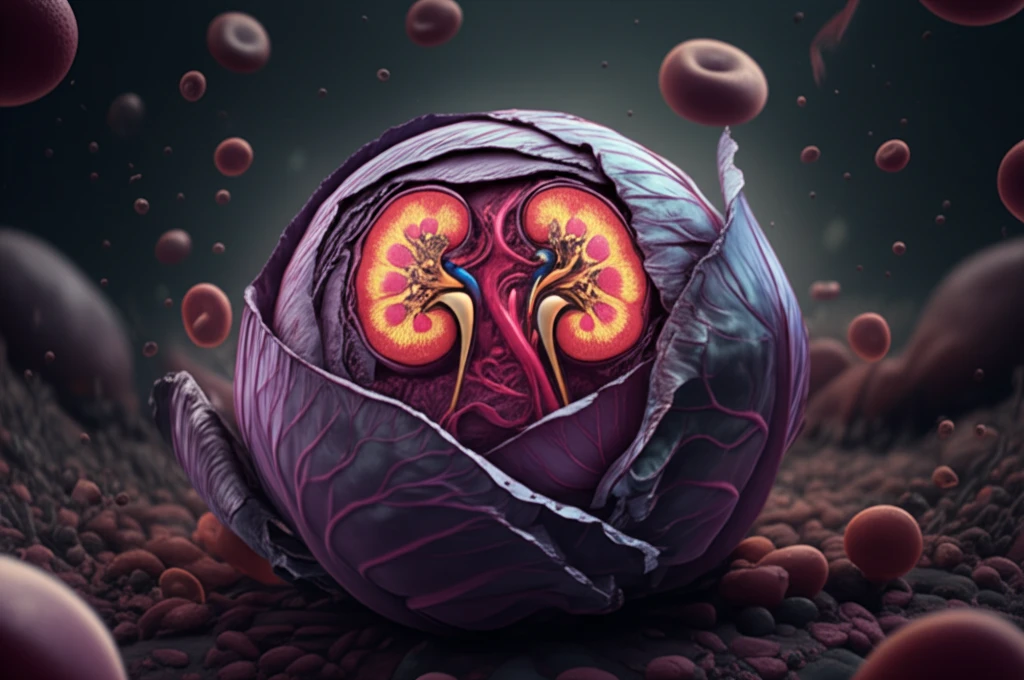
Red Cabbage: The Unlikely Kidney Protector?

"Discover how anthocyanins in red cabbage can fight kidney damage and boost your health, naturally."
In the quest for natural health solutions, certain humble vegetables stand out, offering benefits far beyond basic nutrition. Red cabbage, with its vibrant color and earthy flavor, is one such powerhouse. Often overlooked in favor of its green counterparts, red cabbage boasts a high concentration of anthocyanins, potent antioxidants linked to a range of health benefits.
Emerging research suggests that these anthocyanins may play a significant role in protecting kidney health. Kidneys, essential for filtering waste and maintaining overall balance in the body, are vulnerable to damage from oxidative stress and various toxins. The antioxidant properties of anthocyanins found in red cabbage could offer a natural defense against such threats.
This article explores the science behind red cabbage's potential kidney-protective effects, drawing from recent studies and insights. We will delve into how anthocyanins combat oxidative stress, and the implications this has for maintaining healthy kidney function. Whether you're proactively seeking natural ways to support your health or simply curious about the hidden benefits of everyday foods, this exploration into the power of red cabbage promises to be enlightening.
A Global Crop with a Dedicated Holiday
Cabbage, comprising several cultivars of Brassica oleracea, is a leafy green, red, or white biennial plant grown as an annual vegetable crop for its dense-leaved heads. Its cultural footprint is significant enough to merit its own observance, with World Cabbage Day celebrated on February 17 as an occasion to explore the vegetable's history, health benefits, and cooking uses. The scale of interest is also reflected in data collection, with USDA FoodData Central serving as a comprehensive source of food composition data and analysts such as Statista tracking national output, including dedicated statistics for Japan's cabbage production volume.
Coring, Color, and Storage Limits
The standard approach to preparing round-headed cabbage begins with coring, a method intended for round heads such as green cabbage, red (or purple) cabbage, and savoy cabbage. These heads are tight and rounded, formed by green or red leaves, with early and mid-season varieties described as smaller and faster growing. Red cabbage's defining trait is its anthocyanin content, a substance that changes color depending on whether it is mixed with an acid or a base, the basis of the classic classroom red cabbage indicator. Because red cabbage can be used interchangeably in most standard cabbage recipes, the main limitations are practical: the color leaches into other ingredients, and even with proper storage the heads keep fresh for only up to about 10 days.
From the Eastern Mediterranean to European Kitchens
Wild cabbage (Brassica oleracea) is believed to have originated from feral populations of related plants in the Eastern Mediterranean, where it was most likely first cultivated. Accounts differ on the details of early domestication, however, with at least one other source reporting that cabbage was most likely domesticated somewhere in Europe in ancient times before 1000 BC and has been documented in cuisine since Antiquity. What is not in dispute is the vegetable's wide historical spread: European cultivation records exist for distinctive forms such as conehead cabbage, and a Dutch account ties red cabbage to hearty, long-standing comfort-food traditions dating to when farmers returned hungry from the fields. The general European adoption and culinary integration of these varieties is broadly corroborated across these accounts.
Unlocking Anthocyanins: The Science of Red Cabbage and Kidney Health
The key to red cabbage's potential kidney-protective properties lies in its high concentration of anthocyanins. These plant pigments, responsible for the vibrant red and purple hues in many fruits and vegetables, are powerful antioxidants. Antioxidants work by neutralizing free radicals, unstable molecules that can cause cellular damage and contribute to inflammation and disease.
- Extraction Optimization: The most effective extraction method combined 96% ethanol with 3% citric acid, yielding the highest anthocyanin content and antioxidant activity.
- Study Design: Rats were divided into groups to test the effects of red cabbage extract against induced kidney damage.
- Key Intervention: Gentamicin and captopril were used to induce kidney damage, followed by treatment with red cabbage extract.
- Measurements: Kidney function was assessed by measuring serum creatinine and blood urea levels.
An Active Subject of Ongoing Coverage
Ongoing scientific and gardening coverage of red cabbage is easy to track: Phys.org maintains a dedicated tag collecting the latest news, advancements, and breakthroughs on red cabbage, while Medindia rounds up the most recent scientific publications on its health benefits. Current coverage emphasizes both variety and taste, noting that red cabbage, with its vibrant purple hue, offers a slightly spicier and earthier taste compared to the green variety. Most varieties of cabbage form heads that can weigh anywhere from 1 to 12 pounds (0.5–5 kg), with each plant producing a single head, a fact that shapes how growers plan their plots. Together, these sources present red cabbage as an evolving subject of both research and popular interest.
When Cabbage Goes Wrong
Growing red cabbage is not without its failures. Rutgers Extension documents tipburn, a breakdown of plant tissue inside the head of cabbage that can spoil the crop. Climate is another limiting factor: production data from the Lockyer Valley indicate that the cabbage season aligns with a 32°C upper limit for quality head growth, with the cooler months from April to October producing the large, dense, high-quality cabbages preferred by both the fresh and processing markets. Even the vegetable's use as feed carries risk, with one safety guide warning that feeding cabbage to deer can trigger rumen acidosis, a potentially serious digestive condition. These counterpoints frame cabbage as a crop that demands careful management rather than guaranteed success.
Nutrition, Taste, and Grower Trade-offs
Comparisons between cabbage types largely center on nutrition, growing behavior, and use. Dedicated nutrition comparison tools examine cabbage versus red cabbage in depth, scoring each food by the number of minerals in which one or the other is richer. However, sources differ on nutrient-density rankings: one social-media report credits green cabbage with a Nutrivore Score of 1857 compared to 1369 for red cabbage, while other comparisons emphasize red cabbage's flavonoids, such as hesperetin, which has been linked to lowering cholesterol and to potential antioxidant and anti-inflammatory effects. Gardeners are advised to weigh flavor and use alongside nutrition, since varieties like Savoy, Napa, and red cabbage differ in taste, growth habits, and culinary applications.
Embrace the Power of Red Cabbage
The findings from this study offer promising insights into the potential of red cabbage, specifically its anthocyanin content, as a natural aid for kidney health. While further research is always valuable, incorporating red cabbage into your diet may be a proactive step towards supporting overall well-being. Whether enjoyed raw in salads, cooked in stir-fries, or fermented into sauerkraut, this vibrant vegetable offers a delicious and accessible way to harness the power of nature's antioxidants. Remember, a balanced diet rich in diverse fruits and vegetables is a cornerstone of good health, and red cabbage can be a valuable addition to that foundation.
Expert Consensus on Growing and Eating Red Cabbage
Garden experts converge on a few practical guidelines for red cabbage. It is a popular winter vegetable, and as a cool-season crop it thrives at temperatures between roughly 60 and 65°F. Harvest timing is best judged by feel, with the squeeze test — picking heads that feel firm and solid — being a widely recommended method. In the kitchen, red cabbage adds color to dishes and often carries a slightly peppery taste, making it a favorite for salads and pickling.
Beyond the Dinner Plate
Red cabbage is positioned to grow beyond the dinner plate. Culinary writers expect it to keep gracing traditional holiday tables while starring in the latest food trends, standing ready to meet new culinary challenges. The market for related processing equipment reflects this momentum, with the cabbage shredders market expected to expand by 2031 at a reported compound annual growth rate. The vegetable's versatility is also pushing it into new frontiers, from exploration as a research material at the Jan van Eyck Academie's Future Materials Bank to its role as a versatile and cost-effective option for restaurants looking to diversify their menus with fresh, wholesome choices.
The Challenge of Finding Reliable Guidance
One of the underappreciated challenges surrounding red cabbage is informational: reliable, practical guidance is scattered across a web crowded with unrelated content. For instance, the technique of salting red cabbage before pickling is explained in brief video formats that surface amid entirely unrelated material, such as gaming-forum threads and character leaderboards, with little editorial curation tying relevant items together. At the same time, broader discussions of systemic credibility — including published work examining the impact of trust and adoption on artificial intelligence — highlight how difficult it is for readers to assess source quality generally. The practical takeaway is to approach claims about red cabbage with the same source skepticism applied anywhere else online.
From German Fields to Everyday Plates
Red cabbage — the purple-leaved varieties of Brassica oleracea Capitata Group, also known as Blaukraut after preparation — is a familiar crop from the panorama of German fields to markets far beyond. Its human impact is partly nutritional, with reports that cabbage, especially red cabbage, seems to raise levels of beta-carotene, lutein, and other heart-protective antioxidants while helping to lower oxidized LDL linked to hardening of the arteries. Culturally, uses differ by region: in Kenya, for example, red cabbage is used mainly in salads while green cabbage is commonly cooked, with both crops first grown in a nursery for about a month before transplanting at roughly 30 cm spacing with regular irrigation. In U.S. grocery stores, European red and green cabbages, along with Savoy and Napa varieties, are typically the ones stocked.