
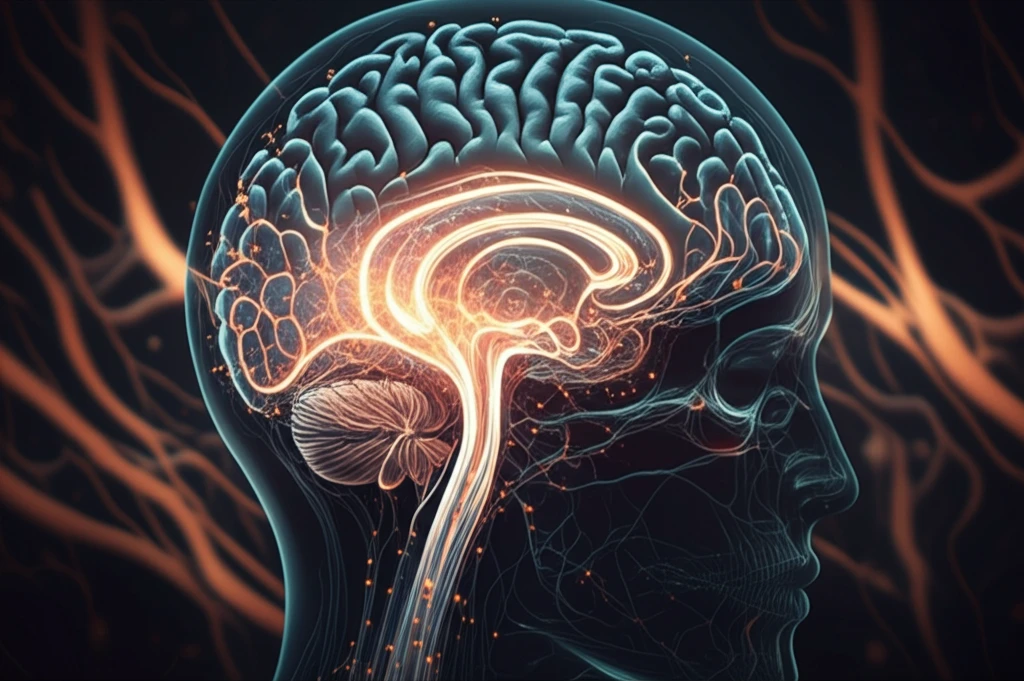
Prion Diseases: New Biomarkers Offer Hope for Early Detection and Treatment

"Discover how cutting-edge research into fluid biomarkers is revolutionizing the diagnosis and management of human prion diseases, potentially leading to earlier interventions and improved clinical trial outcomes."
Human prion diseases are a group of rare and devastating neurodegenerative conditions characterized by the misfolding of the prion protein. These diseases, which include sporadic Creutzfeldt-Jakob disease (sCJD), variant Creutzfeldt-Jakob disease (vCJD), and inherited prion diseases (IPD), pose significant diagnostic and therapeutic challenges. The rapid progression and varied clinical presentations of prion diseases often lead to delayed diagnosis, hindering timely intervention.
Recent advances in biomarker research offer a beacon of hope for improving the diagnosis and management of prion diseases. Fluid biomarkers, such as those found in cerebrospinal fluid (CSF) and blood, are showing promise in detecting early signs of prion-related changes in the brain. These biomarkers not only aid in diagnosis but also hold potential for predicting disease progression, stratifying patients for clinical trials, and assessing the risk of developing prion disease in asymptomatic individuals.
This article explores the current state of fluid biomarker research in human prion diseases, highlighting key findings, clinical applications, and future directions. We will delve into the various types of biomarkers, their diagnostic accuracy, and their potential to transform the landscape of prion disease management.
A Rare but Devastating Family of Brain Diseases
Prion diseases are a group of rare neurodegenerative disorders in which misfolded proteins cause progressive brain damage. According to the CDC, these diseases affect both humans and animals and are distinct from other neurodegenerative conditions. Creutzfeldt-Jakob disease (CJD), the most common human prion disorder, produces symptoms that can mimic Alzheimer's disease but typically progresses far more rapidly and is uniformly fatal, as noted by the Mayo Clinic. Advances in biomarker research using cerebrospinal fluid markers such as t-tau, 14-3-3, and alpha-synuclein are helping clinicians move toward earlier and more accurate differential diagnosis.
The Diagnostic Gap: From Post-Mortem Certainty to Living Uncertainty
Cleveland Clinic describes prion disease as a group of rare, terminal neurodegenerative diseases for which current medications can only manage symptoms rather than halt progression. Historically, definitive diagnosis has relied on post-mortem examination of brain tissue to detect proteinase K-resistant prion protein, a significant limitation for living patients. While cerebrospinal fluid biomarkers and emerging proteomic profiling techniques offer promise for premortem diagnosis, current candidates still require rigorous verification of their sensitivity and specificity. Compounding this challenge, prion disease is typically fatal within months of symptom onset, leaving a narrow window for clinical intervention.
Building the Foundation: From Kuru to Modern Biomarker Science
The study of prion diseases traces back to investigations of kuru, a fatal nervous system disease first identified among the Fore people of Papua New Guinea and later linked to ritualistic cannibalism. Prion diseases, also known as transmissible spongiform encephalopathies, are recognized as rapidly progressive and irremediably fatal neurodegenerative disorders. Over time, the discovery of biomarkers measurable in blood, cerebrospinal fluid, and through imaging has become essential for both early diagnosis and differentiation from other dementias. These sensitive and specific biomarkers not only aid initial diagnosis but also hold the potential to track disease progression and evaluate the effectiveness of future therapeutic interventions.
The Promise of Fluid Biomarkers in Prion Disease
Fluid biomarkers are revolutionizing the approach to diagnosing and managing prion diseases. Traditional diagnostic methods often rely on clinical symptoms, imaging techniques, and tissue biopsies, which can be invasive and may not provide definitive results in the early stages of the disease. Fluid biomarkers, on the other hand, offer a less invasive and more accessible means of detecting prion-related changes in the body.
- 14-3-3 proteins: These proteins are released into the CSF as a result of neuronal damage. While not specific to prion diseases, their presence can indicate rapid neurodegeneration.
- Tau protein: Total tau concentration in CSF increases with neuronal damage. High levels of tau can be indicative of rapidly progressive sCJD.
- Neurofilament light chain (NfL): NfL is a neuronal cytoskeleton component released during neuronal damage. Elevated levels in CSF suggest neurodegeneration and can be useful in atypical cases.
- Alpha-synuclein: This protein appears to be a surrogate marker for neuronal damage in prion disease and has shown remarkable diagnostic value.
Multi-Biomarker Panels: A More Promising Diagnostic Strategy
Recent research emphasizes that the biomarkers used to diagnose prion diseases directly reflect the underlying pathophysiology of the condition, giving them a potential role not only in diagnosis but also in monitoring future treatments. However, individual biomarkers alone have not proven sufficient for reliable diagnosis. Researchers now advocate for the use of a panel combining multiple biomarkers rather than relying on any single marker, arguing that this multi-marker approach may significantly increase both diagnostic sensitivity and specificity. This shift toward composite testing strategies represents one of the most active areas of investigation in prion disease diagnostics.
Challenges and Complexities in Biomarker Development
Despite progress, the biomarker landscape for prion diseases faces significant hurdles. Research into microRNAs (miRNAs) as potential biomarkers has identified several miRNAs that appear deregulated during prion-induced neurodegeneration, suggesting they may play a regulatory role in disease-related gene expression. However, translating these findings into clinically reliable diagnostic tools remains difficult. The fundamental challenge persists: prion diseases are rapidly progressive and irremediably fatal neurodegenerative disorders, and no single biomarker has yet emerged as a definitive standalone diagnostic marker, leaving clinicians to grapple with incomplete and sometimes ambiguous test results.
Differential Diagnosis: When Biomarkers Overlap
Accurately distinguishing prion diseases from other neurodegenerative dementias is a growing clinical priority, yet it remains imperfect. Comparative analyses of cerebrospinal fluid biomarkers have revealed that there is partial overlap in biomarker profiles between prion diseases and alternative forms of dementia, which impedes absolute discrimination in the differential diagnostic context. This overlap means that even well-established CSF markers cannot always definitively separate prion disease from conditions such as Alzheimer's disease or other dementias. The finding underscores the need for combined diagnostic strategies that integrate biomarker data with clinical assessment and imaging.
Future Directions
The field of prion disease biomarker research is rapidly evolving, with ongoing efforts to improve diagnostic accuracy, identify novel biomarkers, and develop therapeutic strategies. Future research directions include exploring the potential of blood-based biomarkers for early detection and screening, developing quantitative RT-QuIC assays to assess disease severity, and investigating the role of biomarkers in predicting treatment response. By continuing to advance our understanding of prion diseases and leveraging the power of fluid biomarkers, we can pave the way for earlier diagnosis, improved patient care, and ultimately, effective treatments for these devastating conditions.
Where the Field Stands Today
The search for reliable biomarkers for prion diseases has reached an important inflection point. While no single test yet provides a definitive premortem diagnosis, the growing body of evidence supports the use of multi-marker panels and novel techniques such as real-time quaking-induced conversion (RT-QuIC) as the most promising paths forward. Researchers broadly agree that combining cerebrospinal fluid analysis, blood-based markers, and neuroimaging offers the best chance of achieving early and accurate diagnosis. The field continues to move cautiously, recognizing that the rarity of these diseases makes large-scale clinical validation inherently challenging.
An Innovation Pipeline Driven by Biomarker Discovery
The future of prion disease treatment and diagnosis is being shaped by significant investment in both drug development and diagnostic technology. Multiple therapeutic candidates targeting prion protein misfolding, aggregation, and neurotoxicity are currently progressing through preclinical and clinical trial phases. These efforts are increasingly supported by advances in biomarker discovery, which are expected to improve patient selection for trials and enable more precise monitoring of treatment responses. As diagnostic technologies mature, the hope is that earlier detection will open new windows for intervention before irreversible brain damage occurs.
The Rarity Problem: Why Progress Is Slow
Prion diseases carry an exceptionally low incidence rate of approximately 1.5 to 2 cases per million people per year, a reality that fundamentally shapes research funding, clinical trial design, and drug development timelines. The disease manifests in three forms: sporadic cases account for roughly 85% of diagnoses, genetic forms represent 10 to 15%, and acquired cases are considered anecdotal. This rarity means that large patient cohorts for biomarker validation studies are difficult to assemble, and commercial incentives for pharmaceutical development remain limited. Addressing these systemic challenges will likely require coordinated international collaboration and innovative trial designs.
Living with Uncertainty: Patients, Comorbidities, and Diagnostic Reality
For patients and families, the diagnostic journey in prion disease is often marked by uncertainty and speed. Creutzfeldt-Jakob disease, the most common human prion disorder, can sometimes present alongside other neurodegenerative conditions, as retrospective studies of autopsy cases have documented comorbid prion deposits alongside other forms of neurodegeneration. Newer diagnostic tools such as RT-QuIC testing of olfactory mucosa and cerebrospinal fluid samples are improving the ability to confirm diagnoses in living patients, but access to these advanced tests remains uneven. The human toll of these diseases, combined with their rapid progression, makes the push for earlier and more accessible diagnostic solutions deeply urgent.