
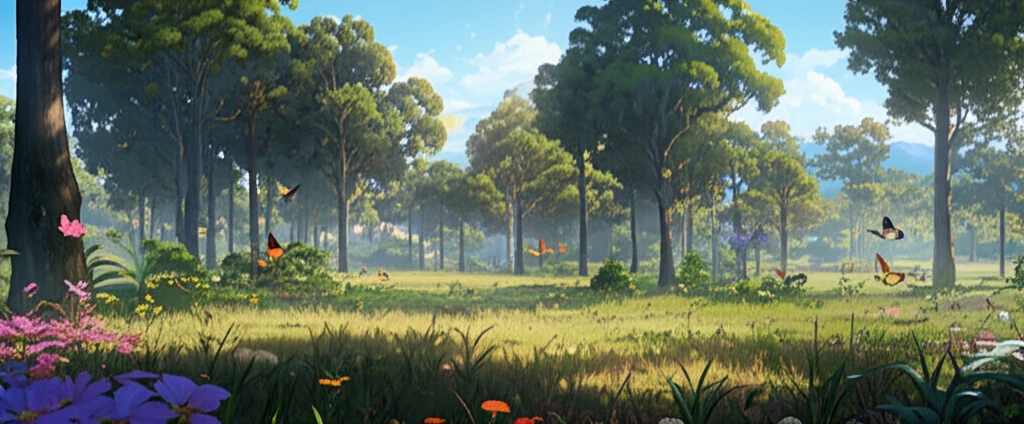
Pilliga Forest Butterflies: Unveiling a Hidden World & What It Means for Conservation

"Discover the surprising diversity of butterfly species in the Pilliga Forest and why this makes it a critical hotspot for biodiversity conservation in Australia."
Australia's western slopes have undergone significant transformation over the past two centuries, evolving from vast temperate woodlands into extensive agricultural landscapes. This shift has left native vegetation highly fragmented, primarily confined to small remnants on less productive soils unsuitable for agriculture. As a result, a wide array of native vertebrate species faces serious decline, highlighting the urgent need for conservation efforts.
Invertebrate species' impact remains less understood. Many invertebrate species have disappeared from the agricultural matrix, now confined to remnant woodland areas. Even small remnants, often overlooked in vertebrate conservation, support diverse woodland invertebrates. However, disturbance-sensitive species may have already vanished, emphasizing the importance of studying and preserving these habitats.
Located in northern inland New South Wales (NSW), between Coonabarabran and Narrabri, the Pilliga Forest stands as the largest surviving temperate woodland remnant in the western slopes bioregions. This makes it an invaluable resource for understanding the original invertebrate fauna of the western slopes before landscape-scale agricultural development. This study describes the butterfly fauna of the Pilliga Forest, documenting local species diversity's spatial and temporal patterns.
Butterfly Data Gaps and Extinction Risk
Australia's butterfly fauna remains significantly under-documented compared to other taxa. On the Atlas of Living Australia, there are currently fewer than 250,000 butterfly records, compared to 40 million for birds, highlighting a stark data imbalance. A recent study identified 26 Australian butterfly taxa as being at greatest risk of extinction, with experts estimating a 42% probability of extinction within 20 years for the most threatened species. The Pilliga Forest alone supports 63 recorded butterfly species, potentially representing up to 80 species and approximately 37% of the New South Wales fauna.
Conservation Methods and Their Constraints
Australia has recently proposed a new strategic national approach for the conservation of insects and allied invertebrates, reflecting growing recognition that current frameworks are insufficient. Traditional survey methods for monitoring butterflies have been diverse but often limited in scope, with some approaches unable to detect successful predation events or introducing size biases when studying bird-butterfly interactions. Functional connectivity modelling between protected areas has been applied to 59 butterfly species to assess landscape-level conservation needs under current environmental conditions. However, these methods collectively face challenges in scaling up to comprehensive national monitoring, given the vast geographic extent and biodiversity of Australia's butterfly fauna.
Tracking Butterfly Conservation Over Time
Butterfly conservation in south-eastern Australia has evolved significantly, with naturalists historically documenting methods for attracting butterflies to feed and breed in home gardens as an early form of citizen engagement. Historical specimen collections have become increasingly valuable for understanding long-term changes in butterfly distributions, particularly when combined with modern climate change research. The development of butterfly conservation in the region represents a largely endemic and highly threatened fauna that has required sustained scientific attention. Cultural associations with butterflies across different Australian language groups reflect deep historical connections between indigenous communities and these insects, adding cultural significance to conservation efforts.
Why the Pilliga Forest's Butterfly Diversity Matters
The Pilliga Forest's butterfly fauna is exceptionally rich, with 63 species representing five families recorded. This makes it one of the richest butterfly faunas recorded on the New South Wales western slopes and adjacent plains. This high diversity reflects the Pilliga Forest's location in a biogeographic overlap zone between northern and southern faunal assemblages, close to both the western plains and outliers of the mesic eastern highlands.
- Biogeographic Overlap: The forest's location makes it a meeting point for species from different regions.
- Habitat Diversity: Varied landscapes within the forest support a wide range of butterfly species.
- Range Extensions: The presence of certain species indicates a potential expansion of their known habitats.
- Hilltopping Sites: Specific locations within the forest serve as gathering points for butterflies, crucial for mating and genetic diversity.
Citizen Science and Threat Assessment
A comprehensive review of butterfly survey methods used in Australia over the past 50 years has revealed a diverse array of approaches, though standardization remains an ongoing challenge. Citizen science databases, particularly iNaturalist, have emerged as powerful tools for collecting butterfly occurrence data at national scales. Recent research has focused on identifying which Australian butterfly taxa would most benefit from formal listing under conservation legislation. The Black Grassdart butterfly provides a notable case study, where recent surveys have dramatically increased the known distribution of the species, warranting a reassessment of its conservation status.
Conservation Gaps and Legal Protections
Despite butterflies being a long-standing focus of scientific study and conservation efforts worldwide, significant gaps persist in their legal protection. Of the 26 Australian butterflies identified as being at greatest risk of extinction, only 10 are currently listed for protection under Australian law. The brigalow ecosystem provides a stark example of habitat loss, with over 90% of brigalow cleared since the 1950s, directly impacting butterfly populations dependent on this habitat. The positive public perception of butterflies, while beneficial for engagement, has not translated into comprehensive conservation outcomes for many threatened species.
Regional Comparisons and Context
Australia's butterfly conservation challenges exist within a broader global context where insect declines have attracted increasing scientific and public attention. The Pilliga Forest, as one of the largest remaining woodland areas in northern New South Wales, represents an important refugium for butterfly diversity compared to more fragmented landscapes. Regional comparisons between Australian butterfly monitoring and international programmes suggest that citizen science approaches may offer scalable solutions, though challenges around data quality and coverage persist. The integration of historical data with modern survey techniques provides opportunities to track long-term population trends across different management regimes.
Protecting the Pilliga Forest for Future Generations
The Pilliga Forest stands as a vital refuge for butterfly diversity in a landscape increasingly dominated by agriculture. Its unique biogeographic location, combined with varied habitats, makes it a crucial area for conservation efforts. Ongoing monitoring, habitat protection, and climate change mitigation strategies are essential to ensure the survival of these butterfly populations and the overall health of this invaluable ecosystem.
Expert Assessments of Extinction Risk
Experts assessing Australian butterflies at risk of extinction have collectively estimated moderate probabilities of extinction within the next 20 years for the taxa under consideration. This expert assessment represents a systematic approach to identifying priority conservation actions for Australia's most threatened butterfly species. The collaborative nature of these assessments, drawing on multiple expert perspectives, provides a more robust foundation for conservation planning than single-researcher evaluations. These findings underscore the urgency of translating scientific assessments into concrete conservation actions and policy protections for vulnerable species.
Expanding Knowledge Through Survey Expansion
Recent survey efforts have demonstrated that expanded field work can dramatically increase the known distribution of butterfly species, as exemplified by the Black Grassdart reassessment. This suggests that many Australian butterfly distributions remain incompletely documented, and targeted surveys could reveal significant range extensions or new populations. The reassessment of conservation status based on updated distribution data provides a model for how scientific knowledge can directly inform management priorities. Future research directions include leveraging citizen science platforms, environmental DNA techniques, and long-term monitoring programmes to build comprehensive baseline data for Australia's butterfly fauna.
Threats Beyond Individual Species
Butterfly conservation faces systemic challenges that extend beyond individual species management to encompass landscape-scale habitat loss. Forest-dependent butterflies are particularly vulnerable to two primary threats: the replacement of primary forest by commercial oil palm plantations and unsustainable timber extraction practices. These dual pressures create compounding effects on butterfly populations that may be difficult to reverse once habitat thresholds are crossed. Addressing these challenges requires integrating butterfly conservation into broader landscape management strategies that balance economic activities with biodiversity protection.
Engaging Communities in Conservation
The success of butterfly conservation ultimately depends on engaging diverse stakeholders, from local communities to policymakers, in understanding and protecting these species. Citizen science programmes have demonstrated that public participation can generate valuable data while simultaneously building awareness and support for conservation initiatives. The Pilliga Forest example illustrates how regional biodiversity assessments can inform local management decisions and community engagement strategies. Effective conservation communication requires translating scientific findings into accessible narratives that connect people with the natural world and inspire action.