
Pelvic Injury Stabilization: Are We Squeezing Too Hard?

"Exploring new compression methods for pelvic fractures reveals critical insights into tissue health and alternative treatments to enhance patient care."
Pelvic ring injuries pose significant challenges in trauma care due to their association with high morbidity and mortality. Stabilization is crucial, but traditional methods involving continuous compression can compromise tissue health, leading to necrosis and other complications. Innovative approaches are needed to balance the necessity of stabilization with the imperative of preserving tissue perfusion.
Conventional pelvic binders, widely used in emergency settings, often apply constant pressure exceeding safe limits for tissue perfusion. This sustained compression can lead to ischemia, potentially exacerbating patient outcomes. Recognizing the limitations of existing solutions, researchers are exploring alternative methods that offer effective stabilization while minimizing the risk of tissue damage.
This article examines the potential of alternating compression as a novel strategy for pelvic ring injury stabilization. By cyclically varying the pressure applied to the pelvic region, this method aims to maintain adequate tissue perfusion while providing the necessary support for fracture healing. The concept could revolutionize emergency and trauma care, offering a safer, more effective way to manage these complex injuries.
The Scale of Pelvic Fracture Burden
Unstable pelvic fractures represent a critical challenge in trauma care, with external emergency stabilization shown to reduce hemorrhage and mortality. No standardized protocol currently exists for which stabilization procedure should be used in emergency settings. Prospective studies remain needed to validate findings and identify factors influencing long-term recovery outcomes for these patients.
Current Stabilization Methods
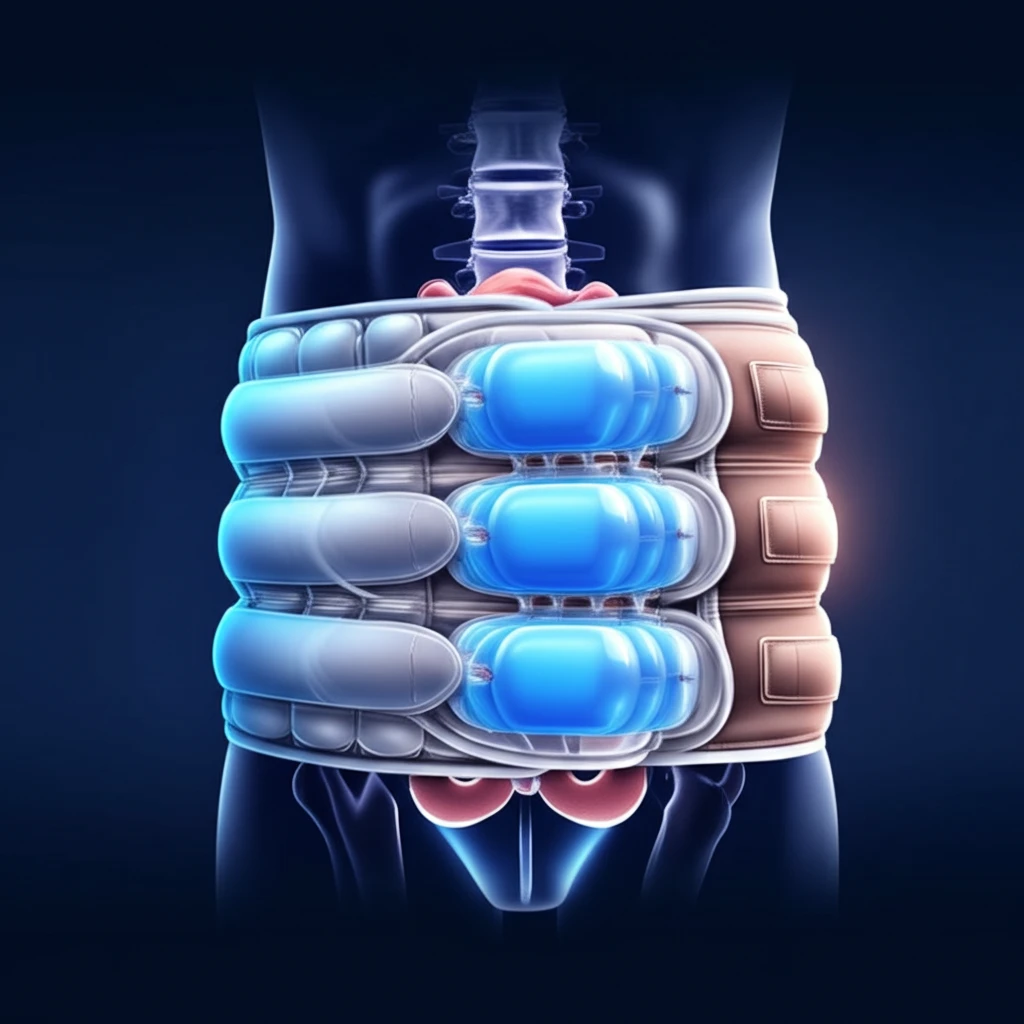
Anterior pelvic ring stabilization is typically indicated when the posterior pelvic ring is also unstable, such as in open-book injuries with ruptured symphyses or complete posterior disruption. Emerging innovations like alternating compression binders aim to address limitations of continuous compression by using sequential inflation and deflation of air chambers. Current management encompasses both non-operative and operative approaches, emphasizing early stabilization and cross-disciplinary collaboration.
Foundations of Pelvic Emergency Care
The standard management for hemodynamically unstable patients with pelvic ring injuries has long entailed mechanical stabilization of the ring followed by measures to control pelvic hemorrhage. Initial trauma bay workup includes chest X-ray, pelvic X-ray, and FAST exam to differentiate pelvic fracture as the primary source of hemodynamic instability from other life-threatening injuries. This foundational approach established the framework for modern emergency pelvic stabilization protocols.
Understanding the Pressures: How Alternating Compression Works
Traditional pelvic binders apply continuous pressure to stabilize pelvic fractures. While effective in reducing bleeding and providing immediate support, prolonged pressure above 9.8 kPa (kilopascals) can lead to tissue necrosis. Studies have consistently shown that standard pelvic binders often exceed this threshold, raising concerns about potential complications.
- Continuous Compression Binders: Apply constant pressure, potentially leading to tissue necrosis.
- Alternating Compression Binders: Cycle pressure, promoting tissue perfusion while stabilizing the pelvis.
- Goal: To balance stabilization with tissue preservation, reducing complications.
Pelvic Binders as Temporary Stabilization
Hemodynamically unstable pelvic ring injuries pose significant challenges in trauma care, with external fixation traditionally used for initial stabilization. Recent research has evaluated pelvic binders as potential alternatives to external fixation, examining their feasibility and safety as temporary stabilization methods. This shift toward binder-only protocols represents an evolving area of investigation in pelvic fracture management.
Prioritizing Posterior Ring Stabilization
When dealing with bleeding patients who have unstable pelvic ring injuries and suspected pelvic bleeding, experts emphasize that stabilization of the posterior pelvic ring should be performed first. This priority reflects the critical importance of posterior ring integrity in controlling hemorrhage, suggesting that approaches focusing solely on anterior stabilization may be insufficient in acute trauma scenarios.
Comparative Stabilization Approaches
Pelvic fracture management continues to evolve with ongoing debate regarding optimal stabilization strategies. Different approaches offer varying trade-offs between invasiveness, speed of application, and long-term outcomes. The choice of technique depends on injury pattern, patient stability, and available resources in the clinical setting.
The Future of Pelvic Stabilization
The development and testing of alternating compression binders represent a significant step forward in pelvic fracture management. By addressing the limitations of continuous compression, this innovative approach has the potential to improve patient outcomes, reduce complications, and enhance the overall standard of care in emergency and trauma settings.
Debating Anterior Ring Fixation Necessity
Lateral compression injuries account for more than two-thirds of all pelvic fractures, with surgical treatment aiming to provide adequate stability and early mobilization. While consensus exists on posterior fixation for these injuries, the necessity of anterior ring fixation remains unclear in the literature. This uncertainty continues to drive research into whether combined anterior-posterior stabilization offers meaningful benefits over posterior-only approaches.
The Rise of Minimally Invasive Techniques
The treatment paradigm of pelvic ring injuries has shifted notably over recent decades, with open reduction and internal fixation declining in favor of less invasive approaches. Percutaneous pelvic fixation has gained popularity as a minimally invasive stabilization method, reflecting broader trends toward reduced surgical morbidity. External fixation remains a cornerstone for hemodynamically unstable patients, though its role continues to evolve alongside emerging techniques.
Complexity of Pelvic Trauma Management
Pelvic injuries range from stable avulsion fractures to complex unstable pelvic ring injuries, posing significant diagnostic and therapeutic challenges, particularly in polytrauma patients. The most common causes include motor vehicle collisions, pedestrian injuries, and falls from height, with younger populations at heightened risk from high-energy mechanisms. The three-dimensional anatomy of the pelvic ring and proximity of major neurovascular structures further complicate surgical stabilization efforts.
Addressing Tissue Ischemia from Binders
Traumatic pelvic ring injuries carry significant risks of morbidity and mortality, risks that can be exacerbated by pressures exerted by pelvic binders. Research into alternating compression binders has examined pressure distributions from commercial binders versus novel designs intended to mitigate tissue ischemia. This focus on reducing complications from binder pressure reflects growing recognition that stabilization methods themselves can introduce secondary harm.