
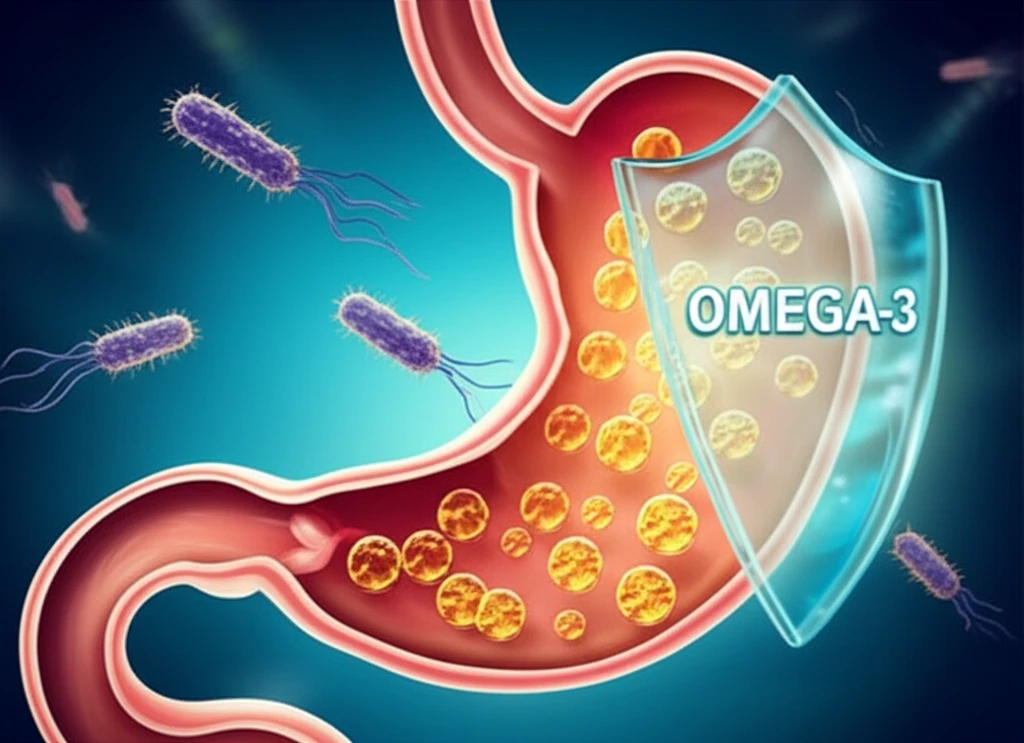
Omega-3s: Can These Fatty Acids Fight Stomach Troubles?

"Uncover how omega-3 polyunsaturated fatty acids (PUFAs) could be a game-changer in managing Helicobacter pylori (H. pylori)-related gastric diseases, offering a non-antimicrobial dietary approach for a healthier gut."
Gastric cancer ranks as the fourth most common cancer globally and the second leading cause of cancer-related deaths. A key culprit in gastric carcinogenesis is Helicobacter pylori (H. pylori) infection, a major risk factor for both gastritis and gastric carcinoma. While factors like host genotype, bacterial virulence, and environmental conditions can heighten the risk, the slow progression from H. pylori infection to chronic inflammation sets the stage for gastric cancer development.
H. pylori's ability to thrive in the harsh acidic environment of the stomach allows it to adhere to gastric epithelial cells, triggering inflammation. This, in turn, leads to the recruitment of immune cells and the production of reactive oxygen and nitrogen species, contributing to gastric epithelial cell damage and, potentially, carcinogenesis.
Omega-3 polyunsaturated fatty acids (n-3 PUFAs), such as eicosapentaenoic acid (EPA) and docosahexaenoic acid (DHA), have gained recognition as essential long-chain fatty acids. These offer benefits ranging from promoting optimal health to rescuing individuals from chronic inflammatory diseases, including atherosclerosis, fatty liver, and various inflammatory gastrointestinal disorders. Emerging research into EPA and DHA has sparked significant interest, particularly with the identification of GPR120, its receptor, a G protein-coupled receptor. This article explores the potential of n-3 PUFAs in reducing H. pylori-associated gastric diseases and even preventing gastric cancer by influencing factors like proliferation, survival, angiogenesis, inflammation, and metastasis.
Stomach Troubles and the Omega-3 Question
Stomach ailments remain among the most common health complaints worldwide, affecting hundreds of millions of people. From chronic gastritis linked to Helicobacter pylori infection to general inflammatory digestive conditions, these issues significantly impact quality of life. Omega-3 fatty acids, essential nutrients found in fish oil and plant sources, have attracted growing interest as a potential dietary intervention. Researchers are exploring whether these anti-inflammatory compounds could complement or even reduce reliance on conventional treatments for persistent stomach problems.
Conventional H. pylori Detection and Omega-3 as an Alternative
Helicobacter pylori infection is a leading cause of gastric diseases, yet current 'gold standard' single-method testing approaches have recognized limitations that can lead to systematic underdiagnosis. Future iterations of clinical consensus may recommend multimodal strategies for both initial screening and confirmatory testing, particularly in high-risk populations. Meanwhile, omega-3 polyunsaturated fatty acids (n-3 PUFAs) have emerged as a promising nonantimicrobial dietary approach to regulate H. pylori-associated gastric diseases. Research suggests these fatty acids could reduce disease progression by influencing multiple biological targets including cell proliferation, survival, and angiogenesis pathways.
The Ancient Partnership of H. pylori and Humans
Helicobacter pylori has co-evolved with humans for approximately 60,000 years, migrating out of Africa alongside its human hosts. While H. pylori has been prevalent throughout human history, the clinical manifestations of infection have changed significantly in recent decades, particularly in Western countries where gastric ulcer and gastric cancer rates have declined. The history of H. pylori-related diseases spanning the last two millennia shows a bacterium deeply embedded in human populations worldwide. Understanding this long evolutionary history provides context for why simple eradication strategies may face challenges and why complementary approaches like dietary omega-3 intake warrant investigation.
Omega-3s: Your Gut's New Best Friend?
Western diets, often high in the ratio of n-6 to n-3 PUFAs, have been linked to the development of various cancers, including those of the esophagus, breast, stomach, colon, pancreas, and prostate. However, n-3 PUFAs possess multiple beneficial antitumor functions that have demonstrated the ability to alter malignant growth in several studies.
- Anti-Inflammatory Powerhouse: n-3 PUFAs are widely recognized for their anti-inflammatory properties, which are crucial in combating inflammatory diseases.
- Gut Guardian: They've been shown to protect against chronic inflammatory diseases affecting the gut.
- Cancer Risk Reduction: Some studies even suggest n-3 PUFAs can play a role in reducing the risk of certain cancers.
Emerging Evidence on Omega-3s and Gastric Health
The scientific landscape around omega-3 fatty acids and digestive health continues to evolve, though research remains in relatively early stages. While several studies have explored the anti-inflammatory mechanisms of omega-3s, comprehensive clinical trials specifically examining stomach conditions are still limited. Researchers are increasingly recognizing that dietary factors may play a more significant role in gastric disease management than previously understood. The current body of evidence suggests promise, but more rigorous studies are needed to establish definitive therapeutic guidelines.
Omega-6 to Omega-3 Ratios and H. pylori Outcomes
Helicobacter pylori infection is responsible for approximately 90% of non-cardia gastric cancer cases, making it a critical target for intervention. Research examining dietary omega-6 to omega-3 ratios has yielded important findings, with studies noting that diets low in omega-6 and high in omega-3 fatty acids may have anti-inflammatory and anti-microbial effects relevant to H. pylori management. However, one study identified potential limitations or conflicting evidence regarding the optimal balance, suggesting the relationship may be more complex than a simple high omega-3 intake approach. The field continues to investigate whether omega-3 supplementation alone is sufficient or whether the broader dietary context—particularly the ratio of competing fatty acids—determines clinical benefit.
Weighing Dietary Interventions Against Conventional Therapies
When comparing omega-3 fatty acid approaches to conventional H. pylori treatments, important distinctions emerge. Standard triple therapy using antibiotics remains the established clinical standard, yet concerns about antibiotic resistance and side effects continue to grow. Omega-3 fatty acids represent a fundamentally different strategy—not a replacement for conventional treatment, but a potential complementary dietary intervention. The appeal of omega-3s lies in their anti-inflammatory properties rather than direct antimicrobial action, suggesting they might address the downstream inflammatory consequences of infection rather than the infection itself. This complementary positioning may prove most valuable for patients seeking to support their overall gastric health alongside standard medical care.
The Future of Omega-3s in Gastric Health
H. pylori is classified as a class 1 carcinogen by the IARC, underscoring the importance of strategies to prevent associated gastric cancer. Host adaptive responses can modify the carcinogenic influence of H. pylori infection. N-3 PUFAs, known for their antioxidant, anti-inflammatory, and anticancer properties, are under investigation for their effects on H. pylori-induced gastric diseases.
The Current State of Omega-3s for Stomach Health
The intersection of omega-3 fatty acids and gastric health represents a fascinating area where nutrition meets gastroenterology. While the biological plausibility is strong—omega-3s are well-established anti-inflammatory agents, and chronic gastric inflammation is central to many stomach conditions—the clinical translation remains incomplete. Experts increasingly recognize that dietary interventions like omega-3 supplementation should be viewed as part of a holistic approach to digestive wellness rather than isolated treatments. The most responsible path forward combines ongoing research with cautious optimism about omega-3s' role in supporting stomach health.
Innovation Pathways in Omega-3 Gastric Research
The future landscape of omega-3 research in gastric health is being shaped by several converging trends. Bibliometric analyses of H. pylori research indicate growing attention to gut microbiome interactions, which could reveal new mechanisms through which omega-3s exert their effects. Meanwhile, the omega-3 market itself is evolving, with innovations in algae-based and plant-derived sources expanding access beyond traditional fish oil supplements. Market research suggests the global omega-3 industry will continue growing through 2030, driven by demand for functional foods and pharmaceutical applications. These developments suggest that more targeted, bioavailable omega-3 formulations designed specifically for digestive health applications may be on the horizon.
Nutritional Interventions in Global Gastroenterology
Omega-3 fatty acids represent just one component of a broader conversation about nutritional approaches to gastrointestinal health. The challenge lies in translating promising biological mechanisms into practical dietary recommendations that patients can realistically follow. Access to quality omega-3 supplements varies significantly by region and socioeconomic status, creating potential health equity concerns. Additionally, the food industry's increasing interest in omega-3 fortification raises questions about standardization and quality control. As research continues to evolve, integrating omega-3 evidence into mainstream gastroenterology practice will require collaboration between researchers, clinicians, nutritionists, and public health professionals.
Patient Perspectives on Omega-3 Dietary Changes
For patients living with chronic stomach conditions, the prospect of dietary omega-3 intervention offers both hope and complexity. Studies examining omega-6 to omega-3 ratios acknowledge that translating anti-inflammatory research into actionable dietary guidance remains challenging for individuals. The practical reality is that most people cannot easily measure their fatty acid intake ratios or precisely calibrate their diet to optimal levels. Patient education becomes crucial—helping individuals understand that omega-3s are not a miracle cure but potentially one tool among many for managing gastric symptoms. Real-world impact will ultimately depend on making omega-3-rich foods accessible and providing clear, evidence-based guidance that patients can incorporate into their daily lives.
Accumulating evidence suggests that higher consumption of dietary n-3 PUFAs is associated with a lower risk of GI cancer development. Recent studies propose that endogenous n-3 PUFAs delay the progression of stomach cancer, suggesting that elevating n-3 PUFAs could be an important strategy to delay or prevent gastrointestinal cancer in high-risk patients.
Supplementation with n-3 PUFAs, possibly in combination with other antitumor agents, may improve the efficacy of GI cancer prevention. Further research is needed to fully demonstrate the preventive or therapeutic effects of n-3 PUFAs against H. pylori-induced gastric diseases, making clinical trials essential for determining their role in H. pylori-associated gastric conditions.