
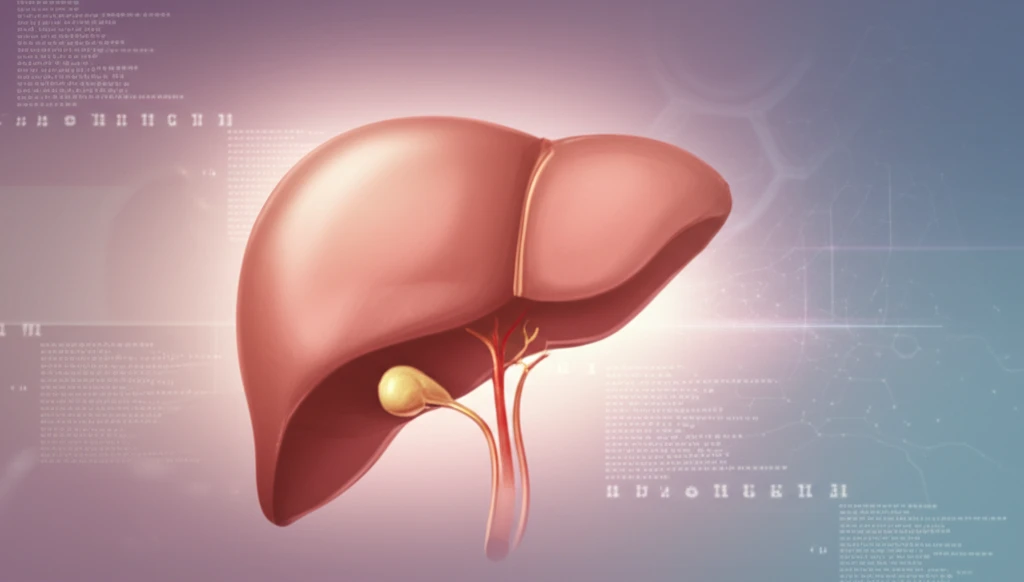
New Hope for Liver Cancer: How a Promising Treatment Could Change Everything

"A groundbreaking study explores the efficacy of a new drug in treating advanced hepatocellular carcinoma, offering a beacon of hope for patients and a potential shift in treatment strategies."
Liver cancer, or hepatocellular carcinoma (HCC), presents a formidable challenge in the medical world. Its prevalence and the often late-stage diagnosis make it a difficult disease to treat. Traditional methods have shown limited success, leaving patients with few options. However, recent research offers a glimmer of hope. A new clinical trial is underway to explore the efficacy and safety of a promising new drug, potentially changing the treatment landscape for advanced HCC.
The study focuses on tislelizumab, an anti-PD-1 antibody, and its potential to be a game-changer in HCC treatment. The trial compares tislelizumab with the current standard of care, sorafenib, evaluating its effectiveness as a first-line treatment for patients with advanced liver cancer. This approach aims to provide a more effective treatment option and improve patient outcomes.
This article will provide an in-depth look at the ongoing clinical trial, discussing its design, goals, and what it means for patients and the medical community. We will also cover the significance of the findings, the potential benefits of the new treatment, and the broader implications for cancer care. This research aims to give patients and their families hope by exploring new ways to combat cancer.
Clinical Evidence in Advanced HCC
Clinical research is evaluating tislelizumab in hepatocellular carcinoma (HCC), including the NCT06003673 study of tislelizumab combined with transarterial chemoembolization (TACE). ClinicalTrials.gov reports participant information such as numbers who started, completed, or dropped out, although the supplied material does not provide those figures. In previously treated advanced HCC, one report found that the number of prior therapy lines did not considerably affect response or survival estimates, suggesting a potential role for tislelizumab as second- or third-line treatment. A phase 3 study also compared intravenous tislelizumab at 200 mg every three weeks with oral sorafenib in eligible patients with advanced HCC.
An Evolving Treatment Standard
Recent evidence reviews assess tislelizumab against standard treatment or placebo using outcomes including objective response rate, disease control rate, overall survival, and progression-free survival. For early-stage HCC, a prospective single-arm phase II trial evaluated perioperative tislelizumab monotherapy, giving nonresponders subsequent lenvatinib before surgery. The available literature indicates that a globally accepted standard adjuvant treatment protocol remains elusive. Researchers are also emphasizing predictive biomarkers and the tumor immune microenvironment to help identify which patients are most likely to benefit.
A Developing Immunotherapy Story
Tislelizumab's place in liver-cancer treatment reflects the broader development of immune checkpoint inhibition for solid tumors. Its evaluation has progressed from clinical investigation toward studies of combinations, perioperative use, and treatment sequencing. However, the supplied material does not establish a detailed historical timeline or identify specific foundational discoveries. Its long-term role therefore remains a subject of continuing clinical research.
Unveiling the Study: Key Aspects of the Clinical Trial
The clinical trial is a phase 3, randomized, open-label, multicenter study. It's designed to compare tislelizumab with sorafenib in patients with advanced HCC. The study is being conducted at multiple international centers, involving a diverse group of participants. This approach ensures that the findings are relevant and applicable to a wide range of patients.
- Study Design: A phase 3, randomized, open-label, multicenter trial.
- Participants: Adult patients with advanced HCC.
- Treatment Arms: Tislelizumab vs. Sorafenib.
- Goal: To evaluate the efficacy and safety of Tislelizumab as a first-line treatment.
Research Continues Across Treatment Settings
Current research is examining tislelizumab across advanced, early-stage, and perioperative HCC settings. Investigators are studying both monotherapy and combinations with treatments such as lenvatinib, while reviews compare outcomes including response, disease control, survival, and progression-free survival. The evidence base is expanding, but the supplied material does not provide enough results to establish a definitive conclusion about the best regimen. Future findings will need to clarify which patients and disease stages benefit most.
Safety Risks and Limited Evidence
Evidence for tislelizumab after curative HCC resection remains limited; one multicenter retrospective analysis specifically noted that few studies had examined adjuvant use to prevent recurrence. Serious toxicities have also been reported in case reports. A report involving a patient with cervical cancer described immune-mediated hepatitis and acute liver failure, while another described a 72-year-old man with cholangiocarcinoma who developed fulminant hepatic injury and acute kidney injury within four days of third-line tislelizumab plus anlotinib. These cases do not establish how often such events occur, but they underscore the need for careful safety monitoring.
Comparisons Require Careful Interpretation
Comparing tislelizumab with other liver-cancer treatments requires attention to the study population, treatment setting, and outcome being measured. The available source material indicates that trials have assessed response, disease control, overall survival, and progression-free survival, but it does not provide a complete, directly comparable set of figures across therapies. Differences in trial design, disease stage, prior treatment, and combination regimens can affect apparent results. Broad claims that one approach is universally superior would therefore be premature.
Looking Ahead: The Future of Liver Cancer Treatment
The ongoing clinical trial of tislelizumab represents a significant step forward in the fight against liver cancer. The results of this study have the potential to reshape treatment paradigms and offer new hope to patients. As research continues, the medical community remains committed to finding innovative solutions and improving patient outcomes in the challenging battle against cancer.
Promising Results With Important Caveats
The supplied evidence presents tislelizumab as a promising component of treatment strategies for advanced HCC. A 2026 report described tislelizumab combined with anlotinib and radiotherapy as showing promising efficacy and acceptable safety as first-line treatment. Perioperative research has also explored combinations involving tislelizumab and lenvatinib, with or without TACE, after relapse during adjuvant treatment. At the same time, a published analysis debated how to quantify the treatment effect of tislelizumab versus sorafenib in a noninferiority overall-survival setting, reinforcing the importance of careful interpretation.
The Next Questions for Tislelizumab
The future research agenda includes clarifying tislelizumab's effectiveness and safety as additional clinical-trial data become available. Updated phase III data presented in connection with ASCO 2026 were described as supporting noninferiority versus sorafenib for first-line advanced liver cancer and continued global development. A single-arm phase II trial has also raised interest in perioperative tislelizumab plus lenvatinib for resectable HCC. These findings are encouraging, but single-arm and emerging data still require confirmation through further research.
Treatment Progress Meets Complex Disease
HCC is often linked to chronic liver disease and cirrhosis, factors that complicate treatment and influence the broader clinical context. The supplied sources describe systemic-therapy advances, including TACE combined with tislelizumab and lenvatinib. One source characterizes tislelizumab as the only immune checkpoint inhibitor with a positive outcome in a global multicenter phase III trial for first-line advanced HCC. Other reporting emphasizes that optimizing treatment sequencing and combinations remains important for maximizing benefit.
Hope Balanced With Patient Safety
For patients and families, promising results from tislelizumab research may offer hope, particularly when advanced liver cancer has limited treatment options. The potential benefits must be weighed against uncertainty about which patients will respond and the possibility of serious immune-related complications. Treatment decisions are therefore likely to depend on disease stage, prior therapies, overall health, and close medical monitoring. Continued clinical research can help translate encouraging findings into safer and more dependable real-world care.