
New Hope for Esophageal Cancer: Promising Results from a Groundbreaking Treatment

"A revolutionary therapy combining immune and targeted approaches shows early promise in treating advanced esophageal cancer."
Esophageal cancer, particularly adenocarcinoma, can be a devastating diagnosis. Often detected at a late stage, treatment options can be limited, and outcomes challenging. However, recent advancements in medical research are offering new hope. A new phase I clinical trial is showing promising early results for a novel treatment approach, potentially changing the landscape of how we treat this aggressive form of cancer.
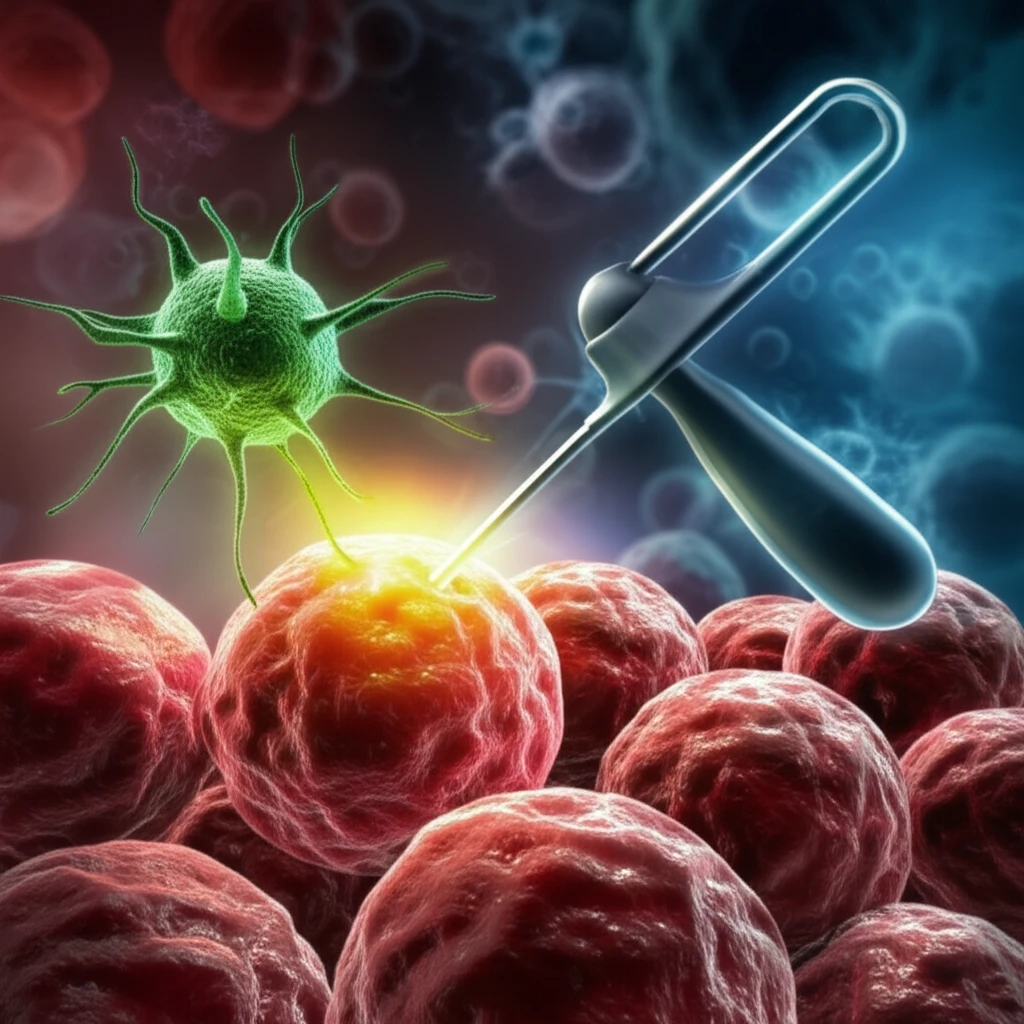
This groundbreaking therapy combines two key strategies: targeting the PD-L1 protein, which helps cancer cells evade the immune system, and addressing the TGF-beta pathway, another mechanism cancers use to suppress the immune response. This dual approach is designed to unleash the body's natural defenses against the disease. The early clinical trial results, which focus on patients with advanced, post-platinum esophageal adenocarcinoma, offer a glimpse of what the future of cancer treatment may hold.
In this article, we'll delve into the specifics of this innovative treatment, explore the encouraging early findings, and discuss what these developments mean for patients and the medical community.
A Significant Health Burden
Esophageal cancer remains a serious global health challenge, affecting patients through both the disease itself and the demands of intensive treatment. Its impact varies by tumor type, stage, geography, and patient health. Because outcomes can be poor, timely diagnosis and individualized care remain important priorities.
Standard Treatment and Its Limits
The National Cancer Institute reports that very early esophageal cancer may be treated with surgery alone, while more advanced disease may require chemotherapy and radiation therapy. For early and some locoregional cancers, surgery is commonly the primary treatment; esophagectomy may use either an open or minimally invasive approach. Patients who are not medically fit for surgery may be considered for endoscopic resection with or without ablation in localized disease. Standard treatments remain established options, but clinical trials continue to test ways to improve current care and develop new treatments.
An Evolving Treatment Tradition
The treatment of esophageal cancer has developed through successive improvements in surgery, radiation, chemotherapy, endoscopic care, and clinical research. Earlier approaches established the importance of removing or controlling localized disease, while later strategies increasingly combined treatments for more advanced cancer. This progression provides the foundation for current efforts to make treatment more precise and less burdensome.
Understanding the New Treatment: How Does It Work?
The new treatment, known as M7824 (MSB0011359C), is a bifunctional fusion protein. This means it's designed to work in two distinct ways. First, it targets the PD-L1 protein. Many cancer cells express PD-L1, which essentially puts the brakes on the immune system's ability to attack the cancer. By blocking PD-L1, the treatment helps to release these brakes, allowing the immune system to recognize and destroy the cancer cells.
- Targeting PD-L1: Blocks the 'brake' that cancer cells use to evade the immune system.
- Addressing TGF-beta: Inhibits a protein that promotes tumor growth and suppresses the immune response.
- Dual Action: Combining these two mechanisms creates a powerful approach to fight cancer.
From Broad Treatment to Precision Care
Recent reviews describe esophageal cancer as encompassing two primary histological subtypes: esophageal squamous-cell carcinoma and esophageal adenocarcinoma. Current research examines the disease from pathogenesis through precision therapies, while clinical oncology reviews highlight advances across the disease continuum. A 2026 New England Journal of Medicine review focuses on epidemiology, risk factors, prevention, and clinical management. Despite treatment advances, the disease remains aggressive, and multidisciplinary care continues to be important.
Persistent Risks and Unsettled Choices
Available treatments include surgery, chemotherapy, and radiation, but esophageal cancer continues to have high morbidity and mortality. Treatment-related complications can include treatment-related death, pulmonary and cardiac complications, anastomotic leakage, and esophagitis. Evidence summarized in a meta-analysis found that, in almost all cases of squamous cell carcinoma, additional treatments did not increase survival but did increase adverse effects. These findings underscore why treatment comparisons cannot ignore cancer type and toxicity.
Why Comparisons Remain Difficult
Comparing esophageal cancer treatments requires attention to histological subtype, disease stage, patient fitness, and the specific combination of therapies used. Surgery, chemotherapy, radiation, endoscopic treatment, and newer approaches may serve different clinical situations rather than competing as interchangeable choices. Differences in complications and treatment response make broad claims about one universally superior strategy unreliable.
A Promising Future for Esophageal Cancer Patients
The initial findings from the phase I trial of M7824 offer a glimmer of hope for individuals battling advanced esophageal adenocarcinoma. While more research is needed to confirm these preliminary results and assess long-term outcomes, the early signs of efficacy and manageable safety profile are encouraging. This innovative approach, combining immune-based and targeted therapies, may represent a significant step forward in the treatment of this challenging disease. Continued research and clinical trials will be essential to fully realize the potential of this promising treatment.
Individualized, Multidisciplinary Care
International experts have reached consensus on terminology and interpretation in multimodal esophageal cancer treatment, which can improve comparisons among studies. An expert opinion reports that five-year overall survival increased from 5% to 17% over the last 30 years, while emphasizing that treatment should reflect disease stage, histology, and patient co-morbidities. Contemporary management also incorporates endoscopic therapy, multimodality treatment, biomarker-driven systemic therapy, and supportive care. Health-related quality of life remains essential when judging treatment efficacy and long-term outcomes.
Prevention, Early Detection, and New Therapies
Future progress is expected to involve prevention, earlier diagnosis, and continued refinement of treatment for both esophageal squamous cell carcinoma and esophageal adenocarcinoma. One review identifies primary prevention as the preferred strategy for reducing the global burden of esophageal cancer. Recent treatment updates also point to newly approved therapies and novel approaches to optimizing care. These developments offer potential new options, but their role must be established through ongoing research.
A Global and Unequal Burden
Esophageal cancer is described as a significant global burden, ranking seventh in incidence and sixth in cancer-related mortality in one cited review. Its two principal histological types have distinct geographic prevalence and molecular characteristics, while early detection remains difficult. Prevention, changes in etiology, improved detection, and treatment advances have contributed to progress, but the disease remains aggressive and deadly. These challenges reinforce the need for advanced systemic treatments and coordinated care.
Care Beyond the Treatment Plan
A 2025 case report described a 73-year-old woman with advanced squamous cell carcinoma of the upper middle thoracic esophagus who received sintilimab, low-dose-rate chemoradiotherapy, and nimotuzumab, followed by maintenance immunotherapy and anti-angiogenesis treatment. The report states that immunotherapy played a central role, but also notes that evidence for this combined approach remains limited. Separately, real-world evidence supports treating patients with esophageal cancer at high-volume centers, with centralization associated with positive patient outcomes. These examples show how treatment choices and care settings can shape patients' real-world experiences.