
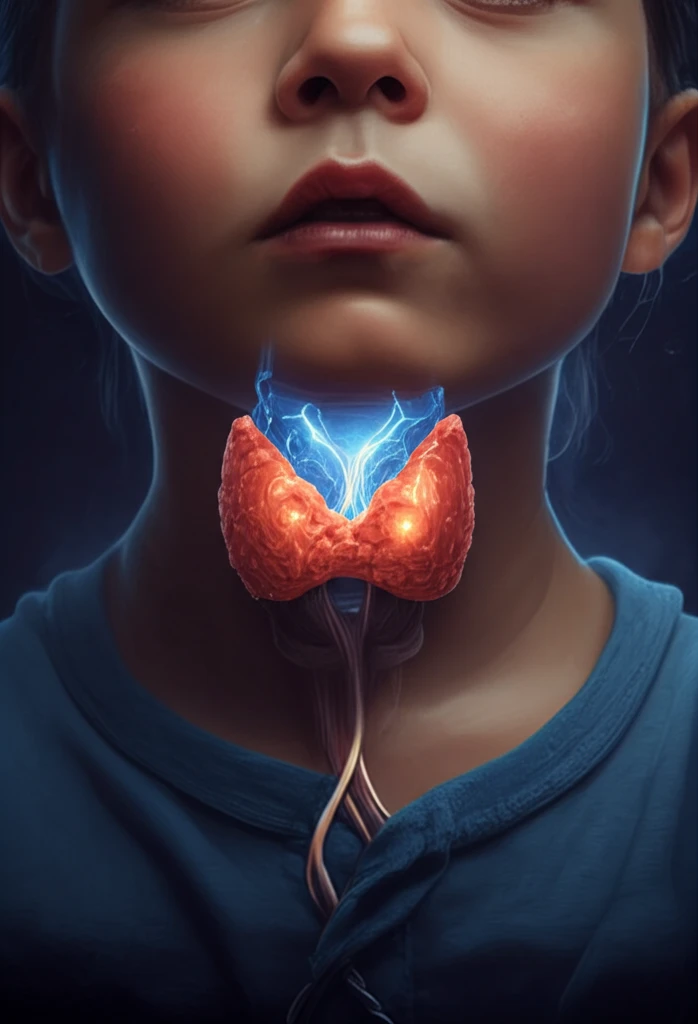
Neck Lump? Understanding Piriform Sinus Fistulas: A Guide for Parents

"Decoding rare congenital neck issues: causes, symptoms, and cutting-edge treatment options for piriform sinus fistulas."
As parents, discovering a lump on your child's neck can be alarming. While many causes exist, one less-known possibility is a piriform sinus fistula (PSF). These rare, congenital abnormalities can lead to recurrent infections and require specialized care. This article will break down what you need to know about piriform sinus fistulas, offering clear explanations and guidance.
Piriform sinus fistulas arise from developmental issues in the third and fourth branchial arches—structures present during embryonic development. Typically, these structures disappear, but sometimes remnants persist, forming a small tract or fistula. Most commonly, these fistulas appear on one side of the neck, but in extremely rare instances, like the case study we'll discuss, they can be bilateral (occurring on both sides).
Understanding PSFs is crucial for early diagnosis and effective management. This guide aims to equip you with information about the causes, symptoms, diagnostic methods, and treatment options available, ensuring you feel empowered to navigate your child's health journey.
How Common Are Piriform Sinus Fistulas?
Pyriform sinus fistula (PSF) is a rare congenital anomaly that accounts for approximately 1%–4% of all branchial malformations, though some sources report it may represent up to 1%–10% of such deformities. Approximately 80% of cases present in childhood, making it a condition that parents and pediatricians should be aware of. The condition is significantly more common on the left side of the neck, with more than 90% of patients affected unilaterally on the left. Diagnosis can be challenging, with one study finding a misdiagnosis rate of nearly 13% among cases initially evaluated with ultrasonography.
How Is PSF Diagnosed and Treated Today?
Current management of pyriform sinus fistula involves both diagnostic imaging and surgical intervention tailored to the patient's age and infection stage. Studies recommend optimal diagnostic schemes that vary depending on whether the patient is in an acute infection phase or a quiescent period. Treatment options include endoscopic procedures, which have demonstrated an 82% success rate with a 5.6% complication rate in one large review. Newer approaches, including novel external cervical surgical methods and hypothermia plasma cauterization with suspension laryngoscopy, are being evaluated for complex or recurrent cases. Despite these advances, the optimal definitive treatment has not yet been universally established.
The Evolving Understanding of PSF
Congenital pyriform sinus fistula was historically underrecognized, often misdiagnosed as simple neck abscesses or thyroiditis. It is now understood to originate from the failure of obliteration of the third or fourth pharyngeal pouches during embryonic development. Researchers have recognized PSF as an underlying cause of acute suppurative thyroiditis and deep neck infections, fundamentally changing how these conditions are evaluated. The condition arises from developmental abnormalities of the third and fourth branchial arches and almost always occurs unilaterally. Clinical series consistently show that patients present with a history of neck swelling, pain, and often multiple prior abscess drainages before correct diagnosis.
What are the Signs and Symptoms of Piriform Sinus Fistulas?
Piriform sinus fistulas can be tricky to diagnose due to their varied and sometimes subtle presentations. However, some common signs and symptoms should raise suspicion, particularly in children:
- Recurrent Neck Abscesses: This is the most common presentation. You might notice a painful, red, and swollen lump in the lower neck, often near the collarbone.
- Suppurative Thyroiditis: Infection and inflammation of the thyroid gland, leading to pain, tenderness, and sometimes fever.
- Upper Respiratory Infections: Infections may precede or exacerbate PSF symptoms.
- Respiratory Distress: In infants, PSFs can cause stridor (noisy breathing), dysphagia (difficulty swallowing), and feeding difficulties if the abscess compresses the trachea (windpipe).
- Normal Thyroid Function: It's important to note that thyroid function is typically normal in children with PSFs.
What Does the Latest Research Reveal?
Recent literature describes pyriform sinus fistula as an epithelialized tract connecting the skin of the neck to the foregut, which may result in cervical infections and abscess formation. A 2024 comparative study notes that the optimal definitive treatment for congenital pyriform sinus fistula has not yet been established, reflecting the ongoing evolution of management strategies. Research continues to refine diagnostic accuracy, as cases are frequently misdiagnosed initially, leading to delayed treatment and repeated infections. The rarity of the condition means that large-scale randomized trials remain limited, and much of the evidence comes from case series and retrospective reviews.
Where Treatment Falls Short
While endoscopic and surgical techniques have improved outcomes, significant challenges remain in managing pyriform sinus fistula. Misdiagnosis continues to be a recurring problem, with patients often undergoing multiple drainage procedures before the underlying fistula is identified. Recurrence after treatment is a documented concern, particularly when the entire fistulous tract is not completely excised. The rarity of the condition also means that many clinicians have limited experience with PSF, which can contribute to diagnostic delays and suboptimal initial management.
Weighing Treatment Options
Clinicians managing pyriform sinus fistula must weigh several factors when selecting a treatment approach, including the patient's age, the acuity of infection, and the complexity of the fistulous tract. Endoscopic approaches offer the advantage of avoiding external scars and have shown favorable success rates in experienced hands. However, external surgical approaches may be necessary for complex or recurrent cases where endoscopic access is insufficient. The choice between these methods requires careful consideration of the individual patient's anatomy and clinical history, and no single approach is universally superior for all cases.
The Takeaway
While piriform sinus fistulas are rare, understanding their potential impact on your child's health is essential. Armed with knowledge of the symptoms, diagnostic approaches, and treatment options, you can work closely with medical professionals to ensure your child receives the best possible care, paving the way for a healthy, happy future.
Key Takeaways for Parents
Piriform sinus fistula, while rare, is an important diagnosis to consider in any child or adult with recurrent neck infections or abscesses, particularly on the left side. Early recognition and appropriate imaging are critical to avoiding repeated invasive procedures and ensuring timely definitive treatment. Parents should be aware that a persistent or recurrent neck lump or infection may not be a simple bacterial abscess and may warrant further investigation. Advances in endoscopic and surgical techniques offer encouraging outcomes, but the condition requires management by clinicians experienced with this specific anomaly.
Where PSF Research Is Heading
Emerging research is expanding our understanding of pyriform sinus fistula across the age spectrum, from neonates to adults. Recent studies note that neck infections are uncommon in neonates with PSF during the first week of life, suggesting potential for earlier identification before complications arise. In adults, the condition remains very rare and typically presents with recurrent deep neck space infections and abscess formation, highlighting the need for continued awareness across all age groups. Future directions likely include improved prenatal detection, refinement of minimally invasive surgical techniques, and larger multicenter studies to establish standardized treatment protocols.
The Diagnostic Challenge
Pyriform sinus fistula poses a significant diagnostic challenge because it mimics more common conditions such as simple neck abscesses or thyroiditis. The rarity of the condition means that many healthcare providers may not consider it in their initial differential diagnosis. Patients frequently experience recurrent anterior neck abscesses, often undergoing multiple drainage procedures before the underlying congenital anomaly is identified. This diagnostic delay can lead to increased morbidity, repeated hospitalizations, and unnecessary procedures, underscoring the importance of clinical awareness and appropriate imaging when standard treatments fail.
Living with Chronic PSF
The real-world impact of pyriform sinus fistula extends beyond clinical statistics, as patients and families navigate prolonged diagnostic journeys and repeated interventions. A documented case of a 26-year-old woman with a chronic left lateral neck abscess illustrates how PSF can persist into adulthood when not correctly identified earlier in life. She required surgery through a combined approach after enduring a chronic infection that significantly affected her quality of life. These cases highlight the importance of persistence in seeking appropriate specialist evaluation and the emotional and physical toll that recurrent neck infections can take on patients and their families.