
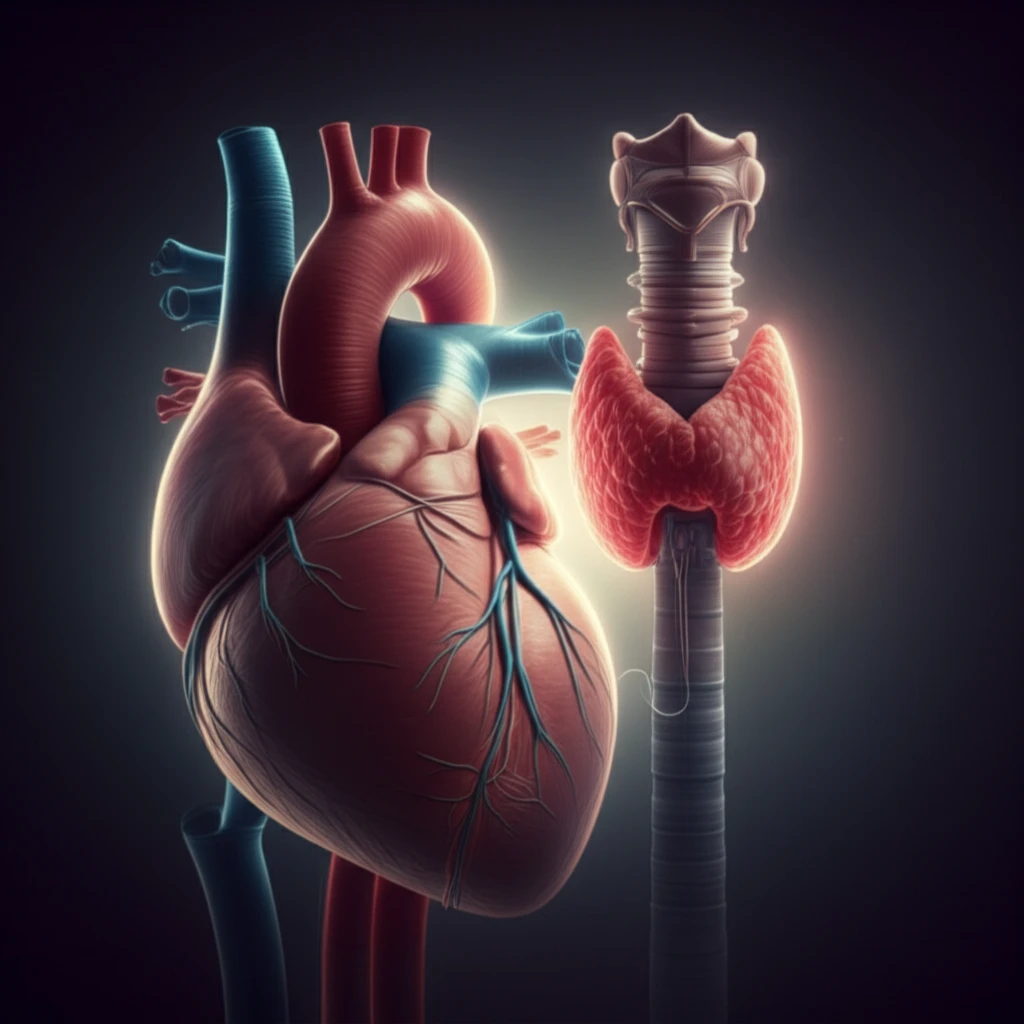
Navigating the Tightrope: Coronary Bypass in Hypothyroid Patients - A Perioperative Guide

"Discover expert strategies for managing hypothyroid patients undergoing coronary bypass surgery, ensuring safer and more predictable outcomes."
Coronary artery bypass grafting (CABG) is a common procedure, but when a patient also has hypothyroidism, the situation becomes significantly more complex. Hypothyroidism, a condition where the thyroid gland doesn't produce enough thyroid hormone, can lead to a host of cardiovascular challenges. These include a weakened heart, increased vascular resistance, and unpredictable responses to common medications used during surgery. This article aims to provide an easy-to-understand guide on how to manage these patients effectively, drawing from recent research and expert recommendations.
The heart of a hypothyroid patient is often more sensitive to the depressant effects of anesthesia and other drugs. The cardiovascular system may be sluggish, with a reduced heart rate and cardiac output. Moreover, the body's ability to regulate blood pressure through baroreceptor reflexes can be impaired. This combination of factors can make it difficult to maintain stable hemodynamics—the balance of blood flow and pressure—during surgery. Adding to the complexity, some patients with ischemic heart disease may experience angina or even myocardial infarction if thyroid hormone replacement is started too aggressively before surgery.
Balancing the risks of hypothyroidism with the need for cardiac surgery requires a delicate approach. This article explores how to optimize patient care by focusing on careful preoperative assessment, tailored medication strategies, and vigilant monitoring throughout the perioperative period. Whether you're a healthcare professional or someone seeking information for a loved one, understanding these strategies can lead to better outcomes and a smoother surgical journey.
Prevalence and Clinical Significance
Hypothyroidism is a common endocrine disorder that affects a substantial portion of the adult population, with prevalence increasing with age. The condition has well-established associations with accelerated atherosclerosis, dyslipidemia, and impaired cardiac function, all of which elevate cardiovascular risk. Patients with hypothyroidism who require coronary artery bypass grafting (CABG) represent a clinically important subgroup, as thyroid dysfunction may influence both surgical risk and long-term cardiovascular outcomes. Understanding the scope of this intersection is essential for perioperative planning and risk stratification.
Current Perioperative Management
Standard perioperative care for hypothyroid patients undergoing CABG typically involves ensuring euthyroid status through thyroid hormone replacement therapy prior to surgery. Thyroid-stimulating hormone (TSH) and free thyroxine levels are routinely monitored, with the goal of achieving normal ranges to minimize hemodynamic instability and coagulation abnormalities. However, evidence guiding the optimal timing of surgery after thyroid normalization, the management of subclinical hypothyroidism, and postoperative thyroid hormone dose adjustments remains limited. These gaps reflect a broader absence of procedure-specific guidelines for this patient population.
Evolution of Understanding Thyroid-Heart Interactions
The link between thyroid dysfunction and cardiovascular disease has been recognized for over a century, with early clinical observations noting accelerated atherosclerosis in myxedema. Landmark epidemiological studies in the late 20th century established hypothyroidism as an independent risk factor for coronary artery disease. The recognition of subclinical hypothyroidism as a distinct entity with potential cardiovascular consequences emerged more recently, reshaping risk assessment paradigms. These historical insights laid the groundwork for contemporary investigations into thyroid status as a modifiable perioperative risk factor in cardiac surgery.
What Makes Hypothyroid Patients a Challenge for CABG?
Hypothyroidism presents several unique challenges during CABG, primarily due to its effects on the cardiovascular system. The condition often leads to a decreased sensitivity to adrenergic drugs, which are commonly used to support heart function during surgery. This insensitivity, coupled with an already weakened heart, can result in unpredictable responses to standard treatments. Furthermore, the increased systemic vascular resistance (SVR) in hypothyroid patients adds to the heart's workload, making it harder to maintain stable blood flow and pressure during the procedure.
- Decreased sensitivity to adrenergic drugs
- Increased systemic vascular resistance
- Impaired calcium handling in heart cells
- Reduced myocardial contractility
- Potential for reduced heart rate and cardiac output
Emerging Evidence on Subclinical Hypothyroidism and CABG Outcomes
Recent studies have begun to clarify the relationship between subclinical hypothyroidism (SCH) and outcomes after coronary artery bypass grafting. A 2026 study evaluated the incidence of CABG in patients with hypothyroidism receiving thyroid hormone replacement and assessed both short-term and long-term outcomes. Research indicates that SCH—defined as elevated TSH with normal free thyroxine—may be associated with increased major adverse cardiovascular events (MACEs) and postoperative complications following CABG, though data remain limited. A 2024 study by Kim et al. specifically found that SCH affects long-term outcomes after CABG but not after heart valve surgery, suggesting a procedure-specific interaction.
Conflicting Evidence on Subclinical Hypothyroidism Impact
Not all studies have found a significant adverse impact of subclinical hypothyroidism on CABG outcomes. A 2021 study evaluating the influence of SCH on recovery after CABG contributes to a mixed evidence base. Long-term follow-up research from 2018 examining 222 euthyroid and 36 SCH patients who underwent CABG reported outcomes during a mean follow-up of 8.2 years, though the abstract snippet suggests the full results require careful interpretation. The association between SCH and post-CABG outcomes has been described as 'elusive' with existing evidence providing 'limited clarity,' highlighting the need for larger, prospective studies to resolve these discrepancies.
Subclinical Hypothyroidism vs. Euthyroid Outcomes After CABG
Comparative analyses consistently examine long-term cardiovascular sequelae in SCH patients versus euthyroid controls undergoing CABG. A 2024 study suggests that preoperative diagnosis and treatment of SCH may reduce major adverse cardiovascular events and mortality after CABG. Research by Kim et al. found that SCH affects long-term outcomes after CABG but not heart valve surgery, indicating the impact may be specific to coronary revascularization. An 8.2-year follow-up study comparing 222 euthyroid and 36 SCH patients provides one of the longer-term comparative datasets available, though the relatively small SCH cohort limits statistical power for definitive conclusions.
Key Takeaways for Managing Hypothyroid Patients Undergoing CABG
While managing hypothyroid patients undergoing CABG can be complex, a proactive and well-informed approach can significantly improve outcomes. It's ideal to optimize thyroid function preoperatively, aiming for a near-normal or mildly hypothyroid state rather than operating on a patient with severe hypothyroidism. Levosimendan may be a beneficial inotrope choice due to its mechanism of action that doesn't rely on β-adrenergic receptors, effectively counteracting the adverse effects of reduced thyroid hormone levels, such as decreased cardiac contractility and increased SVR. Further research is needed to fully understand the effectiveness of these strategies, but current evidence suggests that a tailored, vigilant approach can lead to safer and more predictable outcomes for these challenging cases.
Integrating Current Evidence
Expert commentary synthesizes the available evidence, emphasizing that while the relationship between overt hypothyroidism and cardiovascular disease is well established, data on subclinical hypothyroidism's impact on major adverse cardiovascular events and postoperative complications following CABG remain limited. The consensus appears to be that SCH represents a potentially modifiable risk factor warranting preoperative identification, though the strength of evidence for routine screening and treatment before cardiac surgery varies across guidelines. This synthesis underscores the need for procedure-specific risk models that incorporate thyroid status.
Research Priorities and Emerging Directions
Future research priorities include clarifying the prognostic impact of subclinical hypothyroidism on CABG outcomes, which has remained elusive with existing evidence providing limited clarity. A 2026 report indicates that hypothyroidism is associated with a statistically significant increase in CABG incidence, with patients exhibiting higher short-term risks of postsurgical infections, CABG-specific complications, and critical care utilization. Ongoing and planned studies aim to assess whether preoperative thyroid optimization reduces these risks, and whether SCH should be formally incorporated into cardiac surgical risk scores. The field is moving toward prospective, adequately powered studies with standardized definitions of thyroid dysfunction.
Healthcare System Considerations
The management of hypothyroid patients undergoing CABG intersects with broader healthcare system challenges including preoperative optimization pathways, multidisciplinary coordination between endocrinology and cardiac surgery, and resource allocation for extended postoperative monitoring. Variability in thyroid function testing protocols, thresholds for treatment initiation, and postoperative follow-up practices across institutions contributes to inconsistent care. Health economic analyses of routine preoperative thyroid screening versus targeted testing in cardiac surgical candidates are lacking. These systemic factors influence how emerging evidence translates into clinical practice.
Patient-Centered Outcomes and Complications
The real-world impact of hypothyroidism on CABG patients extends beyond aggregate statistics to tangible postoperative experiences. A cohort study investigating patients under 65 years old after CABG highlights the need to understand prognosis in younger hypothyroid patients specifically. Research indicates that hypothyroid patients face higher risks of ventilator complications and critical care utilization, translating to longer hospital stays and more complex recoveries. A systematic review and meta-analysis examining long-term cardiovascular outcomes after CABG in SCH patients aims to quantify these human impacts more precisely, though the clinical significance for individual patients remains an area of active investigation.