
Nature's Traps: How Plants and Animals Adapt to Survive Predation

"Explore the captivating ways species avoid becoming prey, from autotomy to mimicry and beyond"
The natural world is a constant struggle for survival, where every organism is either trying to eat or avoid being eaten. This has led to an extraordinary array of adaptations, each finely tuned to increase the chances of survival. From the smallest insect to the largest mammal, species have evolved unique strategies to avoid becoming a meal. In this article, we explore some of these fascinating adaptations.
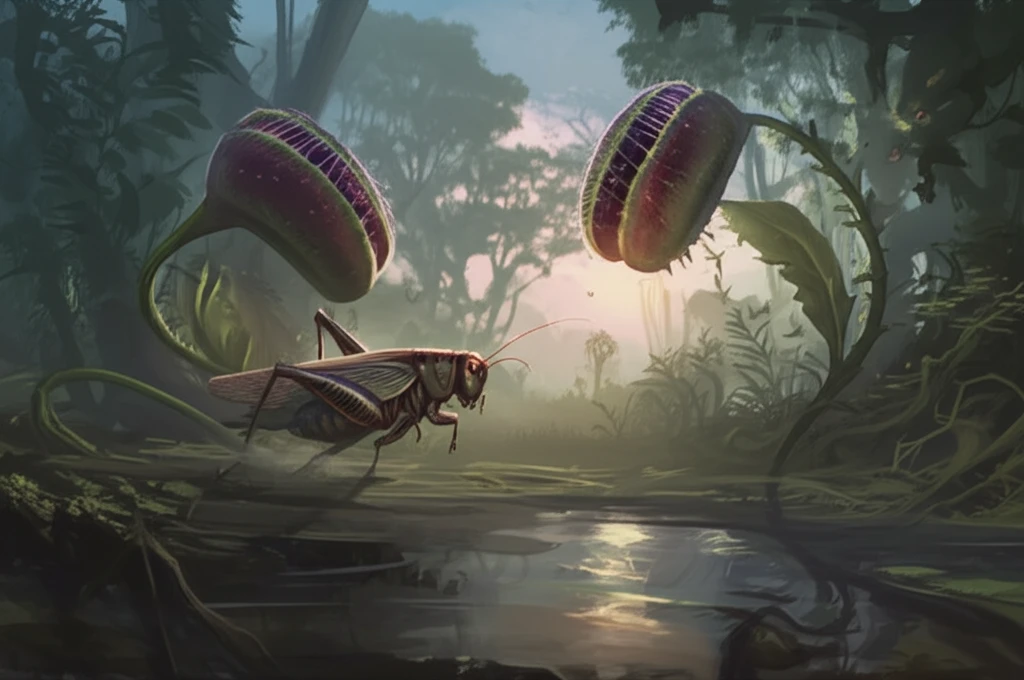
Survival in the wild depends on a complex interplay of behavior, morphology, and environmental factors. Some animals, like crickets, use limb autotomy to escape predators, while others rely on camouflage or mimicry to blend into their surroundings. Plants, too, have developed intricate mechanisms to defend themselves, from carnivorous traps to chemical defenses.
Understanding these adaptations not only provides insights into the evolutionary processes shaping life on Earth but also highlights the delicate balance of ecosystems. By examining specific examples, we can appreciate the ingenuity of nature and the ongoing arms race between predators and prey.
Defining Nature's Traps
Predation is a fundamental ecological interaction that shapes ecosystems and drives evolutionary innovation across species. Plants and animals have developed remarkable adaptations to either capture prey or avoid becoming prey themselves. While specific quantification of these adaptations varies by ecosystem and species, their prevalence underscores the pervasive selective pressure predation exerts on biodiversity. Understanding these mechanisms provides critical insight into how natural selection operates across trophic levels.
Studying Adaptations
Researchers typically employ comparative morphology, behavioral observation, and phylogenetic analysis to identify and classify adaptations. Field experiments and controlled laboratory studies help establish causal relationships between traits and survival outcomes. However, these methods face inherent limitations including difficulty isolating single variables in complex ecosystems and challenges in observing rare or nocturnal behaviors. Additionally, fossil records may not preserve soft-tissue adaptations, creating gaps in historical understanding.
Foundations of Adaptation Theory
Darwin and Wallace's theory of natural selection established the conceptual framework for understanding how traits become fixed in populations through differential survival and reproduction. Subsequent work in population genetics formalized the mechanisms driving adaptation. The mid-20th century saw advances in behavioral ecology and optimal foraging theory, connecting organism behavior to evolutionary fitness. These foundational discoveries continue to inform modern research on predation and adaptation.
Defense Mechanisms in Animals: A Closer Look
Animals have evolved a diverse set of strategies to avoid predation, each tailored to their specific environment and threats. These mechanisms range from physical defenses to behavioral strategies, all aimed at increasing survival rates.
- Limb Autotomy: Shedding limbs to escape predators, balancing immediate escape with long-term vulnerability.
- Camouflage and Mimicry: Blending in with the environment or mimicking other species to avoid detection.
- Behavioral Strategies: Adjusting behavior to reduce the risk of predation, such as altering dispersal patterns or habitat use.
- Physical Defenses: Developing physical features like spines, shells, or toxins for protection.
Contemporary Adaptation Studies
Recent systematic reviews examine how habitat loss impacts behavioral adaptations in animals, focusing on space use, diet, and species interactions. Research demonstrates that animals in extreme environments—from deserts to polar regions—employ unique physiological and behavioral traits to survive harsh conditions. Behavioral ecology studies reveal how predation pressure, competition, and resource availability shape adaptive strategies. These findings synthesize multiple perspectives on survival strategies including predator avoidance, energy acquisition, and reproductive success.
Adaptation Limits
Not all adaptations guarantee survival; some traits become maladaptive when environments change rapidly. Specialized adaptations can create evolutionary traps when historical cues no longer reliably predict resource availability or predation risk. Species with narrow adaptive tolerances face heightened extinction risk during rapid environmental shifts. These constraints highlight that adaptation is not a guaranteed pathway to long-term persistence.
Diverse Survival Strategies
Animals have evolved diverse strategies including camouflage, hibernation, and enhanced sensory systems to cope with extreme weather, predators, and food shortages. Adaptations span morphological traits like polar bears' thick fur and camels' water-storing humps to complex behavioral patterns. These heritable traits enable organisms to survive and reproduce in their specific environments, particularly under extreme conditions. Understanding these varied approaches reveals how different species solve similar survival challenges through distinct evolutionary pathways.
The Importance of Understanding Survival Strategies
The study of survival strategies in both plants and animals is crucial for understanding the complex dynamics of ecosystems. By identifying the mechanisms that species use to avoid predation and secure resources, researchers can gain valuable insights into the evolutionary processes shaping life on Earth. This knowledge is not only academically significant but also essential for effective conservation efforts. As habitats change and species face increasing threats, understanding these survival strategies becomes ever more critical for preserving biodiversity.
Integrative Perspectives
The study of predation adaptations reveals the intricate interplay between organisms and their environments. Morphological, behavioral, and physiological adaptations work in concert to enhance survival and reproductive success. These insights underscore the dynamic nature of evolutionary processes and the continuous refinement of survival strategies. Expert synthesis emphasizes that adaptation represents both a product of evolutionary history and an ongoing response to environmental challenges.
Adaptation in a Changing World
Climate change is testing the limits of animal adaptation strategies as environmental shifts outpace evolutionary responses. Research explores physiological adjustments, behavioral shifts, migration changes, and genetic adaptation as potential pathways for species persistence. Ecosystem interdependence adds complexity, as species' adaptive capacities are linked to broader community dynamics. Understanding the limits of adaptability in a warming world remains a critical frontier in conservation biology.
Ecological Integration
Animal adaptations address fundamental survival challenges including finding food, avoiding danger, reproducing, and handling environmental conditions. Adaptation influences species' persistence and proliferation across diverse ecosystems over evolutionary timescales. These traits represent a complex tapestry of morphological, genetic, and behavioral solutions refined through natural selection. Understanding adaptation reveals how species maintain ecological function within interconnected biological systems.
Human-Wildlife Intersections
The relationship between humans and animals encompasses both benefits and challenges, with human activities exerting substantial influence on animal populations and their habitats. Behavioral adaptations represent flexible survival strategies that animals use to avoid danger and find food, often without requiring genetic changes. As human impacts accelerate, understanding these adaptive capacities becomes critical for conservation efforts. These dynamics underscore the need to integrate ecological knowledge into human-wildlife management approaches.