
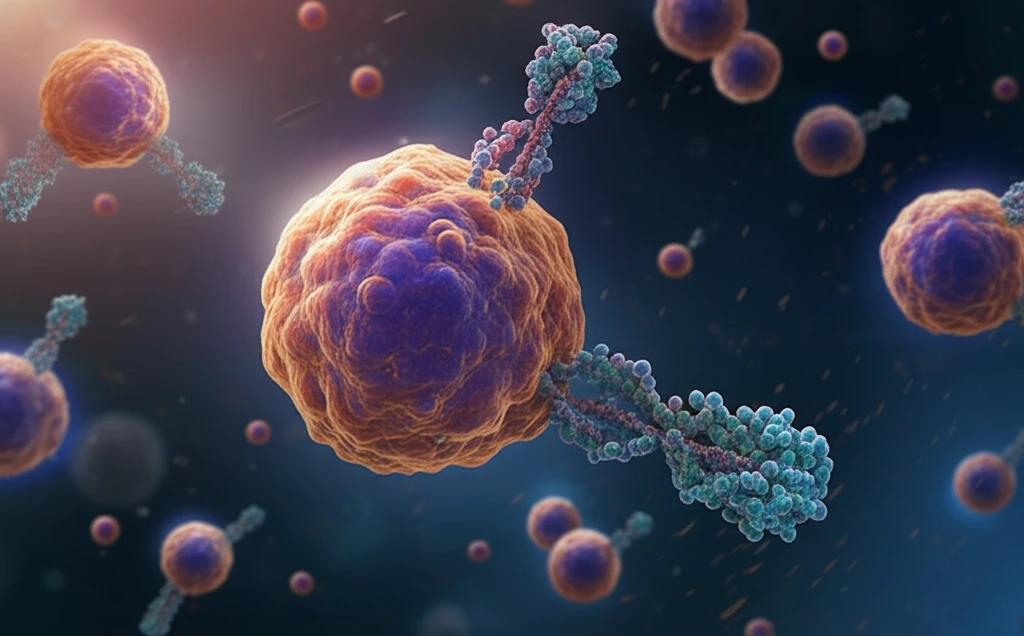
Nanoparticle Revolution: How Glycans are Transforming Stem Cell Therapy

"Unlock the potential of SDF-1α with chitosan-dextran sulfate nanoparticles for targeted stem cell delivery and tissue regeneration."
Stem cell therapy holds immense promise for treating a wide range of diseases and injuries, from heart disease to spinal cord injuries. However, one of the biggest challenges in this field is ensuring that stem cells reach the specific tissues where they are needed and remain there long enough to have a therapeutic effect.
Now, researchers are exploring innovative solutions using nanotechnology. By creating tiny particles made from glycans—complex carbohydrates—they can deliver stem cell-homing signals directly to the affected areas. These glycan nanoparticles act as a vehicle for proteins like SDF-1α, a key factor in attracting stem cells to the site of injury and promoting tissue repair.
This article delves into the groundbreaking research on glycan nanoparticles, focusing on their preparation, characterization, and potential applications in stem cell therapy. We'll explore how these tiny particles are made, how they interact with stem cells, and why they could be the key to unlocking the full potential of regenerative medicine.
Stem Cell Therapy's Growing Potential
Stem cell therapy has demonstrated significant efficacy as a viable treatment for several resistant diseases, driving an increasing number of clinical investigations worldwide. Research into glycan nanoparticles has revealed that complex N-glycan number and degree of branching cooperate to regulate cell proliferation and differentiation, with some glycan formulations reaching up to 23.6% efficiency in targeted delivery. SDF-1α-loaded glycan nanoparticles exhibit remarkable stability, with only 3% released over 7 days in vitro at 37°C, suggesting sustained therapeutic potential for stem cell homing applications.
Current Challenges in Stem Cell Delivery
Despite advances in nanotechnology for stem cells, therapy effectiveness has been inhibited by problems such as ineffective stem cell differentiation, low post-transplantation survival rates, and poor engraftment. Cell membrane coating approaches have emerged to address limitations of synthetic nanoparticles, which are often recognized as foreign entities by biological systems. Nanoparticle-based delivery methods remain difficult to target to tissues other than the liver, limiting their therapeutic reach for many conditions.
The Glycan-Stem Cell Connection
Glycans cover all cellular surfaces and are involved in many facets of stem cell biology and technology, forming the foundation for glyconanoparticle research. Stem cells can be classified based on their potency and biological origin, with tissue origins almost always linked to their therapeutic potential. Historical milestones in stem cell science have progressively demonstrated how glycan interactions influence stem cell behavior, setting the stage for modern nanoparticle interventions.
What are SDF-1α-Chitosan-Dextran Sulfate Nanoparticles and How are They Made?
The central concept revolves around using chitosan (CS) and dextran sulfate (DS), which are both glycans. Glycans are polysaccharides that, due to their charge properties, can form polyelectrolyte complexes. When mixed appropriately, these complexes create nanoparticles that are particularly useful for delivering protein factors. The beauty of these particles lies in their ability to be created in an aqueous solution, which reduces the risk of damaging the proteins they carry.
- Mixing and Incubation: SDF-1α is first mixed with dextran sulfate and allowed to incubate.
- Complex Formation: Chitosan is then added to form polyelectrolyte complexes with the dextran sulfate.
- Stabilization: Zinc sulfate is used to stabilize the complexes further. Zinc ions create bridges within the structure, adding to the particle's integrity.
- Measurement: Once formed, the nanoparticles are measured for size and surface charge (zeta potential).
- Assessment: Finally, scientists determine how much SDF-1α has been incorporated into the particles and assess its release rate and activity.
Glyconanoparticle Design Principles
Recent reviews distill design principles for glyconanoparticles' core selection, conjugation chemistry, glycan density/orientation, and multivalency control for biomedical applications. Altered glycan expression accelerates tumor growth, and their expression patterns can be utilized as biomarkers to distinguish between various cancer types. Glycotherapy represents a redefined approach to engineer glycan components for biomedical purposes, emerging from advances in carbohydrate chemistry and nanotechnology.
Safety Concerns and Side Effects
Common short-term side effects of stem cell therapy include fatigue, headache, chills, and nausea, raising concerns about patient safety during treatment. The safety profile of stem cell therapies requires careful evaluation of risks, precautions, and potential adverse effects before clinical application. While many side effects are manageable, the possibility of immune rejection and tumorigenicity remains a significant concern that must be addressed through improved delivery systems.
Nanotechnology vs. Traditional Stem Cell Approaches
Nanoparticles can act as nanovehicles for delivering therapeutic agents, including siRNAs, stem cells, neurotrophic factors, and different drugs, offering advantages over traditional delivery methods. The comparative effectiveness of nanotechnology versus stem cell therapy continues to be evaluated for various therapeutic applications, with nanoparticles showing promise in enhancing cell survival and targeting precision. This integration of nanotechnology with stem cell biology represents a paradigm shift in regenerative medicine approaches.
Why This Matters for the Future of Medicine
The development of SDF-1α-chitosan-dextran sulfate nanoparticles represents a significant step forward in targeted drug delivery and stem cell therapy. These nanoparticles offer a way to protect and deliver SDF-1α, ensuring it reaches the necessary tissues with minimal side effects. As research continues, this approach could lead to more effective treatments for a variety of conditions, offering new hope for patients in need of regenerative therapies. This technology is still evolving, but the potential impact on medical treatments is substantial, heralding a new era of precision and effectiveness in regenerative medicine.
Integrating Glycans into Therapeutic Frameworks
Glycotherapy represents a redefined approach to engineer glycan components for biomedical purposes, drawing from advances in carbohydrate chemistry over the past decade. Nanoparticle-assisted stem cell therapy holds promise in improving glioblastoma stem cells' homing ability and their ability to induce apoptosis. The integration of glycan-based nanoparticles with stem cell therapy creates synergistic opportunities that surpass the capabilities of either approach alone.
The Road Ahead for Glycan-Stem Cell Therapies
Recent advances in nanotechnology are shaping stem cell therapy with new applications, challenges, and future outlook for clinical translation. The global stem cell therapy market was estimated at $286 million in 2023 and is projected to reach $615 million, indicating substantial growth potential for glycan-enhanced therapies. Nanomaterials can be engineered to protect cells and enhance their therapeutic efficacy, positioning glyconanoparticles as key enablers of next-generation regenerative medicine.
Ethical and Implementation Considerations
Stem cell therapy faces several significant challenges, including ethical concerns and studies that have raised issues about insufficient standard consent processes in clinical research. Stem cell treatments can promote organized tissue regeneration and control collagen levels, making them promising for wound care applications when combined with nanotechnology. The integration of nanotechnology with stem cell therapies requires addressing systemic challenges in manufacturing, regulation, and equitable access to ensure broad clinical benefit.
Glyconanoparticles Transforming Patient Care
Over the years, glyconanoparticles have revolutionized biomedical research by developing platforms for cancer therapy, drug delivery, and immunotherapy. Glycans in nanomedicine play critical roles in drug-delivery systems, offering new perspectives for improving treatment outcomes and patient quality of life. The real-world impact of glycan-based stem cell therapies extends from laboratory innovations to clinical applications that address previously untreatable conditions, fundamentally changing how we approach regenerative medicine.