
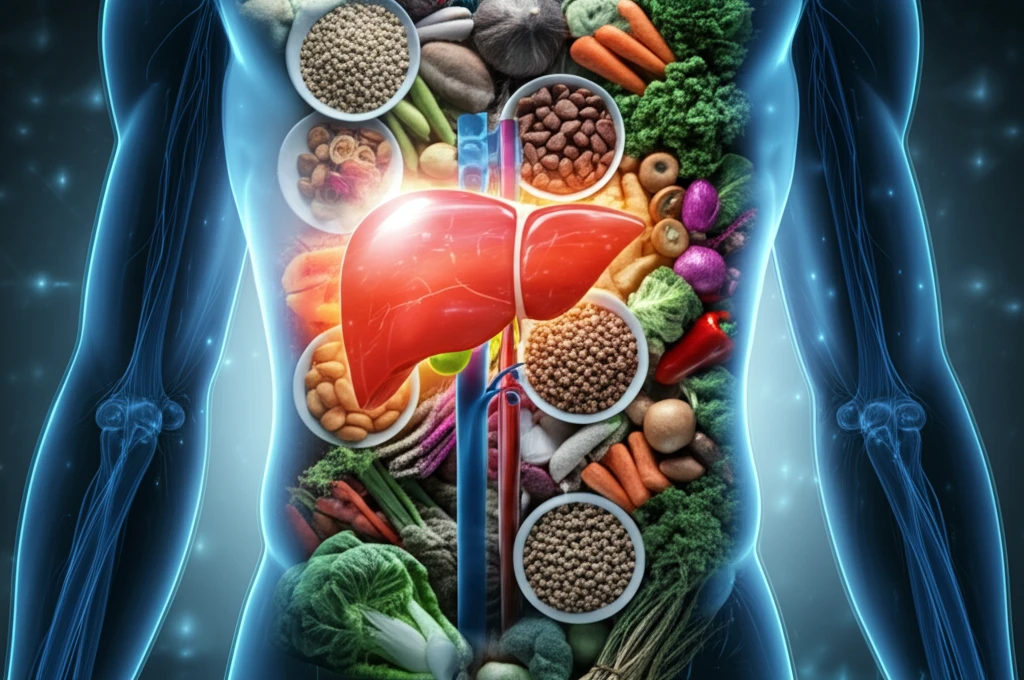
Liver Health: Can Your Diet Really Reduce Liver Cancer Risk?

"Discover how simple dietary adjustments, focusing on the AHEI-2010 index, can significantly impact your liver health and lower your risk of hepatocellular carcinoma."
In an era where health concerns dominate headlines, liver cancer, specifically hepatocellular carcinoma (HCC), is a growing threat. Globally recognized as the sixth most common cancer and the second leading cause of cancer-related deaths, liver cancer demands attention. In the United States alone, the incidence of liver cancer is rapidly escalating, with projections estimating over 42,200 new cases in 2018. What's more concerning is that most individuals are diagnosed at a late stage, diminishing their chances of successful treatment.
While established risk factors like chronic hepatitis B and C virus (HBV/HCV) infections, obesity, type 2 diabetes, alcohol abuse, smoking, and exposure to aflatoxins are well-known, the identification of modifiable risk factors is crucial. This is where the power of diet comes into play. A growing body of research suggests that dietary patterns can significantly influence the development and progression of various cancers, including HCC.
This article delves into the groundbreaking findings of a recent study that explores the intricate relationship between dietary patterns and the risk of HCC. We'll uncover how specific dietary approaches, such as the Alternative Healthy Eating Index-2010 (AHEI-2010) and the Alternate Mediterranean Diet (AMED), can potentially mitigate your risk. Get ready to discover actionable steps you can take to safeguard your liver health and reduce your susceptibility to this formidable disease.
Understanding Liver Cancer
Liver cancer, also known as hepatic cancer, originates in the liver and is characterized by the rapid growth of abnormal liver cells that affect the liver and bile ducts. Key risk factors include hepatitis B and C infections, cirrhosis, and exposure to aflatoxin, a toxin produced by certain molds. Prevention strategies emphasize avoiding these risk factors and vaccinating against hepatitis B, which is recognized as a primary preventive measure. The disease's aggressive nature underscores the importance of early identification of risk factors and proactive prevention efforts.
Prevention Strategies and Their Time Windows
Cancer prevention is defined as action taken to lower the chance of getting cancer, with the goal of reducing both new cases and deaths. Primary liver cancer caused by viral hepatitis tends to develop slowly over the course of two to three decades, creating a significant window for screening and preventive intervention. This extended timeline allows healthcare providers to identify at-risk individuals and implement prevention measures before the disease progresses. However, the challenge lies in reaching and effectively screening at-risk populations within this window.
The Alcohol-Liver Disease Connection
The link between alcohol consumption and liver disease has been well established in medical research as a foundational understanding in liver cancer prevention. Chronic heavy drinking can cause alcoholic liver disease, which often progresses to cirrhosis—a significant and well-recognized risk factor for liver cancer. Limiting alcohol intake or abstaining altogether has long been recognized as a crucial step in prevention. This understanding has formed the basis of public health guidelines regarding alcohol use and liver health for decades.
Decoding the Dietary Patterns: AHEI-2010 and AMED
The study meticulously examined the impact of three key dietary patterns: the Alternative Healthy Eating Index-2010 (AHEI-2010), the Alternate Mediterranean Diet (AMED), and the Dietary Approaches to Stop Hypertension (DASH). These patterns were chosen for their widespread use and established health benefits.
- AHEI-2010: Consists of 11 components, including fruits, vegetables, whole grains, nuts, legumes, and limited amounts of red and processed meats, sugar-sweetened beverages, and trans fats.
- AMED: Emphasizes vegetables, fruits, whole grains, nuts, legumes, fish, and a high ratio of monounsaturated to saturated fat, with limited red and processed meat.
- DASH: Focuses on fruits, vegetables, low-fat dairy products, whole grains, nuts, and legumes, while limiting sodium, red meat, and sugary beverages.
Major Findings in Liver Cancer Prevention
A comprehensive analysis published in The Lancet found that three in five liver cancer cases could be prevented by addressing the disease's major causes, with liver cancer currently killing more than 700,000 people annually worldwide. Research from the World Cancer Research Fund has specifically examined the role of diet, nutrition, and physical activity in liver cancer prevention, providing evidence-based guidance. The NCI continues to highlight clinical advances that may translate into improved care, supported by ongoing research programs. These findings collectively suggest that lifestyle modifications, including dietary changes, could significantly reduce the global burden of liver cancer.
Limitations of Prevention Efforts
While prevention efforts can reduce liver cancer risk, experts emphasize that there is no way to completely prevent cancer in all cases. Prevention of cirrhosis, which is the underlying cause of many liver cancer cases, will help in preventing the development of the disease. However, this acknowledgment of limitations highlights that even with the best prevention strategies, some degree of risk remains for certain individuals. This perspective serves as a realistic reminder that while lifestyle changes are valuable and recommended, they are not absolute guarantees against developing liver cancer.
Risk Factor Hierarchy and Prevention Priorities
The American Cancer Society identifies several factors that can increase the chance of getting liver cancer, providing a framework for understanding relative risk levels among the population. Among these factors, chronic viral hepatitis infections stand out as major contributors, alongside cirrhosis of any cause, certain metabolic conditions, and exposure to specific environmental toxins. Understanding how these risk factors compare to one another helps prioritize prevention efforts and allocate public health resources more effectively. This comparative approach enables more targeted interventions for those at highest risk.
Take Control of Your Liver Health Today
The evidence is clear: what you eat can significantly impact your risk of developing liver cancer. By embracing a dietary pattern rich in fruits, vegetables, whole grains, nuts, and legumes, while limiting processed foods, sugary drinks, and excessive alcohol, you can take proactive steps to protect your liver health. The AHEI-2010 diet, with its emphasis on balanced nutrition and mindful food choices, offers a powerful tool for reducing your risk of HCC and promoting overall well-being. While further research is always valuable, these findings provide a compelling reason to prioritize healthy eating habits as a cornerstone of liver cancer prevention.
Integrating the Evidence
The evidence suggests that while liver cancer remains a significant global health challenge, a substantial proportion of cases may be preventable through lifestyle modifications and medical interventions. Diet and nutrition appear to play a meaningful role in liver health, though they operate within a broader context of risk factors including viral infections, alcohol consumption, and metabolic conditions. Experts generally agree that a multi-faceted approach combining vaccination, screening, and healthy lifestyle choices offers the best prospects for reducing the overall liver cancer burden. As research continues to evolve, the integration of dietary guidance with comprehensive prevention strategies holds particular promise.
Emerging Prevention Strategies
Emerging research is exploring new ways to prevent liver cancer, with a focus on evidence-based strategies that work for both general populations and those at higher risk. The identification of diabetes as a significant risk factor, alongside excess alcohol consumption and hepatitis, opens new avenues for prevention targeting metabolic health and dietary management. Future prevention efforts are likely to integrate personalized risk assessment with targeted interventions, potentially including dietary modifications tailored to individual risk profiles. These developments suggest that the field of liver cancer prevention is evolving beyond traditional approaches toward more comprehensive, individualized strategies.
Liver Cancer in a Wider Public Health Context
Research has revealed that liver cancer risk factors extend beyond the liver itself, with chronic hepatitis B virus infection impacting multiple organ systems and high fasting plasma glucose contributing to overall liver cancer burden. Systemic approaches to prevention are being developed, such as the Cancer Prevention at Work project that leverages existing occupational health infrastructure for hepatitis C screening and treatment. Additionally, research from the Australian National University has found that regular exercise could prevent the early onset of liver cancer, adding physical activity to the arsenal of preventive measures alongside dietary changes. These findings underscore the need for integrated, multi-sectoral strategies that address liver cancer prevention within broader public health frameworks.
The Human Cost and Hope of Prevention
Behind the statistics and research findings are millions of individuals and families affected by liver cancer worldwide, each with their own story of diagnosis, treatment, and recovery. The real-world impact of prevention efforts is measured not just in reduced incidence rates, but in the quality of life preserved and the suffering averted for patients and their loved ones. As prevention strategies become more accessible and personalized, the potential to transform liver cancer from a largely preventable disease to a rare one becomes increasingly tangible. However, significant disparities in access to prevention, screening, and treatment remain across different populations and regions, highlighting the ongoing challenge of ensuring equitable health outcomes.