
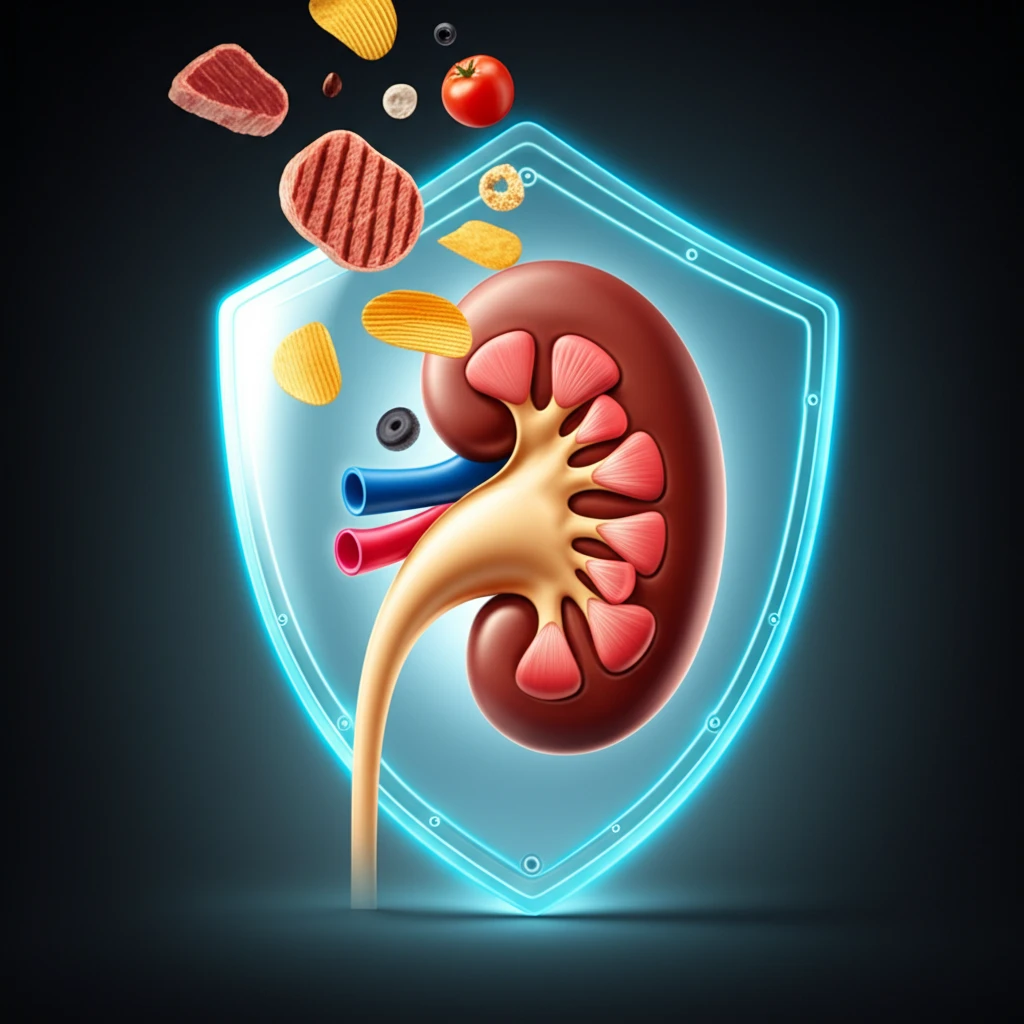
Kidney Health: Could a Common Compound Be a Hidden Danger?

"New research suggests that methylglyoxal, a compound often found in food, could be a prognostic factor in chronic kidney disease. Learn how to protect your kidneys."
The kidneys are unsung heroes of our bodies, working tirelessly to filter waste, regulate blood pressure, and maintain overall health. But as we navigate the complexities of modern life, our kidneys face increasing challenges. From unhealthy diets to environmental toxins, these vital organs are constantly under pressure. Recent research sheds light on a potential hidden danger that might be lurking in our food: methylglyoxal (MG).
This compound, formed through the breakdown of sugars and proteins, has been linked to several health concerns. While MG occurs naturally in various foods, its presence in high concentrations may pose a risk, especially for those with chronic kidney disease (CKD). This article explores the latest research on MG and its impact on kidney health, offering actionable insights to help you protect your kidneys.
This exploration is more than just a discussion of medical findings; it is a proactive call to action. By understanding the potential risks associated with MG, we can make informed choices that support kidney health and overall well-being. We will explore the science behind MG, its connection to CKD, and practical strategies to safeguard your health.
A Potential Kidney Risk
Methylglyoxal is a common, highly reactive compound produced during glucose metabolism. Research has linked it to advanced glycation end-products and processes involved in kidney injury, particularly in conditions such as diabetic and hypertensive nephropathy. However, the available evidence does not establish that methylglyoxal alone causes kidney disease in every person.
Measuring Methylglyoxal
Stable isotopic dilution LC-MS/MS is described as a quantitative method for measuring methylglyoxal in blood plasma, cultured cells, and plant and animal samples. A ReactELISA assay was tested and validated against this LC-MS/MS gold standard and was able to detect small changes in methylglyoxal levels caused by the clinically relevant drug buthionine sulfoximine. These methods support measurement of methylglyoxal, but measuring a compound does not by itself prove that lowering it will prevent kidney disease.
From Metabolite to Disease Mechanism
Methylglyoxal has long been recognized as a ubiquitous metabolite that can spontaneously react with biological polymers to form advanced glycation end-products. These AGEs have been associated with aging-related diseases, including cancer, neurodegenerative disease, and diabetes. Later laboratory work examined methylglyoxal-modified human serum albumin and reported AGE formation and damaging effects in the embryonic kidney cell line HEK 293, while more recent research has compared methylglyoxal's effects with aging-related mechanisms.
The Methylglyoxal Mystery: What is It and Why Should You Care?
Methylglyoxal (MG) is a dicarbonyl compound that forms during the breakdown of glucose and proteins. It is found naturally in various foods and is a byproduct of the Maillard reaction, the same process that gives grilled foods their appealing color and flavor. While MG is present in everyday foods, its levels can vary significantly. Exposure to high levels of MG can be a cause of concern.
- Food Sources: MG is present in various foods, especially those that have been processed or heated.
- Maillard Reaction: High levels of MG is a byproduct of this reaction.
- Health Implications: MG has been linked to oxidative stress and inflammation.
- Kidney Health: Emerging research suggests a connection to adverse outcomes in CKD.
Oxidative Stress and Kidney Injury
A 2025 review describes methylglyoxal as a highly reactive dicarbonyl compound increasingly recognized in kidney injury, especially diabetic and hypertensive nephropathy. The review reports that methylglyoxal promotes advanced glycation end-product formation and directly impairs cell function. A 2024 study separately investigated methylglyoxal-derived hydroimidazolone-1, an AGE formed when methylglyoxal glycates arginine residues, in relation to kidney damage.
Evidence Remains Incomplete
The research summarized for this topic does not yet establish methylglyoxal as a standalone cause of kidney disease or a proven treatment target. Findings from cell studies, animal models, and biomarker research may not translate directly into benefits for people. Methylglyoxal's possible diagnostic or therapeutic importance therefore remains an area for further investigation.
Scavenging and Detoxification
Higher plasma methylglyoxal concentrations have been reported to correlate with development of end-stage kidney disease in people with chronic kidney disease. Proposed strategies include synthetic and natural methylglyoxal-scavenging compounds, while the glyoxalase system detoxifies methylglyoxal into D-lactate. In experimental work, interventions that lowered methylglyoxal reduced albuminuria in diabetic rodents, and L-cysteine showed protective effects against methylglyoxal-induced toxicity in mouse and human kidney-cell models.
Take Control of Your Kidney Health
The information presented here underscores the importance of proactive health management and informed dietary choices. By being aware of the potential risks associated with methylglyoxal, you can take steps to protect your kidney health. Consult with your healthcare provider for personalized advice and incorporate kidney-friendly practices into your daily routine. Remember, your kidneys are vital, and taking care of them is an investment in your long-term health and well-being.
A Promising Biomarker, Not Yet a Verdict
An ADDITION-DK analysis of approximately 1,400 participants examined whether methylglyoxal was associated with kidney-function measures. The study assessed both urinary albumin-to-creatinine ratio and estimated glomerular filtration rate, including longitudinal changes and categories of albuminuria or reduced estimated filtration. Its findings support continued study of methylglyoxal in kidney health, but an association does not by itself demonstrate causation.
Earlier Risk Assessment
Recent commentary has proposed methylglyoxal as a possible biomarker for predicting chronic kidney disease outcomes and supporting earlier risk assessment. Another 2026 report describes methylglyoxal as a byproduct of glucose metabolism that may accelerate kidney filtration decline through mechanisms resembling aging. These ideas could guide future research into modifiable metabolic drivers, but they still require validation in clinical studies.
A Complex Metabolic Picture
Methylglyoxal is being studied within the broader relationship between glucose metabolism, aging, oxidative stress, and kidney function. The available research points to interacting biological pathways rather than a single isolated cause. This complexity makes it important to distinguish laboratory findings and associations from interventions proven to improve health outcomes.
What Patients Should Know
For people concerned about kidney health, methylglyoxal research currently offers a possible explanation for some disease-related processes rather than a definitive personal diagnosis. Studies have explored its measurement, its association with kidney-function markers, and experimental ways to reduce its effects. Clinical decisions should therefore rely on established kidney assessments and medical guidance while research continues.