
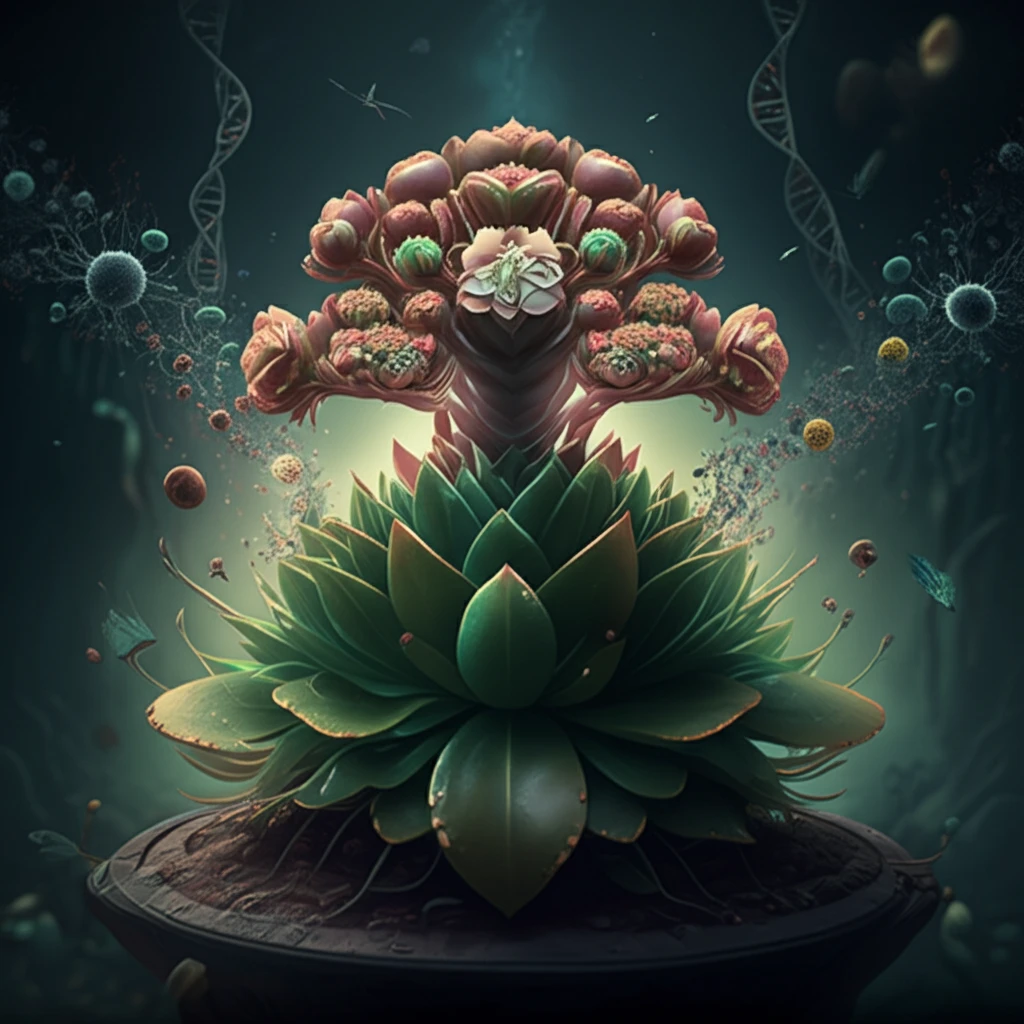
Kalanchoe: The Cancer-Fighting Succulent You Need to Know About

"Uncover the natural power of Kalanchoe, a succulent with promising chemopreventive properties. Learn how this plant could revolutionize cancer treatment."
Despite significant advancements in cancer treatments and diagnostics, cancer remains a leading cause of morbidity and mortality worldwide. With a projected 70% increase in new cases over the next two decades, the need for innovative prevention and treatment strategies is more critical than ever. This is where the Kalanchoe plant steps into the spotlight.
Kalanchoe, specifically the Bryophyllum subgenus, has garnered attention for its unique bioactive compounds with potential cancer chemopreventive properties. While modern medicine advances, interest in natural remedies and preventive measures grows—positioning plants like Kalanchoe at the forefront of research.
This article delves into the existing research on Kalanchoe, exploring its bioactive components, mechanisms of action, and potential applications in cancer prevention. We'll examine how this succulent could become a valuable tool in the fight against cancer, offering new hope and possibilities for future treatments.
A Medicinal Succulent on the World Stage
Cancer is a group of diseases in which abnormal cells grow and spread, differing from normal cells in ways such as having double the normal number of chromosomes and relying on different kinds of nutrients, according to the National Cancer Institute. Kalanchoe pinnata, a succulent herb with ethnomedical applications for several diseases including cancer, has drawn research attention for its bioactive ingredients. Studies describe its anticancer mechanisms through a molecular approach, with its phytochemicals showing antitumor activity. At the same time, kalanchoe is widely grown indoors as a popular houseplant, making this research subject an accessible ornamental plant as well.
Complementing Conventional Chemotherapy
Conventional cancer treatment typically relies on methods such as chemotherapy, and kalanchoe's role is being explored alongside rather than instead of these approaches. Bored Panda reports that Kalanchoe pinnata has the potential to fight cancer, noting that studies have shown its phytochemicals can enhance therapeutic efficacy when combined with chemotherapeutic drugs. Meanwhile, popular social media content claims that kalanchoe daigremontiana can help with breast cancer prevention and treatment. These accounts suggest interest in kalanchoe as a complementary addition to accepted cancer methods, though such claims largely come from informal platforms rather than clinical guidelines.
A Plant Known by Many Names
The plant at the center of this tradition is described on social media as a "cancer curing plant" known by a variety of common names, including Mother of Thousands, Bryophyllum pinnatum, Kalanchoe daigremontianum, and Devil's backbone. A widely shared video presents the propagation of this plant in full detail, walking viewers through how to grow and multiply it. Its multiple names and ease of propagation reflect a long history of being passed between home gardeners. This background illustrates how kalanchoe has spread as a cultivated household plant alongside its reputation in traditional remedies.
Understanding Kalanchoe's Cancer-Fighting Potential
The cancer development process, known as carcinogenesis, is a multi-step process influenced by both genetic and epigenetic factors. Carcinogenesis can originate from mutagenesis, inflammation, and oxidative stress. Unlike older theories focusing solely on genetic mutations, current research recognizes the critical roles of DNA preservation, repair, and defense in preventing cancer. Disruptions in these protective mechanisms can lead to further mutations over time.
- Bioactive Compounds: Kalanchoe synthesizes unique phytochemical compounds.
- Chemoprevention: It holds potential in preventing cancer development.
- Research Focus: Further exploration is needed to unlock its full benefits.
- Biotechnological Applications: Advanced techniques are crucial for enhancing the production of these valuable compounds.
Ongoing Reviews and Early Detection Advances
Interest in kalanchoe's potential role in cancer continues to be tracked through social media, with TikTok's "Kalanchoe Plant Cancer Review" page gathering related videos and having been updated as recently as June 2026. Separately, experts and advocates continue to share insights into cancer risk factors, screening strategies, and the latest research aimed at identifying gastric cancer earlier. These sessions emphasize education, awareness, and proactive healthcare in improving outcomes for patients worldwide. Together, they show a landscape where public discussion of plant-based remedies and formal research into early detection are advancing in parallel.
Why Caution Is Warranted
Health sources warn that cancer can present with nonspecific early signs such as nausea, anxiety, bruising, and bleeding problems, which patients might easily overlook or attribute to other causes. Because these signs are subtle, relying on unproven remedies while dismissing them could delay proper diagnosis. Countering this, organizations such as the International Agency for Research on Cancer produce handbooks on cancer prevention and train researchers in knowledge translation. Their evidence-based work highlights that prevention programs and early detection, rather than unverified plant-based claims, form the foundation of reducing the cancer burden.
Comparing a Kalanchoe Remedy with a Turmeric Tonic
A popular Spanish-language video documents one person's personal battle against cancer using Kalanchoe along with a complementary turmeric preparation. The recipe calls for two centimeters of turmeric root, or half a teaspoon of the powdered form, placed in an extractor and consumed immediately, or blended with half a glass of water and consumed right away. The routine is described as taking the preparation for 40 days and then reducing to one serving per day afterward. This contrasts a single-ingredient kalanchoe remedy with a combined fresh-ingredient tonic, illustrating the variety of homemade approaches circulating online.
The Future of Kalanchoe in Cancer Prevention
While research on Kalanchoe is promising, further studies are crucial to fully understand its potential and ensure its safe and effective use. Overcoming limitations such as low concentration of active compounds in the plant requires innovative biotechnological approaches. As we continue to explore the natural world for solutions to complex health challenges, Kalanchoe stands out as a beacon of hope in the ongoing fight against cancer. Its unique bioactive compounds and potential mechanisms of action offer a compelling avenue for future research and development of novel cancer prevention strategies.
Weighing Promise Against Proof
Taken together, the available material suggests kalanchoe has attracted considerable popular interest in the cancer space, grounded in some early research into its phytochemicals. However, much of the enthusiasm circulates through informal channels rather than established medical guidance. Any assessment should be cautious, treating these accounts as preliminary and anecdotal rather than as clinical evidence. Readers considering kalanchoe are best served by discussing it with qualified healthcare providers alongside, not in place of, standard care.
What the Road Ahead May Hold
The direction of future work on kalanchoe will likely depend on whether promising early findings translate into rigorous, larger-scale research. If studies continue to examine the molecular mechanisms of its phytochemicals, a more concrete understanding could emerge. That said, it remains uncertain whether any of this will evolve into accepted clinical applications. For now, expectations should be tempered, since much of the current evidence base is preliminary.
Access, Evidence, and the Spread of Information
The kalanchoe phenomenon sits within a larger conversation about how people seek out natural approaches to serious illness, often in the absence of accessible or satisfactory conventional options. A key challenge is the gap between viral claims and the slower, rigorous process of medical verification. This can create confusion and, at worst, lead people to delay effective treatment. Addressing these issues requires better public education about how to evaluate health claims and where to find reliable information.
Hope and Home Remedies
For many people, the appeal of kalanchoe lies in a desire for hope, control, and a tangible way to respond to a frightening diagnosis. Shared videos and recipes reflect real human stories of struggle and perseverance against cancer. While these personal narratives can be emotionally powerful, they are not substitutes for medical evidence. The most meaningful impact comes when this hope is channeled into conversations with healthcare professionals about safe, evidence-informed choices.