
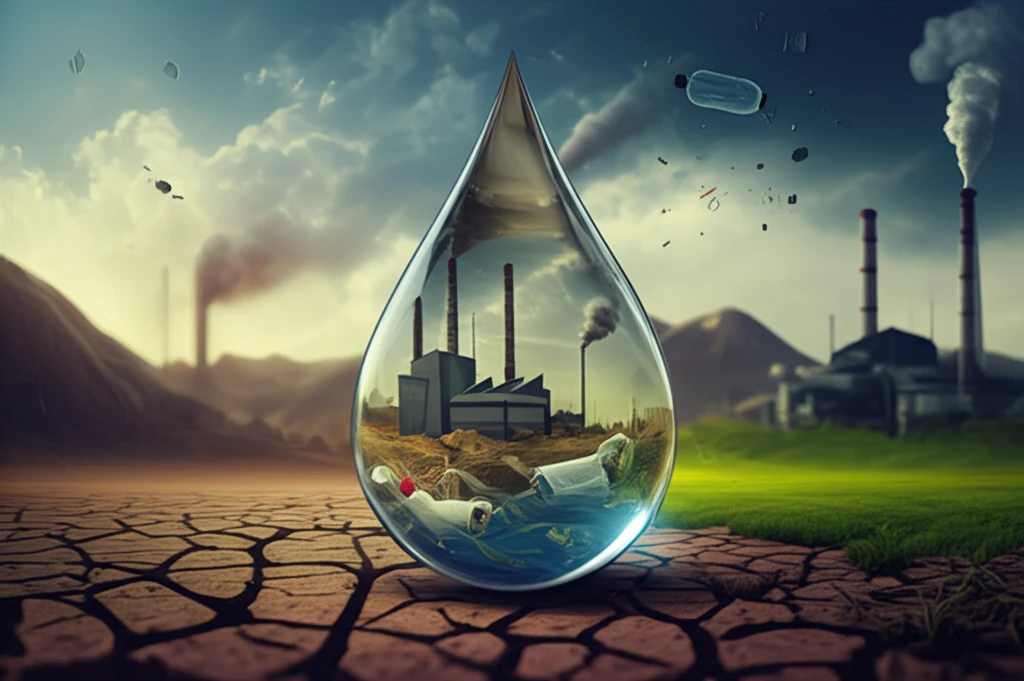
Is Your Water Safe? Unveiling the Hidden Dangers in Our Water Supply

"From emerging contaminants to microplastics, a closer look at the pollutants threatening our drinking water and what can be done to ensure access to clean, safe water for all."
Water, essential for life and civilization, faces unprecedented threats in the 21st century. As valuable as oil, access to clean water is increasingly scarce, with billions facing water insufficiency. The combination of population growth, industrial expansion, and climate change intensifies this global crisis.
The numbers paint a concerning picture. Hundreds of millions lack access to basic drinking water, and water scarcity affects billions more. Organizations worldwide are focused on tackling these problems, but the scale of the challenge is immense.
Freshwater resources are finite, and their depletion is accelerating. With agriculture consuming the majority of available freshwater, followed by industry and domestic use, the need for sustainable water management is more critical than ever.
Global Water Pollution Statistics
Over 1.2 million deaths annually are linked to diarrheal diseases from unsafe water, sanitation, and hygiene, with wastewater treatment reaching less than 5% globally. Agricultural runoff stands as the leading cause of pollution in rivers and streams, and the second most common cause of contaminated ponds and lakes. Global water pollution impacts people and ecosystems worldwide, with effects concentrated along rivers, coasts, and groundwater sources.
Water Pollution Monitoring and Control Methods
Water pollution control involves identifying abnormal water quality conditions through systematic instrument monitoring and data analysis of key parameters including pH, turbidity, dissolved oxygen, chemical oxygen demand, and ammonia nitrogen. Legislative and scientific approaches to environmental quality standardization aim to define total quality standards for water consumers and limits on anthropogenic loads. Water quality index evaluations demonstrate how pollution levels vary across monitoring stations, with techniques like clustering and principal component analysis helping assess contamination patterns.
Historical Development of Water Pollution Awareness
Water pollution is defined as the contamination of water bodies including lakes, rivers, oceans, aquifers, reservoirs, and groundwater, typically caused by human activities. Philadelphia's water pollution problems historically shaped the city's development and infrastructure decisions. The 1969 Time magazine story about the Cuyahoga River and Lake Erie helped bring national attention to severe water pollution, making them poster images for environmental degradation of that era.
A Cocktail of Contaminants: Understanding the Threats
Alternative water sources like wastewater and ocean water are being explored, but they come with their own challenges. Desalination, while promising, is energy-intensive and can have environmental impacts. Wastewater reuse requires advanced treatment to remove emerging contaminants that conventional systems often miss. What are these contaminants?
- Heavy Metals: Toxic elements like lead and mercury find their way into water systems from industrial processes and aging infrastructure.
- Emerging Contaminants: Pharmaceuticals, personal care products, and engineered nanomaterials are increasingly detected, posing unknown long-term health risks.
- Microplastics: Tiny plastic particles from consumer products and industrial waste are accumulating in water bodies, threatening aquatic life and potentially human health.
- Other Pollutants: Dyes, gasoline, pesticides, and fertilizers.
Innovative Solutions in Water Pollution Research
University of Missouri researchers are pioneering innovative solutions to remove tiny microplastic pollution from water systems. Aquaponic systems are being proposed to manage gardening while recovering up to 90% of water used for plants, addressing both food production and water conservation. Water pollution research continues to explore causes, effects, and prevention strategies as harmful substances like chemicals and plastics contaminate groundwater and other water bodies, making them unsuitable for humans and aquatic life.
Implementation Gaps in Water Pollution Solutions
Ecosystems can be severely changed or destroyed by water pollution, with contamination playing a major factor in the survival of creatures, vegetation, and other environmental variables. No new technology needs to be invented to provide safe water and sanitation to the billions who still lack it—the cost of providing water to all and cleaning up pollution is far less than the costs of failing to do so. Despite this, unregulated and uncontrolled water pollution continues as one of the biggest environmental problems of 2026, alongside plastic pollution and fast fashion.
Comparative Water Pollution Impacts
Berlin, Germany shows a drinking water pollution and inaccessibility index of 24.60, while Dubai, United Arab Emirates scores 33.50 on the same scale, indicating relatively low but different levels of drinking water concerns. Data centers and artificial intelligence are being examined for their water use and pollution impact compared to traditional industries. Agricultural runoff, primarily responsible for Fresno's water issues, pollutes water with harmful substances like nitrates and pesticides, demonstrating regional variations in pollution sources.
Taking Action: Protecting Our Water Future
Addressing the water pollution crisis requires a multi-pronged approach: stricter regulations, advanced treatment technologies, responsible waste management, and increased public awareness. By understanding the sources and impacts of water pollutants, we can work together to protect this precious resource and ensure access to clean, safe water for all.
Expert Critique of Global Water Sanitation Progress
Professor Asit Biswas, one of the world's top water pollution experts, challenges the lack of progress in providing clean water to developing countries. He calls for politicians to be removed from water management and well-paid experts to be appointed to run water authorities. Biswas advocates for more public outcry when water supplies are too bad to drink, criticizing both UN sanitation claims and inadequate responses to the global water crisis.
Emerging Contaminants and Advanced Monitoring
Emerging contaminants in wastewater represent a growing concern, with wetlands, rivers, and coastal areas particularly vulnerable to pollution from various sources. Advanced water quality testers enable continuous monitoring of these ecosystems, providing valuable data on pollutant levels and trends for proactive management. Future innovations in pollution control will likely focus on identifying and removing these emerging contaminants before they spread through water systems.
Legal Frameworks and Regional Disparities
The Clean Water Act in the United States defines procedures for pollution control and develops criteria and standards for pollutants in surface water, authorizing the EPA to regulate pollution in partnership with state agencies. Broadly speaking, there are two major types of water pollution affecting different regions differently. Water pollution in Africa is being caused by humans, with the species dependent on safe water also being the one contaminating freshwater sources.
Case Studies of Water Pollution Impact
The Flint Water Crisis stands as a real-world example of water pollution devastating community health. Worldwide, polluted water is linked to approximately 485,000 diarrhea-related deaths each year, with poor sanitation increasing that number to about one million. Surface water pollution poses critical environmental challenges in regions like Tunisia's Cap-Bon peninsula, where rapid urbanization and industrialization have caused significant water quality degradation.