
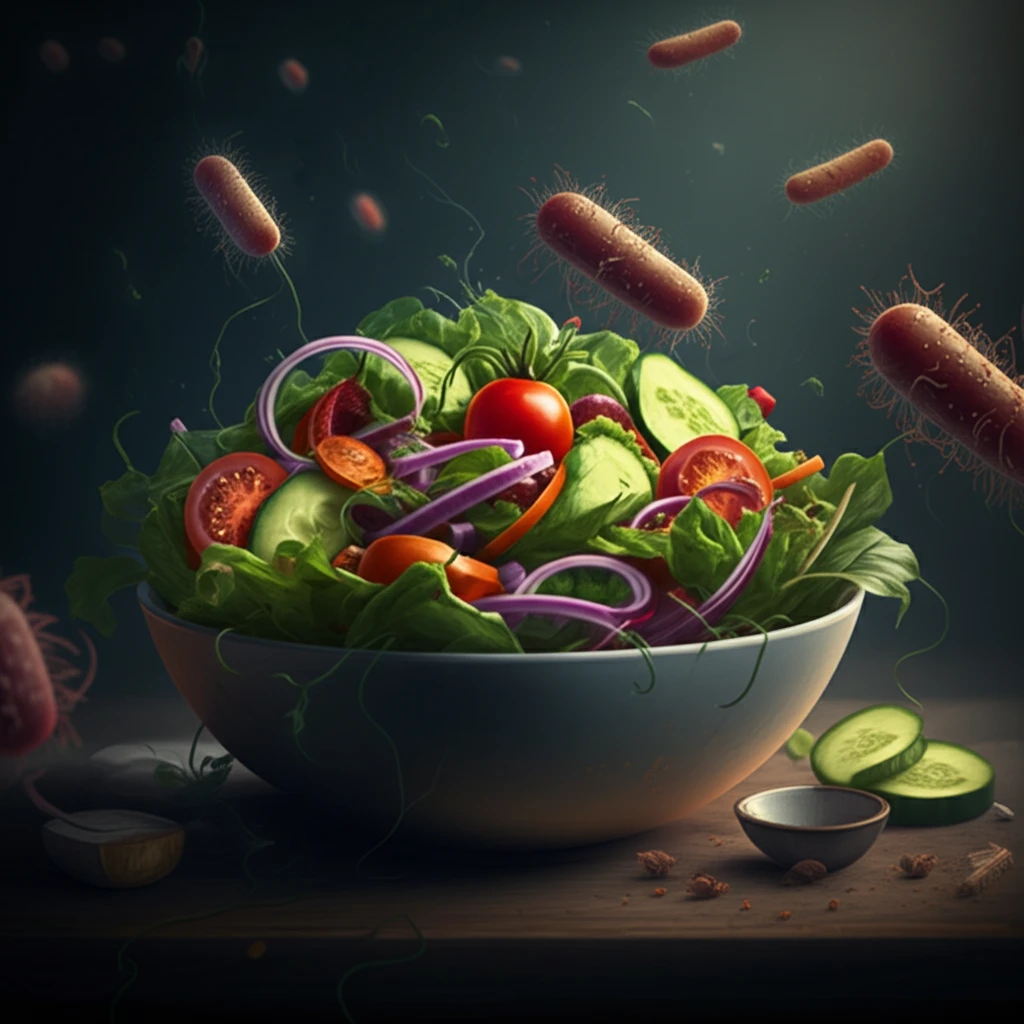
Is Your Salad Safe? Unveiling the Hidden Dangers in Irrigated Vegetables

"A Deep Dive into the alarming levels of bacterial contamination in vegetables irrigated with river water and what it means for your health."
In an era where health and wellness are paramount, the safety of our food supply has never been more critical. We diligently choose fresh produce, aiming to nourish our bodies with nature's bounty. However, a growing concern casts a shadow over the simple act of enjoying a salad: the potential for bacterial contamination in irrigated vegetables. This isn't just about a minor upset stomach; it's about understanding the invisible threats that can compromise our well-being.
Recent research has brought to light some unsettling findings regarding the water used to irrigate crops, particularly in regions where freshwater resources are strained. When rivers and other water sources become contaminated with sewage and industrial waste, the vegetables they nourish can become unwitting carriers of harmful bacteria. This poses a significant risk to public health, turning a seemingly healthy meal into a potential health hazard.
This article delves into the intricate web of factors contributing to bacterial contamination in our vegetables, from the sources of irrigation water to the farming practices that can either mitigate or exacerbate the problem. Our goal is to equip you with the knowledge to make informed choices, protect yourself and your family, and advocate for safer food production practices.
Foodborne Bacterial Threats Are Widespread
Bacteria that can cause foodborne infections include Salmonella, Listeria, and Shigella, and bacterial contamination of food can result in noticeable changes in contaminated ingredients such as unpleasant odors. Bacterial contamination can spread rapidly through food supplies, making early detection critical to preventing widespread illness. Environmental and genetic microbiological data are used as tracers to identify the sources of bacterial contamination in food and water systems. Despite advances in detection, substantial bacterial contamination continues to be found across food and environmental samples.
Screening Methods Struggle with Low Bacterial Loads
Screening platelet concentrates for bacterial contamination reveals that low numbers of bacteria and slow growth in contaminated units mandate alternative approaches to product safety. In the setting of suspected septic transfusion reactions, bacterial culture of both the transfused patient and the residual blood component is recommended, yet these methods have known limitations. The American Association of Blood Banks initiated standards requiring methods to limit and detect bacterial contamination, but challenges persist in achieving comprehensive safety. Decontamination strategies have demonstrated variable effectiveness in reducing bacterial contamination in clinical settings.
From Skin Flora to Systemic Contamination Events
Bacterial contamination of blood collected for transfusion can originate from bacteria present on the donor's skin when a needle is inserted into a vein, or during blood collection and processing. Bacteria are a large and ubiquitous group of unicellular microorganisms, typically a few micrometers in diameter, with a variety of shapes ranging from spheres to rods and spirals. Transfusion-associated bacterial sepsis resulting from transfusing bacterially contaminated blood components has been a recognized and historically significant clinical problem. More recently, concerns have emerged about bacterial DNA contamination found in pharmaceutical products, including mRNA vaccine batches.
The Dirty Truth: Bacterial Contamination in Vegetables
A groundbreaking study conducted in Ethiopia has revealed alarming levels of bacterial contamination in vegetables irrigated with water from the Awash River. The research focused on commonly consumed leafy greens such as cabbage, lettuce, and spinach, analyzing samples from farms in the Adama region. The findings paint a concerning picture: a significant portion of these vegetables tested positive for high levels of aerobic bacteria, total coliforms, and fecal coliforms.
- Spinach was found to be the most heavily contaminated vegetable in both farms, with aerobic mesophilic bacteria counts reaching as high as 2.2 x 10^9 CFU/g.
- Lettuce samples recorded the highest total coliform count at 6.6 x 10^6.
- All three vegetables exceeded the recommended levels set by the International Commission on Microbiological Specifications for Foods (ICMSF).
Airborne Pathogens and Water Contamination Under Scrutiny
The most frequently isolated bacteria in contamination studies are Gram-positive genera such as Staphylococcus, Micrococcus, Kocuria, Streptococcus, and Bacillus, suggesting that air is the main vehicle of contamination. In developing countries, the provision of portable drinking water remains a public health concern, as microbes are ubiquitous and are known to contaminate materials including food and water. A scoping review examining intraoperative cell salvage in bacterially contaminated surgical settings found that bacterial contamination of salvaged blood occurred frequently, even in procedures not typically classified as contaminated.
Detection Gaps and Handling Failures Cost Millions
Critical food handling mistakes that cause contamination include exceeding maximum load limits that prevent adequate air circulation, using faulty or uncalibrated temperature monitoring equipment, and failing to maintain backup power systems for refrigeration units. In clinical settings, limitations of current practices in detection of bacterially contaminated platelet components have been documented, as primary bacterial contamination can occur at the time of component collection. In the dairy industry, colostrum bacteria contamination has been shown to fail approximately 82% of samples before the calf drinks, highlighting systemic breakdowns in passive transfer.
Climate, Currency, and Cross-Contamination Patterns
A comparative study of bacterial contamination on Nigerian currency notes found that hotter weather temperatures in Northern Nigeria were associated with different contamination rates compared to Southern regions. Contamination and cross-contamination differ in that contamination refers to the improper handling of raw or cooked food resulting in disease-causing organisms such as parasites, bacteria, and viruses, while cross-contamination involves the transfer of these organisms between foods. Culture-based detection methods such as BacT/ALERT are used to evaluate bacterial contamination in platelet components, though their effectiveness depends on contamination levels.
Protecting Yourself: What You Can Do
While the findings of this study may seem alarming, there are steps you can take to minimize your risk of exposure to contaminated vegetables. Thoroughly washing your produce under running water can help remove surface bacteria. For leafy greens like lettuce and spinach, consider soaking them in a diluted vinegar solution (1 tablespoon of vinegar per cup of water) for a few minutes before rinsing. Peeling vegetables, when practical, can also remove a layer of potential contamination. Cooking vegetables is very effective way to kill Bacteria. Support farmers who prioritize responsible water management. By staying informed, taking precautions, and advocating for change, you can play a part in creating a safer and healthier food system for all.
Contamination Occurs Across the Entire Production Chain
Bacterial contamination in food commonly occurs at multiple stages in the production chain, from farm to table, involving major pathogens that can cause food poisoning. A meta-analysis critically analyzing original research found significant incidence of pathogenic bacterial contaminants in human milk in the East African region since 2000, demonstrating that contamination is a widespread concern across food sources. The prevalence and dynamics of clinically significant bacterial contamination vary by region, product type, and handling practices, underscoring the need for comprehensive safety protocols throughout the supply chain.
New Environmental Linkages and Blood Safety Progress
Nebulizers have been linked to environmental bacterial contamination, with source tracking software indicating that indoor environments comprised more than 40% contribution to contamination, followed by significantly lower rates from skin, oral, and gut sources. Of 196 blood samples analyzed in a recent study, 3.1% were contaminated with bacteria, with platelets showing a significantly higher contamination rate compared to other blood products. As a result of past successes in reducing other transfusion-transmitted diseases, bacterial contamination of blood products has emerged as the greatest residual source of transfusion-transmitted disease. Beaches across the U.S. continue to close over fecal bacteria levels, signaling that environmental contamination remains a persistent public health challenge.
Contamination as a Surgical and Public Health Concern
Bacterial contaminant refers to the presence of bacteria at a surgical site, which can lead to infection, making it a critical concern in surgical settings. This contamination is a key factor in the development of post-surgical infections, representing a systemic challenge that spans healthcare, food production, and environmental management. Addressing bacterial contamination requires coordinated efforts across multiple sectors, from clinical practice to agricultural production and water treatment.
Water Systems and Biological Materials Under Threat
A comparative analysis of bacterial contamination in tap water and groundwater in Quetta city investigated microbial contamination of the water distributory system by comparing water quality across different sources. Bacterial contamination of platelet components remains a persistent clinical concern, as platelets stored at room temperature between 20-24 degrees Celsius are particularly susceptible to bacterial growth. Bacterial contamination of semen has been shown to affect sperm quality parameters and DNA integrity in males from infertile couples, demonstrating the human reproductive consequences of contamination.