
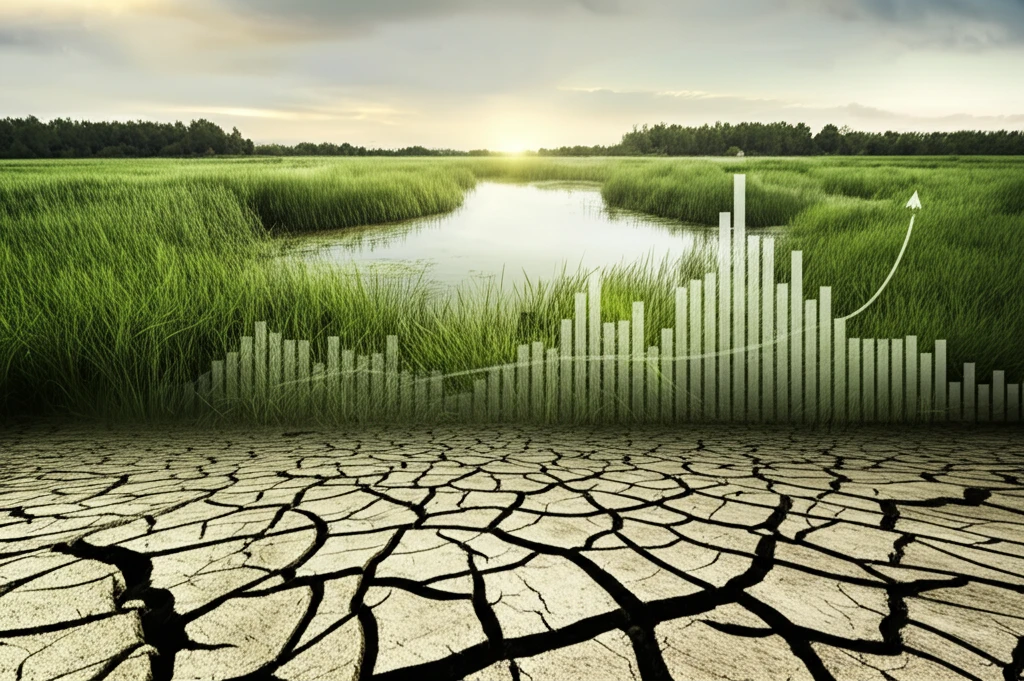
Is Your Local Wetland Disappearing? A New Way to Track and Protect These Vital Ecosystems

"Discover how power-law functions are revolutionizing wetland monitoring, offering a simple yet effective tool to assess losses and guide conservation efforts."
Wetlands are essential. They might not always be the first thing that comes to mind when we think about vital ecosystems, but these areas provide critical functions, from flood control and water purification to biodiversity support. Unfortunately, wetlands are under constant threat from human activities, leading to their degradation and outright destruction.
The loss of wetlands isn't just an environmental issue; it impacts our communities, economies, and overall well-being. Healthy wetlands help mitigate flood risks, improve water quality, and provide habitats for countless species. When wetlands disappear, we lose these invaluable ecosystem services.
Traditionally, assessing wetland loss has been a challenge due to inconsistent data and diverse interpretations. However, a new approach using power-law functions offers a standardized and effective way to monitor wetland changes and inform conservation strategies. This method promises to revolutionize how we understand and protect these vital ecosystems.
35% Lost in 50 Years
Since 1970, roughly 35% of the world's wetlands have been lost, driven by human activities such as drainage and infilling for agriculture and construction, as well as pollution, overfishing and overexploitation. The pace of decline is striking: wetlands are disappearing three times faster than forests. Because these ecosystems store water and slow floodwaters, their loss removes a natural buffer against floods.
Monitoring What Matters
Monitoring wetlands involves measuring wetland features over time that are known to indicate changes in the ecosystem, including both the pressure on wetlands and their state (extent and condition). A common technique is hydrological monitoring, which observes and records water levels across a site to understand how the wetland hydrology behaves. Yet there remains only a slow awakening to the value of wetlands, and legislative bodies are still beginning to integrate wetlands into policy programs and invest in their sustainability.
A Celebration Since 1997
To draw attention to the loss of wetlands, World Wetlands Day has been celebrated every year since 1997, gathering environmentalists who reaffirm the need to protect these vital ecosystems. Since 1970, 35% of the world's wetlands have disappeared, underscoring the urgency behind this annual observance. Wetlands are understood as highly productive, biologically diverse ecosystems where water covers the soil for at least part of the year.
Power-Law Functions: A New Tool for Wetland Monitoring
At the heart of this innovative approach lies the use of power-law functions. These mathematical relationships describe the size distribution of wetlands in a natural landscape. Imagine plotting the area of a wetland against how frequently that size of wetland occurs; in a natural environment, this relationship follows a predictable pattern. Deviations from this pattern can signal disturbances, whether from natural causes like climate change or human activities like development.
- Objective Estimates: Provides standardized, objective measurements of both permanent and temporary wetland loss.
- Policy Evaluation: Helps determine if wetland protection policies are effective in reducing wetland loss.
- Broad Application: Can be applied across large geographic areas, providing a consistent method for monitoring wetlands over time.
Wetlands as Climate Adaptation Assets
Academic reviews now frame wetlands as central to three of the world's greatest challenges over the coming decades: biodiversity loss, climate change, and water security. Research is increasingly focused on the human dimensions of tropical wetlands and their roles in adaptation to climate change. Wetlands are highly productive, biologically diverse ecosystems where water covers the soil for at least part of the year, making them valuable natural assets in a warming climate.
The Cost of Inaction
The loss of wetlands exposes a hidden risk multiplier for floods, meaning that the destruction of these ecosystems makes flood disasters more severe. Where wetlands are drained and infilled for agriculture and construction, the natural buffers that absorb and slow floodwaters disappear. The bitter truth is that protecting and restoring wetlands isn't optional - it is essential for resilience against the growing threat of flooding.
Faster Than Forests
Wetlands are disappearing three times faster than forests, placing them among the most threatened ecosystems on the planet. Human activities that lead to the loss of wetlands include drainage and infilling for agriculture and construction, pollution, overfishing and overexploitation. This comparison highlights that wetland loss is outpacing far better-known conservation concerns, including deforestation.
The Future of Wetland Conservation
The innovative use of power-law functions offers a promising path forward for wetland conservation. By providing a standardized, cost-effective method for monitoring wetland loss, this approach empowers scientists and policymakers to make informed decisions and implement effective conservation strategies. As we face increasing environmental challenges, embracing such innovative tools is crucial for protecting these vital ecosystems and ensuring a sustainable future.
A Slow Awakening
According to UNFCCC reporting, there is a slow awakening to the value of wetlands, and the world still needs to be educated on why these ecosystems matter. Across the globe, legislative bodies need to integrate wetlands into policy programs and make investments into their sustainability. The clear message is that protecting wetlands must move from awareness to concrete policy action.
Data-Driven Wetland Protection
Tracking wetland change depends on better monitoring: measuring wetland features over time that indicate changes in extent and condition, and observing and recording water levels to understand how wetland hydrology behaves. Such data-driven approaches can help guide decisions about protection and restoration. Scaling these monitoring efforts across more sites will be essential to slowing the rapid wetland loss recorded since 1970.
Wetlands and Water Security
Wetland loss sits within the broader global challenge of water scarcity, where freshwater resources are under increasing pressure. Since 1970, 35% of the world's wetlands have been lost to drainage, infilling, pollution, overfishing and overexploitation. Protecting wetlands is therefore closely linked to protecting water resources and the communities that depend on them.
People and Traditional Knowledge
Wetland protection is closely linked to traditional knowledge, and World Wetlands Day highlights how people can help protect these ecosystems. Since 1997, environmentalists have gathered annually to reaffirm the need to protect these vital wetlands, reflecting growing public engagement. Individual and community action remains essential as human activities - drainage, infilling, pollution and overfishing - continue to drive wetland loss.