
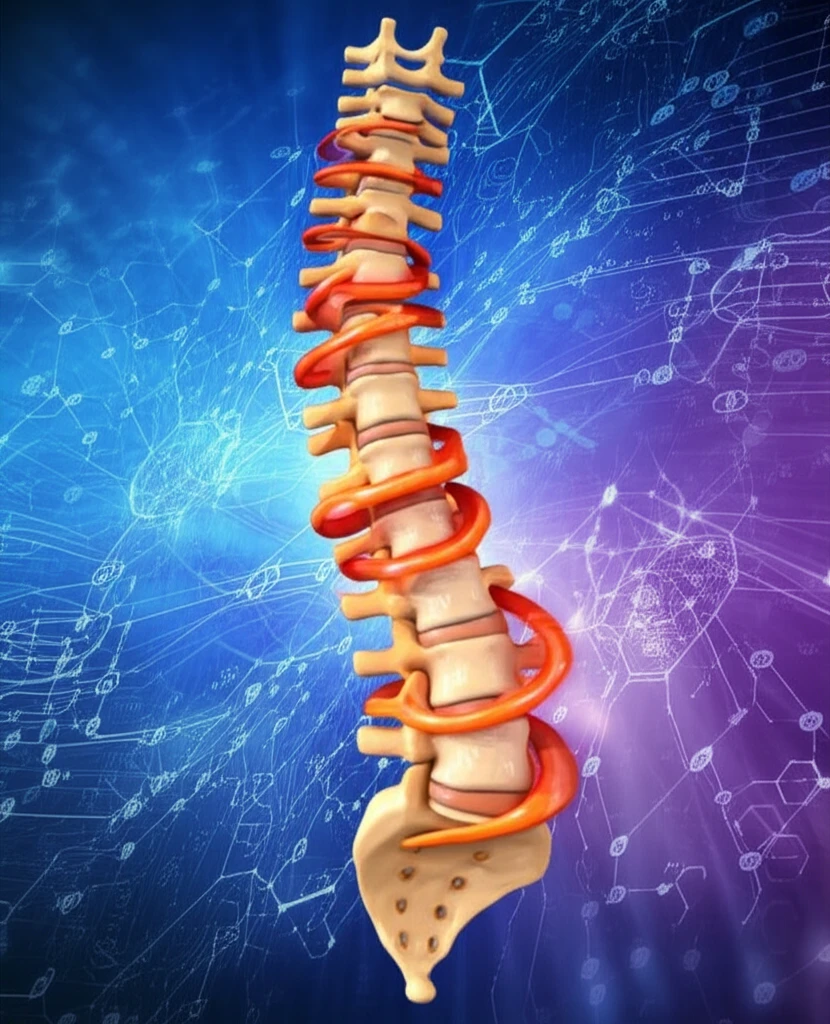
Is Your Back Pain More Than Just a Strain? The Hidden Link Between Visceral Fat and Spinal Health

"Uncover how excess visceral fat could be contributing to lumbar epidural lipomatosis and what you can do about it."
Back pain is a common complaint, often dismissed as a simple strain or the result of poor posture. However, sometimes, there's more to it than meets the eye. Lumbar epidural lipomatosis (LEL) is a condition characterized by an excessive accumulation of fat in the spinal canal, leading to discomfort and neurological symptoms. While seemingly isolated, recent research indicates a significant link between LEL and the less visible but equally concerning visceral fat, the type of fat that accumulates deep within the abdominal cavity, surrounding vital organs.
This connection between LEL and visceral fat is more than just a coincidence; it's a reflection of underlying metabolic imbalances that can significantly impact your overall health. Understanding this relationship is the first step toward managing not only back pain but also the associated risks of metabolic syndrome.
This article will explain the findings of a detailed study into LEL and its connection with visceral fat, offering insights into how these seemingly separate issues are intertwined. We will further provide actions you can take to address both your back pain and the underlying metabolic factors that contribute to it.
When Visceral Fat Inflammation Changes
A 2022 review describes inflammation in obese visceral fat as potentially protective at first: it may help the tissue cope with excess ambient nutrients and restore homeostasis. The authors also caution that this response may contribute to tissue damage at a later stage. The snippet does not quantify how often this progression occurs or establish a direct effect on spinal health.
Limited Evidence for Visceral Manipulation
A 2019 review found that evidence for visceral manipulation as a treatment for low back pain came from only a small number of randomized trials. Those trials varied in methodological quality, had small sample sizes, and mainly reported short-term effects of less than three days. A separate 2022 study set out to evaluate links between visceral fat, chronic low back pain (CLBP), and central sensitization, including possible relationships between pain intensity and these factors; the supplied summary does not report its results.
New Measures and Models in 2025
In 2025, a study examined the association between the Metabolic Score for Visceral Fat (METS-VF) and chronic pain in U.S. adults, describing METS-VF as a refined measure that may surpass traditional metrics. Another 2025 study reported findings that point to the possibility of incorporating abdominal adipose modification into pain management, while emphasizing the importance of monitoring visceral fat. A 2025 review described obesity and low back pain as contributors to disability and healthcare burden in adults and children, and noted that proposed mechanisms remain incompletely integrated; mechanical overload has traditionally been viewed as the principal link.
What is Lumbar Epidural Lipomatosis (LEL)?
Lumbar epidural lipomatosis occurs when there's an overgrowth of fat tissue in the epidural space, the area surrounding the spinal cord. This excess fat can compress the spinal cord and nerves, leading to a range of symptoms, including:
- Persistent lower back pain
- Numbness or tingling in the legs and feet
- Pain that radiates down the legs (sciatica)
- Weakness in the legs
- In severe cases, bowel or bladder dysfunction
Fat, Inflammation, and Chronic Pain
A British birth-cohort paper notes that atherosclerosis and chronic inflammation, both linked to obesity, have also been associated with disc degeneration and low back pain. A Harvard Health report published in February 2025 says participants with more visceral and subcutaneous fat were more likely to experience chronic pain in multiple body areas. It reports that this association was significantly stronger in women, with study authors suggesting hormone and fat-distribution differences as possible explanations.
Limits in Linking Fat to Back Pain
The supplied MRI-analysis excerpt says the study lacked measures that could contextualize epidural-fat accumulation within broader body-composition patterns, as well as metabolic biomarkers such as glucose, HbA1c, lipids, insulin, and inflammatory markers. A large-scale cross-sectional study of middle-aged Japanese adults notes that a better definition of low back pain, including treatment options, might have helped clarify its relationship with metabolic syndrome. Together, these limitations caution against treating the relationship between fat-related measures and back pain as fully established by these sources.
Epidural Lipomatosis: Association and Prevalence
A study of spinal epidural lipomatosis (SEL) reported that metabolic syndrome was associated with SEL, with an odds ratio (OR) of 3.8 (95% confidence interval [CI] 1.5–9.6). Within metabolic-syndrome criteria, visceral fat area of at least 100 cm² (OR 4.8, 95% CI 1.5–15.3) and hypertension (OR 3.5, 95% CI 1.1–11.8) were independently associated with SEL. A separate MRI study found overall SEL in 2.5% of 28,902 scans; it classified 0.6% as incidental, 1.8% as SEL with symptoms, and 0.1% as symptomatic SEL.
Taking Control of Your Spinal Health
The connection between visceral fat, metabolic health, and conditions like lumbar epidural lipomatosis is becoming increasingly clear. By focusing on lifestyle changes that reduce visceral fat and improve metabolic function, you can take proactive steps toward managing back pain and enhancing your overall well-being. It is recommended to consult with your healthcare provider to tailor a plan that addresses your specific needs and health status. By staying informed and proactive, you can protect your spinal health and enjoy a more active, pain-free life.
Mechanisms Still Need Clarifying
A 2025 bibliometric analysis describes research trends and hot spots in obesity-related or obesity-induced pain. Its summary says obesity can directly lead to allodynia, increase chronic-pain incidence, and aggravate existing pain, but also states that the underlying mechanisms remain unclear. The supplied source excerpt points to continued research into those mechanisms rather than a settled explanation for how obesity may relate to back pain.
Case Evidence and Research Consistency
A 2014 publication is a case study titled “Visceral Treatment and Nutritional Patterns in the Management of Low Back Pain,” by Juan Antonio Diaz-Mancha, Alberto Marcos Heredia-Rizo, and colleagues. The supplied excerpt does not provide the patient’s outcome, so it cannot establish whether the approach was effective. A separate 2021 source emphasizes that reducing heterogeneity in chronic low back pain case definitions is important for consistency and comparison between studies.