
Hormone Therapy & Breast Cancer Risk: Is There a Safer Path?

"New research sheds light on how certain hormone therapies may increase breast cancer risk, particularly in women with specific tumor cell characteristics. Could personalized hormone therapy strategies be the key to safer menopause management?"
The use of hormone therapy (HT) to manage menopausal symptoms has been a topic of ongoing debate, especially concerning its potential impact on breast cancer risk. While estrogen-only therapies have shown a relatively neutral or even slightly reduced risk in some studies, the combination of estrogen with certain progestogens, like norethisterone (NET), has been linked to increased risk.
Conventional understanding suggests that progestogens exert their effects by activating intracellular progesterone receptors (PRs). However, clinical observations don't always align with this model, and some research indicates that synthetic progestogens may even promote proliferation in breast cancer cells. The exact mechanisms behind these varying effects remain unclear, prompting scientists to investigate alternative pathways.
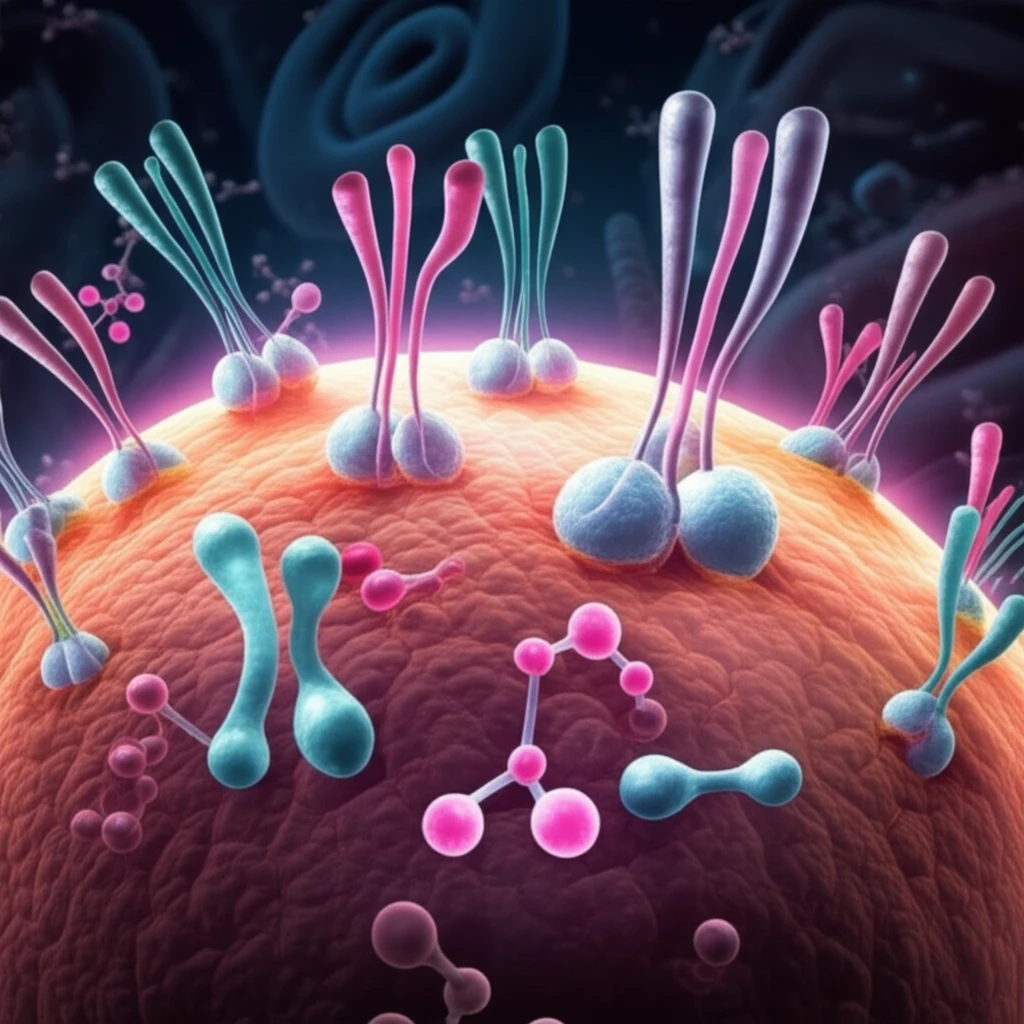
Recent research has focused on the role of progesterone receptor membrane component 1 (PGRMC1), a protein found in various cancer cells. This article will explore how the combination of estrogen and NET affects breast cancer cells that overexpress PGRMC1, both in laboratory settings and in animal models, potentially uncovering new insights into hormone therapy and breast cancer.
From Early Accounts to Endocrine Therapy
The history of breast cancer treatment spans many centuries, with progress shaped by contributions from physicians and scientists. Accounts trace the subject from descriptions of breast disease in ancient Egypt through the development of modern treatments. In 2023, Oncopedia’s history of hormonal therapy noted that a 2014 review marking ASCO’s 50th anniversary described anti-oestrogen treatments as having had a “greater global impact than any other treatment intervention in cancer medicine.” Tamoxifen is identified as the flagship of endocrine therapy.
PGRMC1: A Key Player in Hormone-Related Breast Cancer?
The study specifically investigated how NET, medroxyprogesterone acetate (MPA), and progesterone, alone and in combination with estradiol (E2), impact breast cancer cells that overexpress PGRMC1. The researchers used MCF-7 breast cancer cells, some stably transfected to overexpress PGRMC1 (WT-12 cells) and others with an empty vector as a control. These cells were then exposed to various hormone treatments, and their proliferation rates were measured.
- NET alone significantly increased the proliferation of WT-12 cells.
- MPA was effective only at the two highest concentrations tested.
- Progesterone had no effect on cell proliferation.
- When combined with a low concentration of E2 (10-12 M), NET triggered a significant proliferative response, whereas MPA and progesterone did not.
- In a mouse xenograft model, a sequential combination of NET and E2 significantly increased tumor growth of WT-12 cells.
PGRMC1 and Progestin Signaling
Research on progesterone receptor membrane component 1 (PGRMC1) reports that it can confer progestin responsiveness, enhancing proliferation of MCF7 breast cancer cells in vitro and in vivo. The findings suggest a potential role for PGRMC1 in increased breast cancer risk with progestin-based hormone therapy, rather than establishing that risk in patients. A separate review reports synergistic effects on cell proliferation when norethisterone (NET) is combined with physiological concentrations of estrogen in cell-culture experiments. A 2025 review addresses invasive breast cancer risk in relation to ever, recent, and past use of different systemic menopausal hormone therapies and exposure durations.
Benefits, Risks, and Evidence Gaps
A 2026 narrative review considers menopausal hormone therapy’s benefits and risks, focusing on breast cancer and risk modifiers to inform clinical decision-making. It also highlights important research gaps. A separate review notes that long-term hormone replacement therapy has been implicated as a breast cancer risk factor, a concern that can make some women skeptical about treatment. At the same time, the National Cancer Institute describes hormone therapy as a treatment that helps lower recurrence risk for certain types of breast cancer.
Personalized Risk Assessment
A November 2025 article by Dr. Jennifer Davis, a Certified Menopause Practitioner, frames menopausal hormone therapy and breast cancer risk as decisions that can feel overwhelming. It discusses the role and types of therapy, timing, alternatives, and personalized risk assessment. The source presents these as evidence-based guidance intended to empower health decisions, rather than providing a specific comparative estimate of risk between therapy options.
Personalized Hormone Therapy: A Path Forward?
This research highlights the complex interplay between hormone therapy, breast cancer risk, and individual tumor cell characteristics. The study suggests that women with pre-existing breast cancer cells overexpressing PGRMC1 might be more susceptible to increased breast cancer risk with certain hormone therapies, particularly those involving NET.
Two Decades of Debate After WHI
A 2024 article reviews studies linking menopausal hormone therapy with relative breast cancer risk that appeared after the Women’s Health Initiative (WHI) study was published in 2002. It describes the evidence as having remained under discussion. Its analysis draws on the WHI study updated 20 years after its first publication and a 2019 meta-analysis.
Understanding Risk Across Breast Cancer Subtypes
A study of menopausal hormone therapy (MHT) reports an association with increased risk of postmenopausal breast cancer, predominantly the luminal A-like subtype. It says the impact of MHT on deaths from breast cancer subtypes is less understood and describes exploring that question as the study’s aim. BCRF also describes its funded research as advancing understanding of how hormone replacement therapy influences breast cancer risk.
Symptoms, Quality of Life, and Treatment Duration
A 2026 real-world study followed postmenopausal women in China for two years to evaluate menopausal hormone therapy’s effects on vasomotor symptoms and quality of life while monitoring treatment-related adverse events. A separate 2024 report presents breast cancer risk according to duration of menopausal hormone therapy use among current users compared with non-users, using a 1:10 nested case–control sample. The supplied source descriptions do not provide results or specific risk estimates from either study.
The findings underscore the need for personalized approaches to hormone therapy. Considering individual risk factors, tumor cell characteristics, and the specific type and dosage of progestogens used could lead to safer and more effective management of menopausal symptoms.
Further research is needed to fully understand the role of PGRMC1 in hormone-related breast cancer and to identify which progestogens pose the lowest risk. However, this study provides valuable insights that could help guide future clinical decisions and improve the safety of hormone therapy for women experiencing menopause.