
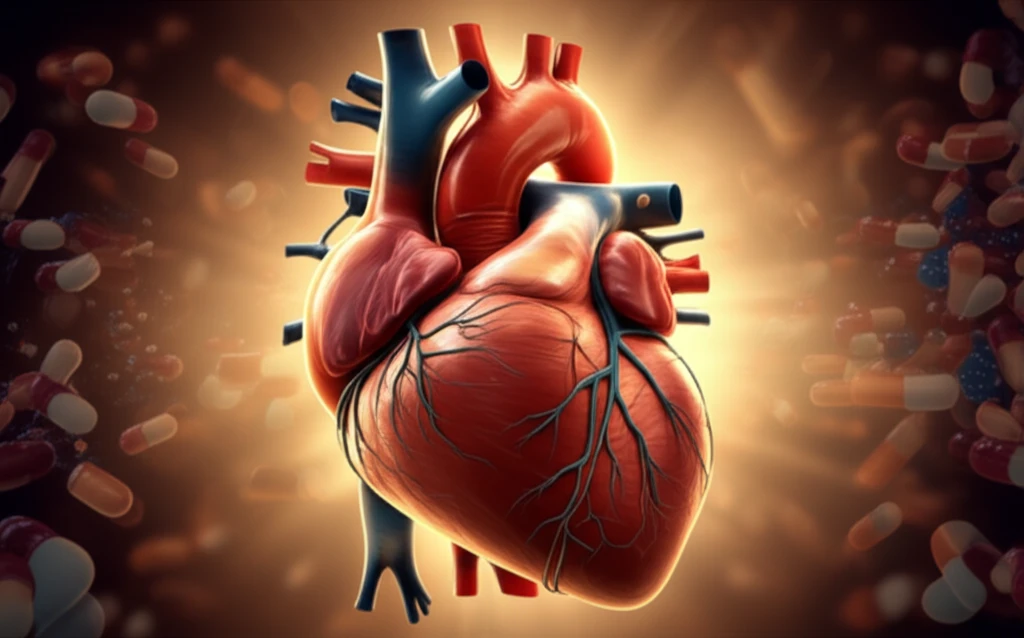
Heart Failure & Happiness: Can Medication Improve Your Life?

"New research explores the surprising link between sticking to your heart failure meds and enjoying a better quality of life. Could better health be just a pill away?"
Heart failure (HF) is a major health concern, affecting millions worldwide. While advancements in treatment have improved survival rates, the impact of HF on quality of life remains a significant challenge. Many people living with HF experience a diminished quality of life, struggling with physical limitations, emotional distress, and social challenges.
Managing heart failure often involves taking multiple medications, a complex regimen that can be difficult to maintain. Non-adherence to medication is a common problem, leading to poorer health outcomes and increased hospitalizations. But what if sticking to your medication could not only improve your health but also boost your overall sense of well-being?
Recent research investigates the connection between medication adherence and quality of life in individuals with heart failure. This article breaks down the study's key findings and explores how consistent medication use can lead to a more fulfilling life.
Medication Adherence and Heart Failure Health
For heart failure with reduced ejection fraction (HFrEF), guideline-directed medical therapy (GDMT) is a foundation of management, and adherence has been studied in relation to patients’ symptoms, function, and quality of life. A 2025 review reports that adherence and persistence remain suboptimal, particularly with complex, multi-drug regimens and prolonged treatment. That review also reports an association between improved adherence and better clinical outcomes, while noting the need for standardized adherence measures and targeted interventions. Health-related quality of life is itself related to medication adherence, hospitalization, and death.
Building the Evidence on Adherence
Research on heart failure medication adherence has included systematic reviews of factors thought to influence whether patients follow treatment. A later systematic review focused on interventions to improve adherence, situating the issue within the broader burden of heart failure, which includes poor quality of life, frequent hospitalization, and increased health care costs. A 2024 study of medication adherence and health status in HFrEF also emphasizes adherence to guideline-directed medical therapy as a foundation of management. Together, these sources show a developing research focus on both the factors shaping adherence and its relevance to patients’ health status.
The Link Between Meds and a Better Life: What the Study Found
A study published in the journal Heart & Lung explored the relationship between medication adherence and quality of life in 180 patients with heart failure. The researchers used questionnaires to assess medication adherence and quality of life, and then analyzed the data to see if there was a connection.
- More adherent meant better life. A clearer link was found between how well people stuck to their medication and their quality of life.
- Emotional well-being. The emotional side of the quality-of-life score was strongly related to the adherence level.
- Multiple factors at play. Income, disease severity, and other health issues also affect the quality of life in heart failure patients.
Adherence, Quality of Life, and Emotional Burden
A report on coronary heart disease patients cites Silavanich’s 2019 research in Thailand, which found a relationship between medication adherence and quality of life among heart patients. A prospective pre-post study of pharmacist-led tailored interventions for people with heart failure likewise cites Silavanich et al. (2019), reporting higher emotional-domain scores among patients with poor adherence than among those with medium or high adherence. These findings point to a link between adherence and patients’ reported quality of life, including its emotional dimension. The supplied sources do not provide a numerical effect estimate for that relationship.
Taking Control: Practical Tips for Medication Adherence
While the study demonstrates a link between medication adherence and quality of life, sticking to a medication regimen can be challenging. The key to improved adherence is establishing routines, understanding the medications, and having good support.
Adherence and Acceptance of Illness
A study of people with heart failure examined factors affecting health-related quality of life, with particular attention to medication adherence and acceptance of illness. Its framing recognizes that heart failure can negatively affect multiple aspects of patients’ lives and diminish quality of life. The supplied source identifies these factors as the study’s focus but does not report the direction or size of their effects. It therefore supports considering adherence and illness acceptance together when examining quality of life, without establishing a specific causal effect.
Improving How Adherence Is Measured
A study published in 2025 proposes using electronic health databases to evaluate medication adherence and persistence in heart failure management. It aims to examine commonly used measurement methods and their limitations, and to identify adherence thresholds associated with improved clinical outcomes. The authors anticipate that this work could inform enhancements to future research. The source describes these as study aims and anticipated contributions, rather than established findings.
By following these tips, people living with heart failure can take control of their health and improve their quality of life. Remember, managing a chronic condition is a journey, and every step towards better adherence is a step towards a healthier, happier you.
The information provided in this article is intended for general knowledge and informational purposes only, and does not constitute medical advice. It is essential to consult with a qualified healthcare professional for any health concerns or before making any decisions related to your health or treatment.