
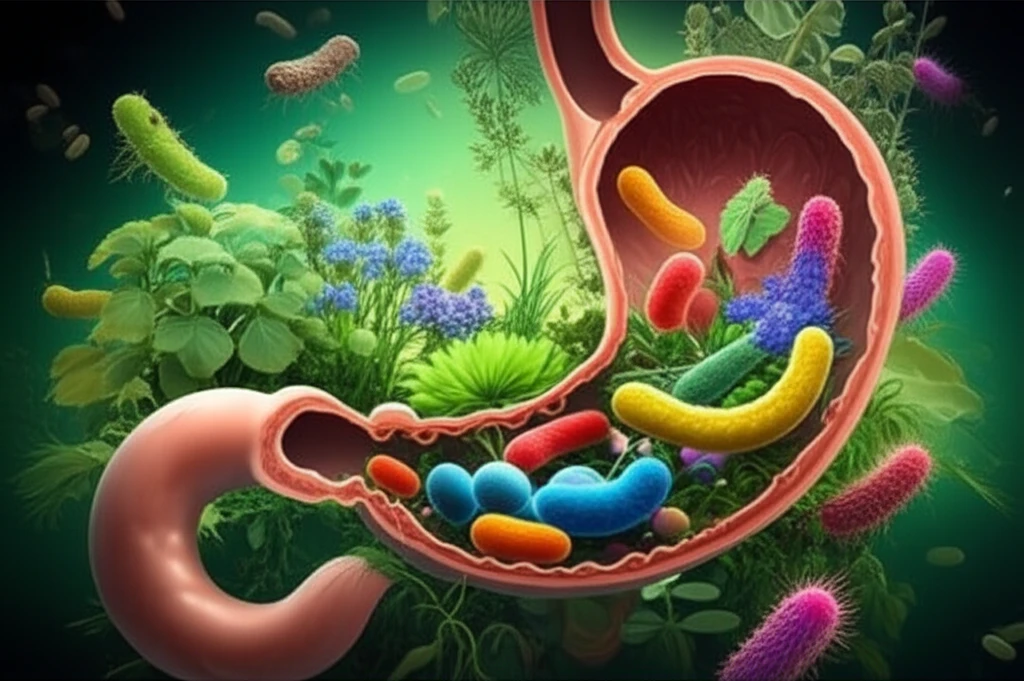
Gut Health Revolution: How Herbal Medicines are Changing Your Microbiome

"Unlock the secrets of herbal medicine and discover how they can revolutionize your gut health by influencing your microbiome and short-chain fatty acid production."
In recent years, there's been a surge in interest in alternative and complementary medicine, with herbal remedies taking center stage. These aren't just old wives' tales; modern science is starting to uncover the profound ways they interact with our bodies, especially our gut.
Your gut is home to trillions of microorganisms, collectively known as the gut microbiota. This complex ecosystem plays a crucial role in everything from digestion and immunity to mental health. Disruptions in this balance have been linked to various diseases, making gut health a key focus for overall well-being.
Herbal medicines, derived from plants, have been used for centuries in traditional medical systems. Now, research suggests they can significantly influence the composition and function of our gut microbiota, leading to the production of beneficial substances like short-chain fatty acids (SCFAs). Let's explore this exciting intersection of herbal medicine and gut health.
A Growing Herbal and Gut-Health Market
The US herbal medicine market is valued at USD 64.65 billion in 2026 and is projected to reach USD 98.49 billion by 2031, growing at a CAGR of 8.79%. Major companies named in the market analysis include Amway Corp., Himalaya Wellness Company, Nature's Sunshine Products, NOW Health Group, and Herbalife Ltd. Separate reporting on herbal gut-health supplements examines historical data from 2021 to 2023 and identifies 2024 as a baseline year for analyzing consumer behavior, competition, and regulation.
Standardization and Oversight Challenges
Research on herbal-drug standardization reports that different methods have distinct strengths and inherent limitations. A PubMed-indexed review describes current criteria, challenges, and future prospects, while emphasizing that quality-assessment methods should be state of the art, fast, low-cost, accurate, precise, and applicable across herbal drugs. The WHO notes that regulatory diversity affects product standards, quality assurance, safety monitoring, evidence requirements, market oversight, and public-health protection.
From Ancient Remedies to Phytotherapy
Historical accounts trace herbal medicine from ancient Egyptian and Chinese remedies toward modern evidence-based phytotherapy. Other histories describe a path through ancient materia medica, medieval herbals, apothecaries, plant-drug trade, and pharmacology. Reports also identify Mesopotamia, Egypt, India, and China as cultures whose ancient remedies influenced modern medicine, while describing medicinal plants as thousands of years old and relevant to modern integrative health practice.
The Gut Microbiota: Your Inner Ecosystem Explained
Think of your gut microbiota as a bustling city within your digestive tract. This community of bacteria, fungi, viruses, and other microorganisms works together to perform essential functions. A healthy gut microbiota is diverse and balanced, with beneficial species outnumbering the harmful ones.
- Digestion: Breaking down complex carbohydrates and fibers that your body can't digest on its own.
- Immune Function: Training your immune system to recognize and respond to pathogens.
- Nutrient Synthesis: Producing essential vitamins like vitamin K and B vitamins.
- Protection: Preventing harmful bacteria from colonizing your gut.
Mapping Herbal Effects on the Microbiome
A 2026 systematic review aims to synthesize human clinical evidence on how multi-herb formulations modulate the gut microbiota and to identify herbal components associated with reported directional microbial shifts. In prediabetic mice, research on Dendrobium officinale polysaccharide discusses short-chain fatty acids binding to FFAR2 and FFAR3 receptors and stimulating GLP-1 and PYY secretion by colonic cells. A separate study of Wenyang Jiedu Huayu Formula reported a trend toward improved microbiota diversity and evenness in acute-on-chronic liver failure, including changes involving Lachnospiraceae_NK4A136_group, Turicibacter, and Allobaculum.
Safety, Evidence, and Translation Gaps
Evidence that herbal interventions affect the microbiome does not by itself establish reliable human benefits: one cited example concerns high-molecular-weight polysaccharides from Ganoderma lucidum reducing obesity in mice through microbiota modulation. Reviews also report serious concerns about the safety and efficacy of herbal remedies, particularly gastrointestinal side effects. Clinical literature further warns that self-medication with supplements is prevalent and that users may mistakenly assume herbal products are inherently safe because they are natural.
Mechanisms and Practical Comparisons
One microbiome review reports that acetate, propionate, and butyrate occur in an approximate molar ratio of 3:1:1 in the colon and stool. A guide titled “Herbal Antimicrobials for Gut Health: 13 Herbs Compared” frames herbal options around SIBO, IBS, and candida, including dosing, cycling, and safety considerations. Other comparison material presents herbal and probiotic support as an unsettled practical question involving daily digestion, bloating, and gut-health goals rather than a conclusively established winner.
Future Directions: Optimizing Herbal Medicine for Gut Health
The research is clear: herbal medicines have the potential to transform our gut health by modulating the microbiota and influencing SCFA production. By focusing on targeted interventions and personalized approaches, we can unlock the full potential of herbal medicine to promote a healthier, happier gut. As we continue to unravel the complexities of the gut microbiome, herbal medicines will undoubtedly play a central role in shaping the future of personalized medicine and preventative healthcare.
Personalization and Market Expansion
Future gut-health development is expected to emphasize microbiome research, personalized nutrition, and innovative delivery systems. The global gut-health supplement market is projected to grow from USD 14,432.0 million in 2025 to USD 32,390.0 million by 2035, with a reported CAGR of 8.4%. Another 2026 market report places the gut-health supplements market at approximately USD 20 billion in 2025 and projects roughly 8% CAGR from 2026 to 2030, so published market estimates differ.
Integrating Patient Experience and Care
Research on dietary interventions and medicines reports that routinely prescribed drugs for diabetes, digestive problems, constipation, bacterial infections, and depression may alter gut-microbiota balance and potentially increase susceptibility to specific illnesses. Clinical case-study collections in herbal medicine present the health issue, case history, diagnosis, and treatment from medical herbalists. An integrative model combines herbal remedies with conventional treatments to bring traditional practices and modern medicine into digestive-health care.