
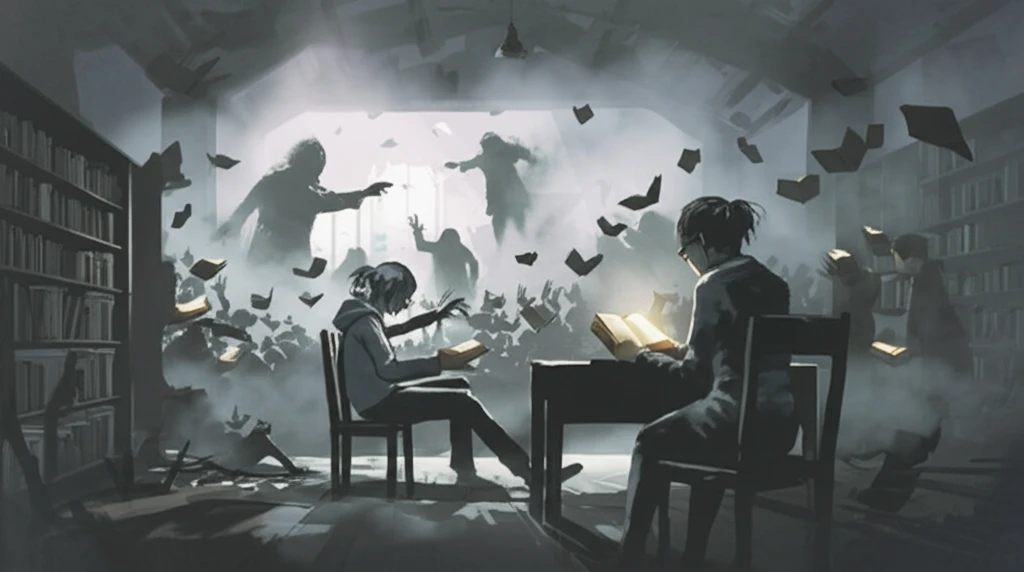
Grief, Ghosts, and Great Wars: Finding Meaning in Mourning

"How Literature and Mysticism Helped Navigate Loss After World War I"
The aftermath of World War I left a world reeling. Millions mourned lost loved ones, grappling with a sense of loss that permeated every aspect of life. In this environment of profound grief, many turned to unconventional avenues for solace and understanding. Literature became a mirror reflecting collective trauma, while mysticism offered a framework for processing the intangible aspects of loss.
George M. Johnson's book, 'Mourning and Mysticism in First World War Literature and Beyond: Grappling with Ghosts,' delves into this fascinating intersection. Johnson explores how British writers and intellectuals of the time sought to make sense of the senseless through psychic research, spiritualism, and literary expression. These individuals, including iconic figures like Virginia Woolf, Rudyard Kipling, and researchers like Frederic Myers, sought ways to connect with the departed and find meaning in the face of unprecedented devastation.
Their explorations weren't just personal journeys; they reflected a broader societal need to redefine life, death, and the boundaries of reality in a world forever changed. By examining these responses to loss, we can gain a deeper understanding of how individuals and societies cope with trauma and seek paths toward healing.
A War That Reshaped Societies
World War I was the first three-dimensional war, with air attacks joining land and sea combat to create an unprecedented scale of destruction (source 4). The conscription of an immense number of people meant the war deeply affected the populations of all combatant nations, including the Ottoman Empire, where poor Turkish women bore particular hardships (source 4). Beyond the battlefields, the conflict catalyzed profound cultural shifts; as historian Cordell Scott and others have documented, WWI sparked the Harlem Renaissance and the broader artistic movement that transformed Black America (source 3). These twin impacts — mass civilian suffering and cultural upheaval — made the war a defining rupture in modern history.
Modernism and the Limits of Traditional Frameworks
Modernism in World War I literature reflects the era's upheaval and disillusionment, challenging traditional values and perceptions of identity and heroism (source 3). The war and Modernism emerged from the same societal changes, yet conventional literary and historical frameworks often struggle to fully capture the scale of dislocation that soldiers and civilians experienced (source 3). Epic History TV's comprehensive four-part video survey of the entire conflict — from the Schlieffen Plan to the Versailles Treaty — demonstrates how the war's complexity strains any single interpretive method (source 4). These limitations suggest that understanding WWI requires interdisciplinary approaches that go beyond standard disciplinary boundaries.
From Neutrality to Global Conflagration
When Europe exploded into the First World War in 1914, it was a war no nation really wanted but no nation seemed able to stop, according to VOA's Making of a Nation series (source 3). The tangled secret alliances, royal feuds, and the personalities of key leaders made the seemingly inevitable series of events in June and July 1914 catastrophic (source 2). The United States initially adopted a posture of neutrality, yet the Philippines-American War of 1899–1902 had already foreshadowed America's growing entanglement in global affairs (source 1). Meanwhile, the Armenian Genocide unfolded as one of the war's most devastating episodes, illustrating how total war enabled mass atrocities against civilian populations (source 4).
The Rise of Mysticism and Psychic Research
The late 19th and early 20th centuries saw a surge in interest in psychic phenomena. This wasn't limited to fringe groups; prominent scientists and intellectuals actively engaged in investigating spiritualism and psychic research. Organizations like the Society for Psychical Research meticulously studied mediums and paranormal claims, attempting to apply scientific rigor to the realm of the unseen. Johnson highlights this widespread appeal, emphasizing that it wasn't merely a rejection of reason but a genuine effort to explore the boundaries of human understanding.
- Increased interest in psychic research and spiritualism.
- Scientists sought to legitimize paranormal studies.
- Traditional religion became inadequate to address mass loss.
- Séances offered comfort and connection to the deceased.
The War That Shaped the Modern World
Duke University scholars describe World War I as the pivotal moment in international relations — a war nobody wanted but that happened because everyone wanted a different kind of war than what they got, filled with gross miscalculations (source 2). Recent scholarship has also expanded the literary canon; a five-volume reset edition from Taylor & Francis makes available newly-edited short stories, novels, and plays from 1914–19, redressing the surprising scarcity of accessible contemporary literary works from the conflict (source 3). The sinking of the Lusitania in 1915 remains a critical turning point, as it shifted American public opinion and drew the United States closer to entering the war (source 4).
Rethinking the Causes and Cultural Legacies
ThoughtCo identifies five core causes of World War I, simplifying a complex web of alliances, militarism, imperialism, nationalism, and the assassination of Archduke Franz Ferdinand (source 1). However, modernist critics and literary scholars have pushed back against purely political readings, arguing instead that the war's cultural consequences — the break with past forms of expression — are equally important (source 3). Arnold's literary criticism, rooted in the problem of living adequately in late industrial society, offers a humanist framework that runs through figures such as F. R. Leavis and persists in contemporary thought (source 4). These alternative lenses challenge reductive narratives and insist on the war's multidimensional legacy.
Memory, Literature, and the Distance of Time
The increased temporal distance from World War I allows for a more flexible approach to historiography, enabling scholars to engage critically with memory politics and collective identities (source 2). Comparative literary analysis reveals significant differences between accounts written by actual combatants and those produced by later writers who relied on imagination and research to reconstruct the war from a distance (source 3). This tension between lived experience and retrospective interpretation remains a central question in WWI studies, as authors and historians alike grapple with how faithfully literature can represent the realities of the front.
Literature as a Mirror to Trauma
Johnson’s analysis provides a lens through which to understand how individuals and societies grapple with profound loss and trauma. By examining the literature and mystical explorations of the World War I era, we gain insight into the enduring human need to find meaning and connection in the face of unimaginable adversity. These explorations offer valuable lessons for navigating our own experiences with grief and loss, reminding us of the power of creativity, spirituality, and human connection in the healing process.
Royal Failures and Literary Meritocracy
A Brookings Institution analysis highlights a poignant irony of WWI: the three principal monarchs — Kaiser Wilhelm II of Germany, King George V of England, and Tsar Nicholas II of Russia — were all first cousins, yet their family ties could not prevent the catastrophe (source 1). Keith Gandal's War Isn't the Only Hell offers a new reading of American WWI literature, arguing that the conflict was interpreted not merely as alienated outcry against modern warfare and propaganda but also as a meritocracy literature that reshaped social hierarchies (source 4). Together, these perspectives underscore the war's capacity to expose the limits of personal bonds and reshape cultural narratives.
Technology, Scale, and Enduring Lessons
World War I saw the mobilization of over 70 million military personnel, resulting in an unprecedented scale of casualties that continues to inform modern conflict studies (source 1). The war also drove rapid technological innovation, particularly in aviation; the evolution of World War I aircraft — from reconnaissance platforms to combat vehicles — laid the groundwork for 20th-century air power (source 2). Understanding these developments is essential for contextualizing how total war reshapes both military strategy and civilian life, lessons that remain relevant as global tensions persist in the present day.
Origins, Innovation, and Global Tensions
Sidney Bradshaw Fay's landmark 1928 study The Origins of the World War changed how historians understood the conflict's causes, rejecting the notion that Germany alone was responsible and instead emphasizing underlying systemic factors shared across nations (source 1). On the battlefield, the British Mark I tank represented a technological revolution that fundamentally altered warfare, introducing armored vehicles that could cross trenches and break through enemy lines (source 3). The ongoing monitoring of global tensions through platforms like World Tension Watch serves as a reminder that the systemic dynamics which enabled WWI — entangling alliances, arms races, and competing nationalisms — have not fully disappeared (source 4).
Suffering, Gender, and the Shattering of Certainty
The devastation of World War I and the subsequent Great Depression caused widespread suffering across Europe and the United States, and these contradictory impulses found expression within Modernism — a radical break from the past (source 1). Wikiquote compilers observe that the 1914–18 conflict merely precipitated and immeasurably aggravated a crisis it had not created, with the postwar revolutions still forming part of the nineteenth century's unresolved tensions (source 2). Behind the Lines: Gender and the Two World Wars examines how the wars transformed relations between women and men, drawing on government policy and popular media to trace profound social shifts (source 3).