
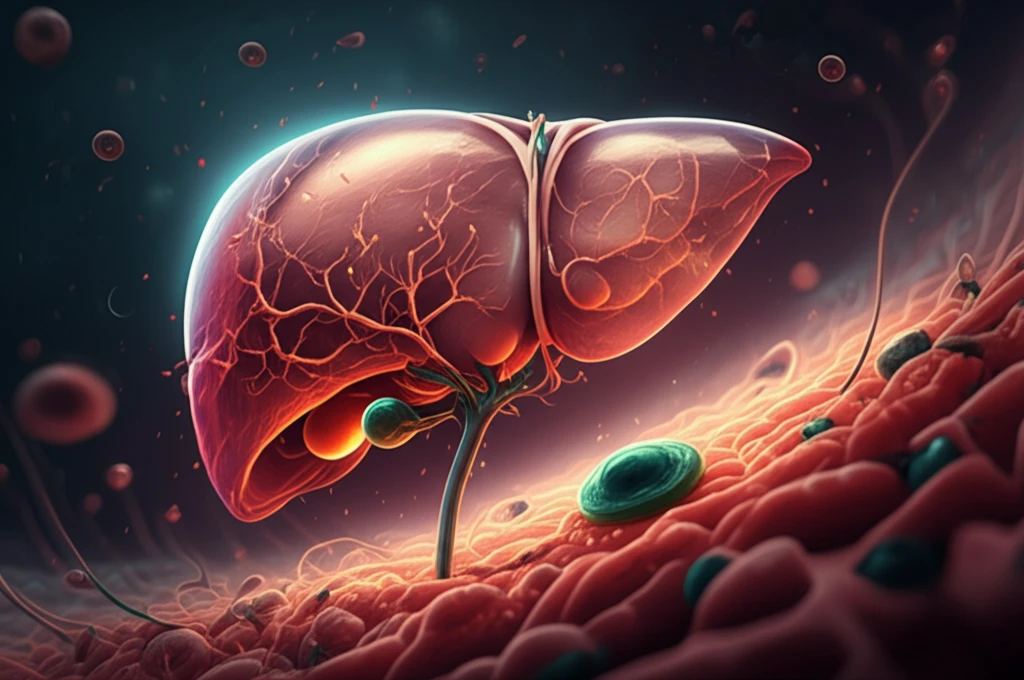
Fountain of Youth? Infant Cells Show Promise in Liver Disease Treatment

"Research highlights how younger cells could revolutionize therapies for end-stage liver disease, offering a new path for regenerative medicine."
End-stage liver disease (ESLD) poses a significant threat, often requiring liver transplantation as the only viable option. However, the shortage of donor organs and potential complications associated with transplantation have spurred the search for alternative treatments. Cell-based therapies, particularly those involving mesenchymal stromal cells (MSCs), have emerged as a promising avenue.
MSCs, known for their multilineage potential and immunoregulatory properties, can be derived from various sources, including bone marrow and adipose tissue. Adipose-derived stem cells (ADSCs) are especially attractive due to their abundance and ease of accessibility. Recent studies suggest that ADSCs can enhance liver regeneration and improve outcomes in patients with ESLD.
A groundbreaking study, published in "Molecular Medicine Reports," delves into how the age of the cell donor affects the biological and functional characteristics of ADSCs. Researchers compared ADSCs from infants, adults, and elderly patients with benign ESLD to determine if age plays a role in the cells' regenerative capabilities. This research has significant implications for autologous cell therapy, potentially maximizing its effectiveness by considering the age of the cell source.
The Global Burden of Liver Disease
Liver disease is frequently diagnosed at a late stage, by which point treatment may only manage symptoms rather than cure the condition. When caught early, however, liver disease can be treated successfully. Advances such as direct-acting antivirals now cure more than 95% of Hepatitis C cases, and liver transplant recipients achieve approximately 90% one-year survival rates. These outcomes underscore both the severity of late-stage diagnosis and the promise of early intervention.
MELD Scoring and Transplant Prioritization
Liver damage is progressive; without diagnosis or successful treatment, it can advance to cirrhosis or end-stage liver disease (ESLD), also known as chronic liver failure. The Model for End-Stage Liver Disease (MELD) score is the standard tool used to prioritize patients for liver transplantation. The MELD score has had a measurable impact on transplant allocation, helping clinicians rank patients by medical urgency. However, the scoring system has evolved over time—the etiology of liver disease was removed from the model because it posed difficulties such as how to categorize patients with multiple causes of liver disease.
Understanding End-Stage Liver Disease
End-stage liver disease is the result of advanced liver damage in which the liver can no longer adequately perform its essential functions. In ESLD, much of the liver's natural ability to regenerate is lost, marking a critical threshold beyond which recovery becomes extremely difficult. Many different causes of liver disease—including viral hepatitis, alcohol use, and metabolic conditions—may ultimately lead to liver failure if left unaddressed. This understanding of irreversible hepatic decompensation has shaped how clinicians approach treatment and prognosis.
Infant Cells: A Regenerative Powerhouse
The study revealed that ADSCs from infants exhibit superior proliferation and migration capabilities compared to ADSCs from adults and elderly individuals. This means infant cells can multiply faster and more efficiently move to the site of damage, which is crucial for effective tissue repair. While all ADSC samples displayed typical MSC characteristics (CD90+/CD73+/CD105+ and CD45-/CD34-), the functional differences were striking.
- Infant ADSCs proliferate and migrate more effectively.
- They exhibit a higher capacity for osteogenic differentiation.
- Infant ADSCs more effectively suppress T-cell proliferation.
- They enhance the proportion of regulatory T cells (Tregs).
Emerging Insights into ESLD Complications
End-stage liver disease is the final stage of cirrhosis, an irreversible scarring of the liver that affects patients' quality of life as well as that of their informal family care partners. New research published in Obesity Reviews highlights the importance of abdominal adipose tissue—particularly its type and distribution—in influencing the prognosis of ESLD patients. The distribution of fat, rather than total fat alone, appears to play a significant role in disease outcomes. These findings suggest that body composition assessments could become an important component of ESLD management.
The Challenge of Silent Progression
Liver disease does not always cause symptoms that can be seen or felt, making early detection a persistent clinical challenge. Problems such as fatty liver disease and cirrhosis can develop gradually and silently, with patients remaining unaware of significant hepatic damage until it reaches advanced stages. In rare cases involving conditions like Kawasaki disease, acute liver failure can occur, though it is considered extremely rare and indicates advanced disease with synthetic dysfunction. The difficulty of identifying liver problems before they become severe remains a fundamental limitation in current clinical practice.
Variable Manifestations Across Liver Disease Etiologies
Different types of liver disease lead to distinct signatures of muscle loss, according to research from the University of Birmingham, which could help pave the way for more personalised treatments for sarcopenia in people with end-stage liver disease. Meanwhile, the use of macrovesicular steatotic liver grafts in transplantation has declined over the past decade—from approximately 37% of all grafts in 2014 to about 30% in 2024—reflecting evolving donor organ selection criteria. These trends highlight how the underlying cause of liver disease significantly influences both clinical presentation and treatment strategy.
Implications and Future Directions
This study underscores the importance of considering donor age in cell-based therapies for ESLD. The superior regenerative and immunomodulatory properties of infant-derived ADSCs suggest that they may offer a more effective therapeutic option. While further research is needed to fully elucidate the mechanisms underlying these age-related differences and to translate these findings into clinical applications, this study provides a compelling rationale for exploring the potential of younger cells in regenerative medicine. Future studies could focus on optimizing the isolation, expansion, and delivery of infant-derived ADSCs, as well as investigating their long-term safety and efficacy in clinical trials. Ultimately, harnessing the regenerative power of younger cells may revolutionize the treatment of ESLD and other chronic diseases.
Recognizing the Warning Signs
Advanced liver disease can manifest in visible ways that patients and caregivers should not ignore. Confusion is a hallmark sign associated with advanced-stage liver disease, reflecting the liver's inability to filter toxins from the blood. Muscle wasting is another critical indicator—when a patient has an oversized stomach with swollen ankles alongside skinny or weak arms and legs, it may result from fluid imbalances caused by a diseased liver. Early recognition of these warning signs, combined with lifestyle measures such as responsible alcohol use, healthy diet, and regular exercise, remains essential for preserving liver health.
Expanding Access to Transplantation and Treating Viral Hepatitis
Liver transplantation is a viable treatment for alcoholic hepatitis in appropriate candidates, and recent data show a rising trend in waitlisting for this condition among patients with favorable outcomes. At the same time, missed opportunities in Hepatitis C care remain a concern—research from New South Wales, Australia, has evaluated trends in late HCV diagnosis and treatment among people who progressed to end-stage liver disease, highlighting gaps in timely intervention. Addressing these gaps in both viral hepatitis care and transplant access will be critical to reducing the future burden of ESLD.
Etiology-Driven Differences and Therapeutic Targets
Research presented at the British Association for the Study of the Liver Annual Meeting in 2022 demonstrated that the aetiology of end-stage liver disease impacts both the site and severity of muscle loss, reinforcing the need for etiology-specific treatment approaches. Additionally, clinical trials have measured liver fat and demonstrated its reduction through targeted interventions, suggesting that modifiable metabolic factors may offer new therapeutic avenues. Together, these findings point toward a future in which ESLD treatment is more precisely tailored to the underlying cause and metabolic profile of each patient.
Disease Burden and Complications in Real-World Settings
A 2018 study estimated the disease burden and economic impact of diagnosed non-alcoholic steatohepatitis (NASH) across the adult populations of France, Germany, Italy, Spain, and the United Kingdom, underscoring the significant societal cost of chronic liver disease in Europe. In clinical settings, spontaneous bacterial peritonitis—an infection of ascitic fluid—remains a serious complication in patients with end-stage liver disease, with studies from Brazil analyzing outcomes among nearly 300 patients undergoing liver transplantation. These real-world data highlight both the economic toll and the acute clinical risks that ESLD patients face across diverse healthcare systems.