
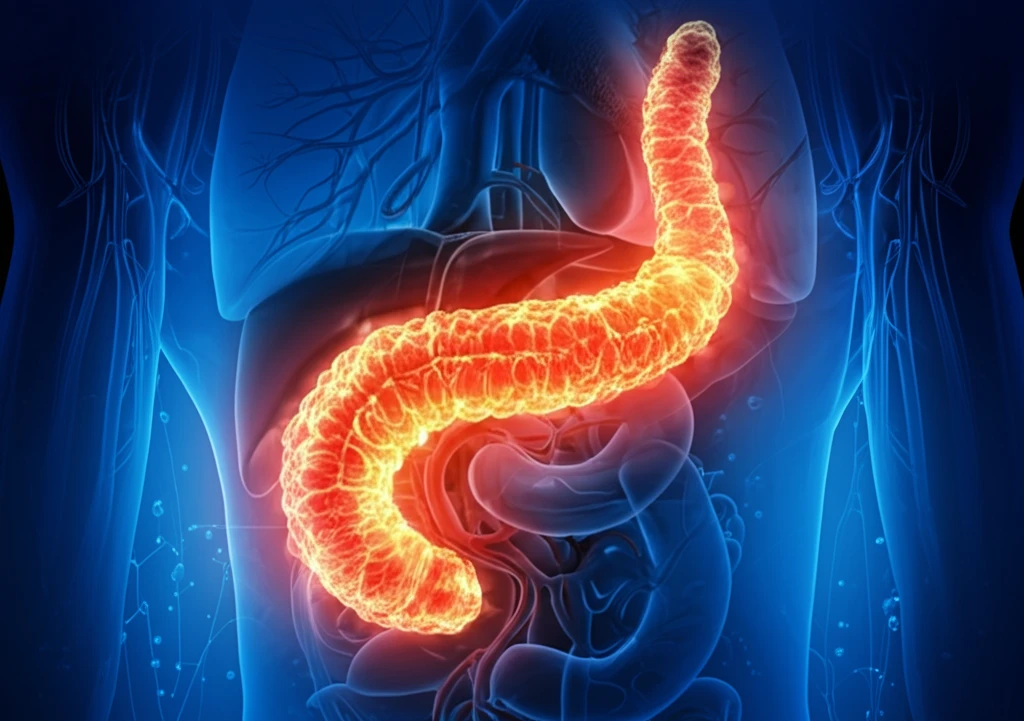
Fatty Liver's Impact on Pancreatitis: What You Need to Know

"Uncover the connection between fatty liver disease and acute pancreatitis, and how it affects severity and outcomes."
Acute pancreatitis (AP) is a condition characterized by inflammation of the pancreas. Its severity can vary widely, ranging from mild and self-limiting to severe and potentially fatal. Early and accurate assessment of AP severity is crucial for determining the appropriate course of treatment and improving patient outcomes. While the risk factors of AP have been long studied, researchers are constantly discovering new factors that contribute to this disease.
A frequent comorbidity with acute pancreatitis is fatty liver disease, where there is excess fat accumulation in the liver. Fatty liver disease is becoming increasingly prevalent worldwide due to rising rates of obesity and metabolic syndrome. Given the growing overlap between these two conditions, understanding the relationship between fatty liver disease and acute pancreatitis is of utmost importance. Is there a correlation between these two conditions? And if so, how does fatty liver disease impact the severity and prognosis of acute pancreatitis?
This article dives deep into the connection between fatty liver disease and acute pancreatitis, leveraging the insights of recent research to shed light on how fatty liver influences the severity, clinical outcomes, and potential complications of AP. We aim to translate complex findings into understandable insights, empowering you to make informed decisions about your health and lifestyle.
A Widespread, Silent Condition
Fatty liver, also known as non-alcoholic fatty liver disease, is a condition characterized by the accumulation of fat in the liver, driven by factors such as obesity, high cholesterol, and insulin resistance. This fat buildup can progress to liver dysfunction that impairs the body's ability to metabolize fats and process toxins, and this underlying dysfunction can in turn contribute to the development of cardiovascular disease. Clinical tools such as the Fatty Liver Index diagnose fatty liver using laboratory results and physical examination findings, while related calculators estimate the degree of scarring in the liver based on several laboratory tests.
From Biopsy Gold Standard to Non-Invasive Tools
Assessment of fatty liver disease usually begins with blood tests, but liver biopsy remains the gold standard for evaluating fibrosis in MAFLD, despite being invasive and costly. When standard fatty liver patterns do not fully explain abnormal liver tests, clinicians check for autoimmune hepatitis through ANA (antinuclear antibody) and SMA (smooth muscle antibody) tests to rule out concurrent conditions. Newer biomarkers are being studied to provide information beyond standard liver function tests, including CK-18 (cytokeratin-18 fragments), which are released when liver cells undergo a specific type of cell death. Even widely used non-invasive tools have limits, since the FIB-4 index can produce false positives, for example during acute hepatitis. For people with metabolic dysfunction-associated steatohepatitis (MASH), vitamin E has been investigated as a treatment because oxidative stress is considered to contribute to liver damage and disease progression.
From Silent Disease to Recognized Diagnosis
Fatty liver has historically been easy to overlook because no specific symptoms noticeable to the patient are present. Medical understanding of the condition has since centered on insulin resistance as the root cause, with weight gain and a bulged midsection described as symptoms, even as medicines have often addressed symptoms rather than that root cause. The diagnosis has become well enough recognized that UK insurers commonly assess simple steatosis at standard rates, while offering more tailored underwriting where fatty liver accompanies diabetes or a cardiovascular history.
The Fatty Liver and Pancreatitis Connection
A new study analyzed the medical records of 2,671 patients diagnosed with acute pancreatitis to find if there was a correlation between fatty liver and the severity of AP. The researchers collected patient data and assessed the presence of fatty liver using abdominal CT scans, categorizing patients into groups based on the presence or absence of fatty liver. The study analyzed various factors, including mortality rates, clinical severity, and CT scan findings, to determine the impact of fatty liver on acute pancreatitis outcomes.
- A significantly higher rate of mortality.
- A greater frequency of severe acute pancreatitis (SAP) and necrotizing acute pancreatitis (ANP).
- Increased incidence of local and systemic complications, such as pancreatic necrosis and organ failure.
New Clues in Microbes, Molecules, and Microplastics
The prevalence of non-alcoholic fatty liver disease is rapidly increasing worldwide, making it the leading cause of liver-related morbidity and mortality. In recent research, UC Davis Health scientists discovered a natural molecule made by gut bacteria that can reverse liver damage and repair the gut lining after aflatoxin exposure. Other findings link polyethylene microplastics to fatty liver disease, and researchers at VIB and KU Leuven, with international partners, have uncovered how fatty liver disease can fuel the most aggressive form of metastatic colorectal cancer. Reviews continue to examine the role of enzymes such as CYP2E1 in the biotransformation of endogenous and exogenous molecules and in different liver diseases.
Why the Disease Is Dangerous: The Silent Progression
Fatty liver is particularly concerning because it develops quietly, with few early warning signs, so fat accumulation can gradually cause inflammation, scarring, and, in advanced stages, cirrhosis, liver failure, or liver cancer. The condition can remain silent for years, and by the time it is detected through blood tests or an ultrasound, significant metabolic stress may already be present. Without treatment, liver disease may progress to liver failure, which can be fatal, which is why attention to nutrients, diet, and lifestyle is repeatedly emphasized.
Fatty Liver vs. Cirrhosis
Fatty liver, or hepatic steatosis, occurs when excess fat accumulates in liver cells and may not cause symptoms early, whereas cirrhosis represents a more advanced stage of liver disease. The two conditions are commonly linked to obesity, insulin resistance, and unhealthy diets, and fatty liver may occur with or without alcohol use. Beyond the liver itself, researchers have begun examining connections between fructose, fatty liver disease, and cardiovascular disease, with early results in line with the metabolic changes produced by the metabolism of fructose.
Implications for Management and Prevention
The research underscores the need for healthcare professionals to consider the presence of fatty liver when assessing and managing patients with acute pancreatitis. Individuals with fatty liver may require more aggressive monitoring and intervention to prevent complications and improve outcomes. Further research is needed to fully elucidate the mechanisms by which fatty liver exacerbates acute pancreatitis and to identify targeted therapies to mitigate these effects. In the meantime, lifestyle modifications such as weight loss, a balanced diet, and regular exercise can help reduce the risk of both fatty liver and acute pancreatitis, promoting overall health and well-being.
What Experts Emphasize Now
Fatty liver, also known as hepatic steatosis, is characterized by the accumulation of fat in the liver cells, a buildup that can interfere with normal liver function. Several studies and meta-analyses have established a correlation between NAFLD and the onset of acute coronary syndrome, extending the condition's significance well beyond the liver. The field has also evolved terminologically, with an international expert consensus statement introducing a new definition for metabolic dysfunction-associated fatty liver disease.
Toward Personalized Treatments and Prevention
In the near future, fatty liver disease is projected to become the major reason for liver transplants, according to reporting by Medical News Today. Researchers are working on new treatments and medicines, aiming to find a cure for fatty liver disease with personalized and targeted treatments. Preclinical work points to possible dietary interventions: a Medical News Today report describes how a stevia extract reduced signs of fatty liver disease in mice when substituted for sugar in a model of the condition. Market analyses reflect growing clinical attention as well, with liver biopsy market reports tracking nonalcoholic fatty liver disease as a key indication.
Fatty Liver in a Broader Disease Landscape
Fatty liver is only one of several conditions that can injure the organ, alongside alcohol-related liver disease, which is liver damage caused by drinking too much alcohol and carries its own symptom profile, disease stages, and risk-reduction guidance. Together, these conditions place sustained pressure on healthcare systems because they are often diagnosed late. Alongside conventional management, many people explore complementary approaches, and many studies have been conducted on the safety and usefulness of turmeric or curcumin for nonalcoholic fatty liver disease, as well as for osteoarthritis and high cholesterol or other lipid disorders.
Patients, Pregnancy, and a Growing Burden
The human toll of fatty liver is visible both in research and in everyday clinical practice. One retrospective study of 32 cases of acute fatty liver of pregnancy in South China illustrates how the condition can arise in specific, high-stakes patient groups. More broadly, one functional medicine clinic reports that fatty liver (hepatic steatosis) is quickly becoming the leading cause of liver failure and liver transplant in the U.S., a claim that signals the disease's growing everyday burden. Real-world studies, including case-control designs and disease prediction models, are increasingly being used to support prevention and management of liver disease.