
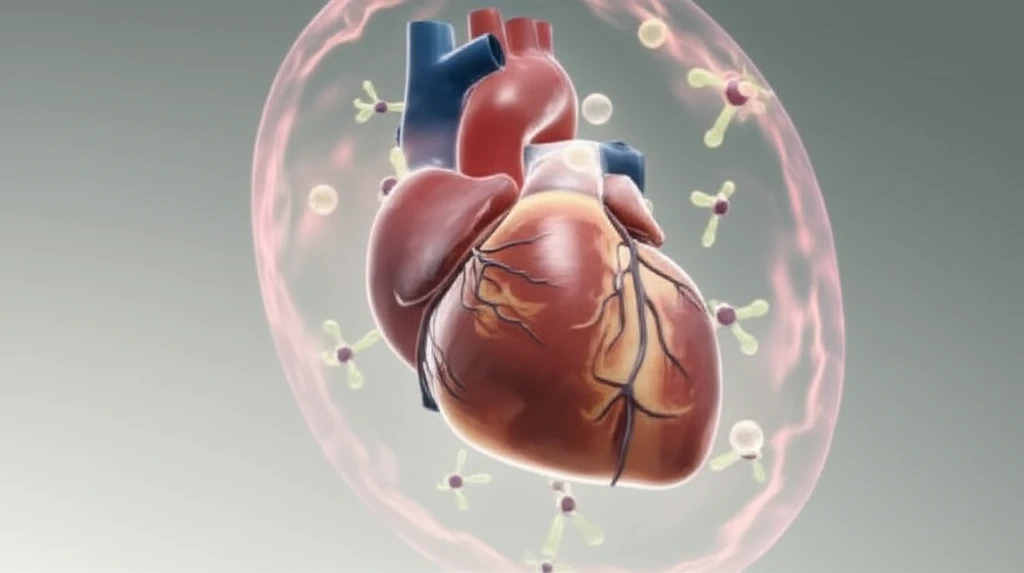
Fasudil: A Heart-Saving Drug You Should Know About?

"Discover how this Rho-kinase inhibitor could revolutionize the treatment of myocardial ischemia/reperfusion injury."
A heart attack, or acute myocardial infarction (AMI), is a leading cause of death worldwide. When the heart muscle is deprived of oxygen due to a blocked artery, rapid treatment to restore blood flow is essential. However, the very act of restoring blood flow, known as reperfusion, can paradoxically cause further damage – a phenomenon called ischemia/reperfusion (I/R) injury.
While current treatments like thrombolysis, percutaneous coronary intervention (PCI), and coronary artery bypass grafting (CABG) effectively restore blood flow, they don't completely eliminate the risk of I/R injury. This has spurred the search for new therapies that can protect the heart during this critical period.
One promising candidate is Fasudil, a Rho-kinase inhibitor already used to treat cerebral vasospasm after brain hemorrhage. Emerging research suggests that Fasudil has significant cardioprotective effects. This article dives into a meta-analysis and review of preclinical studies examining Fasudil's potential to reduce damage and improve outcomes in animal models of myocardial I/R injury.
Measuring the Burden of Heart Disease
Heart disease in the United States is tracked through large, ongoing surveillance efforts. The American Heart Association's annual statistics report—the 2026 update being the latest—is assembled over a full year by volunteer clinicians, scientists, government professionals, and association staff. Underlying mortality figures are compiled from death certificates sent by state health agencies to the National Center for Health Statistics, where they are verified and tabulated by cause of death, age, sex, and race/ethnicity for the nation and each state. On the clinical side, CDC FastStats reports that 6.9% of visits to physician offices involve coronary artery disease, ischemic heart disease, or a history of myocardial infarction noted on the medical record. Interactive tools such as CDC's Atlas and trends dashboards also let users explore local maps and graphs of heart disease and stroke death rates.
Standard Prevention Methods—and Where They Fall Short
Conventional cardiovascular prevention relies on risk-prediction models, screening tools, and rated community programs, but critics say the system misses too many people. A 2025 Journal of the American Heart Association review argues that despite advances in risk prediction, prevention remains suboptimal due to limitations in model architecture, incomplete integration of contextual determinants, and inadequate translation of risk estimates into clinical practice. A study led by Mount Sinai researchers, covered by both the institution and ScienceDaily, found that commonly used cardiac screening tools fail to identify nearly half of the people who are actually at risk of having a heart attack—in other words, many heart attacks strike people who were told they were low risk. Even public-health guidance acknowledges uncertainty: the CDC's guide to effective community health programs explicitly discusses the limitations of its rating methodology.
From Ancient Egypt to Modern Epidemiology
The story of heart disease stretches back millennia. As Baystate Health recounts, medical awareness of heart disease began with ancient Egyptian royalty and evolved through game-changing advancements toward today's cutting-edge treatments. The modern science of prevention took shape in the mid-twentieth century: the University of Minnesota's Heart Attack Prevention history project documents pioneering epidemiological observations and experiments on coronary disease from roughly the mid-1940s to the mid-1970s, along with biographies and oral histories of the pioneer researchers. Over that formative era, clinicians developed the skills to diagnose heart attack during life, recognized its epidemic proportions, and began studying its causes, trends, care, and prevention in whole populations over time.
How Fasudil Fights Heart Damage: Promising Research
A systematic review analyzed nineteen preclinical studies involving 400 animals to evaluate Fasudil's effectiveness in animal models of myocardial ischemia/reperfusion (I/R) injury. These studies explored the impact of Fasudil on various factors, including infarct size, levels of cardiac enzymes, heart function, and ST-segment changes. The methodological quality of each study was rigorously assessed using the CAMARADES checklist.
- Reduced myocardial infarct size (P < 0.05)
- Lower levels of cardiac enzymes and cardiac troponin T (P < 0.05), indicating less heart muscle damage.
- Improved systolic and diastolic functions (P < 0.05)
- Increased degree of decline in the ST-segment (P < 0.05), a marker of improved electrical activity in the heart.
What Recent Research Is Telling Us
Recent reviews converge on prevention's outsized payoff. One 2025 review highlights global data from more than two million individuals affirming that modifying five classic risk factors can prolong life by over a decade, and notes that the ALLEPRE trial showed a nurse-led prevention program reduced cardiovascular events by 30% after acute coronary syndrome. A companion review of the 2025 European Society of Cardiology conference summarizes trials on novel therapies, vaccination, blood pressure management, and the use of technology and risk scores to guide treatment. The American Heart Association similarly flagged 2025 findings that could fill gaps in preventing and managing high blood pressure, stroke, heart failure, dangerous blood clots, and aortic stenosis. Another late-2025 review framed heart failure prevention as a critical frontier, emphasizing stage-based risk stratification, early identification of subclinical disease, and targeted interventions.
Where Prevention Efforts Still Falter
Even prevention's strongest advocates concede major gaps. An April 2025 American Heart Association scientific statement admits that a risk-based approach to primary prevention of heart failure remains in its infancy, while identifying opportunities to actualize the paradigm in clinical practice. A joint societal scientific statement from the Heart Failure Society of America and the American Society for Preventive Cardiology stresses the links between cardiovascular disease prevention and heart failure, arguing that prevention must be prioritized more broadly—not only early detection and deterrence, but across a patient's lifespan in conjunction with therapeutic intervention. Taken together, these statements suggest that current care systematically underuses prevention even where its value is well established.
How Do New Options Compare?
Any emerging drug-based strategy inevitably invites comparison with established prevention tools such as statins, blood pressure control, and lifestyle change. Direct head-to-head evidence for newer agents is often limited, and new treatments typically enter practice as options for specific patient groups rather than wholesale replacements for proven approaches. Readers should therefore weigh any promising therapy against established methods case by case, ideally with guidance from a clinician.
The Future of Fasudil in Heart Health
The meta-analysis points to several mechanisms by which Fasudil may protect the heart, including:
Experts Weigh In: Simplify, Then Double Down
Expert commentary points to both radical simplification and stubborn unfinished business. A February 2026 Lancet commentary proposes a population policy of offering a single combination of three drugs from age 50 onward—when almost all heart attacks and strokes occur—arguing this would be simpler and achieve large blood pressure reductions for more people than current individualized approaches. Statins remain foundational to primary prevention, with landmark randomized trials such as ALLHAT-LLT, which tested pravastatin against usual care in moderately hypercholesterolemic, hypertensive patients, forming part of the evidence base. Yet a European Heart Journal analysis stresses that inadequate secondary prevention remains a significant and challenging worldwide problem, leaving residual risk and recurrent cardiovascular events insufficiently addressed. Preventive cardiologists themselves argue the field is worth the investment, noting the impact of preventive interventions compares favorably head-to-head with many treatments cardiology delivers.
The Next Frontier of Heart Disease Prevention
Commentators see prevention moving earlier in life while treatment becomes more technologically ambitious. Harvard Health lists five trends to watch: preventing heart disease early in life, new ways to treat inflammation, cardiac cell therapy, improved left ventricular assist devices, and heart transplants from pigs. The American College of Cardiology argues that a substantial proportion of heart disease cases are preventable with timely, evidence-based intervention—particularly when risk identification and prevention begin early, including in childhood. Mayo Clinic experts likewise describe innovation reshaping prevention, treatment, and patient outcomes, while an American Heart Association centennial advisory frames a century of progress as setting the stage for future scientific advances in cardiovascular health.
Hurdles Beyond the Medicine Itself
Even the most promising therapy depends on health systems capable of delivering it consistently. Access to care, long-term adherence, funding for preventive services, and coordination between clinics and communities all shape whether prevention succeeds outside clinical trials. These systemic hurdles are widely acknowledged, though their precise weight varies across countries, health systems, and populations.
Communities, Patients, and Real-World Results
Prevention ultimately proves itself—or fails—in real communities. A UK case study from Barnet describes how a simple, transparent impact-modeling approach converted culturally tailored community activity into demonstrable population health value, addressing the common struggle of community programs to show measurable impact. Academic reviews of community-driven heart attack prevention efforts assess their effectiveness, challenges, and future directions, while UK public health specialists compiled evidence-based case studies of successful cardiovascular reduction initiatives worldwide for Public Health England and the British Heart Foundation. At the individual level, the NHLBI funds long-term studies of how lifestyle habits, stress, heart and blood vessel diseases, and genes raise heart attack risk across different populations—research that grounds prevention advice in everyday lives.
<ul> <li>Improvement in coronary vasodilation, ensuring better blood flow.</li> <li>Inhibition of apoptosis and oxidative stress, reducing cell death and damage from free radicals.</li> <li>Relieving inflammation, a key contributor to I/R injury.</li> <li>Reduction in endoplasmic reticulum stress and improved metabolism, supporting overall cellular health.</li> </ul>
While these results are encouraging, it’s important to remember that this research is preclinical. Further studies are needed to confirm Fasudil's effectiveness and safety in humans. However, this research offers a promising new avenue for developing more effective treatments for myocardial I/R injury, potentially improving outcomes and quality of life for those at risk of heart damage following a heart attack.