
Epic Battles, Eternal Lessons: What the Ancient Poem 'Khavaran Nameh' Teaches Us About Good vs. Evil

"Delve into the world of 'Khavaran Nameh' and discover how this religious epic from ninth-century Persia continues to resonate with modern readers seeking inspiration and moral guidance."
Imagine a world filled with heroic battles, where the forces of good and evil clash in a struggle that defines the very essence of humanity. This is the world of 'Khavaran Nameh', a religious epic composed in ninth-century Persia by Ibn Hossam Khosfi. Often compared to Ferdowsi's 'Shahnameh', this epic poem weaves a rich tapestry of faith, courage, and the eternal battle between light and darkness. But what makes this ancient text relevant to us today? How can a story written centuries ago still offer valuable lessons for our modern lives?
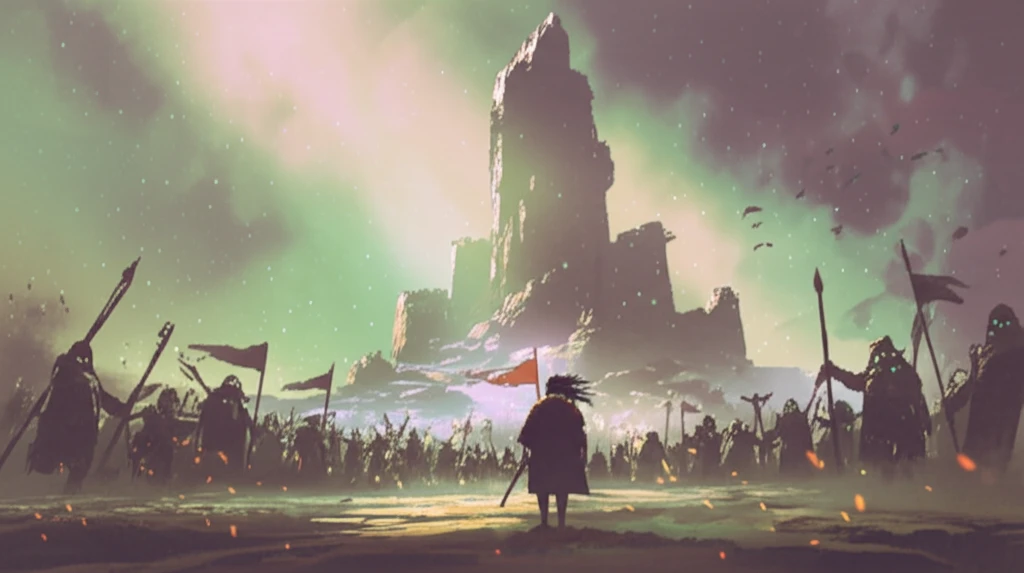
At its heart, 'Khavaran Nameh' is a story about the struggle between good and evil, embodied by Imam Ali (AS) and his followers against tyrannical kings and monstrous creatures. This theme, as old as time itself, continues to resonate with readers seeking inspiration and moral guidance. As we navigate the complexities of our own lives, we can draw strength from the heroes of 'Khavaran Nameh' and their unwavering commitment to justice and righteousness.
This article explores the poetic causes and circumstances surrounding the composition of 'Khavaran Nameh'. We will delve into its structure, content, and the historical context in which it was created, examining how this epic poem reflects the social, political, and religious landscape of its time. By understanding the forces that shaped 'Khavaran Nameh', we can gain a deeper appreciation for its enduring power and relevance.
A Religious Epic's Lasting Reach
Khavaran Nameh stands as one of the best examples of the religious epic, a genre that places the struggle between good and evil at the center of its narrative. Scholars regard it as a sign of the establishment of Shia religion among Iranians, indicating its cultural significance well beyond poetry.
Evaluating Epic Elements in Ancient Texts
Recent scholarship focuses on comparatively analyzing modern epic elements as they appear in ancient epics, including story format, heroism, time, place, and other narrative elements. Applying these modern criteria to classical texts is the main approach used for Khavaran Nameh and related works, which treats an ancient epic through a contemporary literary lens.
Composition in the Ninth Century AH
Khavaran Nameh is a religious epic composed by Ibn Hossam Khosfi, a committed and able poet of the ninth century AH. It belongs to a Persian literary tradition that spans over two-and-a-half millennia, written in Persian since the ninth century CE.
A Deep Dive into 'Khavaran Nameh'
To truly understand 'Khavaran Nameh', we must first examine its structure and content. The epic is divided into several stories, each focusing on the wars and valor of Ali (AS) and his companions. These stories can be grouped into five main sections:
- Story of Khavaran Land
- Story of Champion Land
- Story of Shore Land
- Story of Qam Land
Studies on Poetic Causes and Circumstances
Research into the poetic causes and the circumstances in which Khavaran Nameh was composed has drawn scholarly attention, with findings published in academic journals. These studies describe the epic as a battle of good against evil aimed at the dissemination of good, justice, and the spread of Islam to save mankind.
Limits of Modern Frameworks
Because the epic blends religious devotion with heroic narrative, it resists straightforward classification alongside classical secular epics. Comparative studies acknowledge that analyzing ancient epics through modern epic elements carries inherent limitations, since criteria developed for contemporary works do not always map cleanly onto a ninth-century religious text.
Ali Nameh and the Shadow of Shahnameh
Scholars have undertaken comparative studies of epic elements in Ali Nameh and Khavaran Nameh, examining how heroism, time, and place function in both poems. Research on the effect of Shahnameh in Khavaran Nameh further situates the religious epic within Iran's great tradition of epic storytelling.
Why 'Khavaran Nameh' Still Matters
In conclusion, 'Khavaran Nameh' is more than just an ancient poem; it is a testament to the enduring power of faith, courage, and the struggle for justice. While the world has changed dramatically since the ninth century, the themes explored in this epic remain as relevant as ever. By studying 'Khavaran Nameh', we can gain a deeper understanding of ourselves, our values, and the challenges that we face in our own lives. As Ibn Hossam Khosfi himself suggests, the lessons of 'Khavaran Nameh' are timeless, offering inspiration and guidance to readers across generations.
Faith and Epic Converge
Khavaran Nameh marks the establishment of Shia religion among Iranians by giving epic expression and language to the deeds of Imam Ali. The heart of the epic is the struggle between good and evil, Islam and disbelief, with Imam Ali as its hero, fusing Persian epic form with religious conviction.
Illustration and Rhetoric as Next Frontiers
Future scholarship may explore the illustration techniques used in Khavaran Nameh manuscripts, alongside its literal and rhetorical devices. Existing studies already examine how these literary and rhetorical techniques shape the epic's expression and language, pointing toward deeper investigation of the work's visual and verbal artistry.
Rooted in a Millennia-Old Tradition
Persian literature, of which Khavaran Nameh is a part, spans over two-and-a-half millennia and is among the world's oldest literary traditions. When faced with existential questions, the Persians responded by telling stories that explained phenomena, a storytelling impulse that the religious epic carries into the service of Islamic themes.
A Battle to Save Mankind
Khavaran Nameh is a good battle against evil that aims at the dissemination of good, justice, fairness expansion, and the spread of Islam to save mankind from the tyranny of kings and other cruel and cannibal rulers. Its real-world impact lies in portraying heroism as a force that liberates people from oppression.