
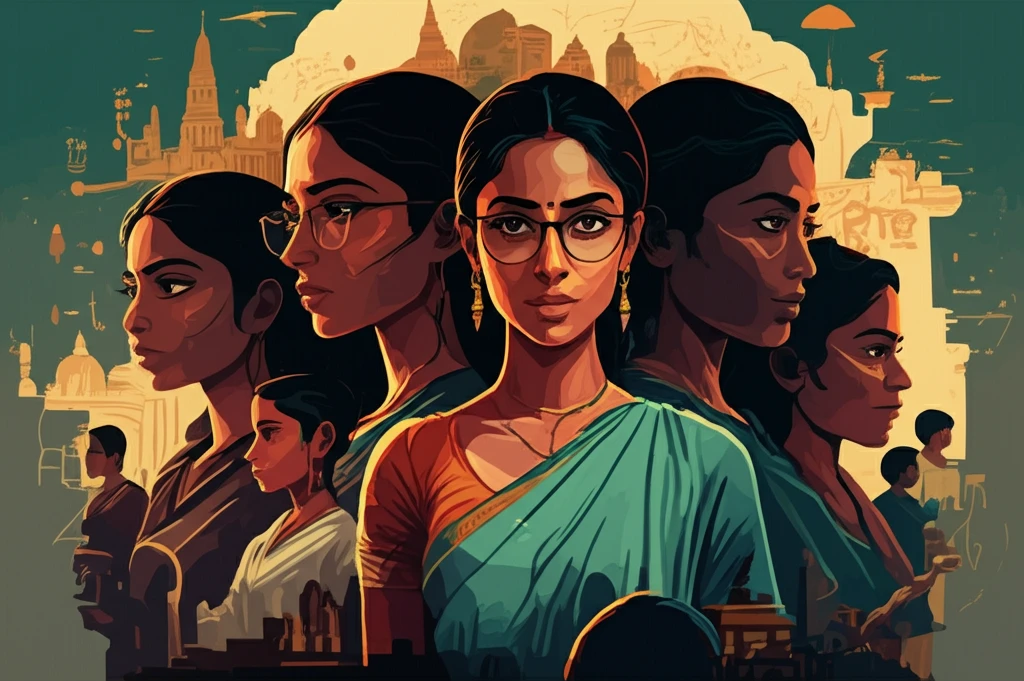
Empowering Women Through Work: How SEWA Builds Solidarity and Fights for Economic Justice

"Discover the transformative power of the Self-Employed Women's Association (SEWA) and its holistic approach to educating and empowering women in India's informal economy."
In a world grappling with issues of economic inequality and gender disparity, the Self-Employed Women's Association (SEWA) stands as a beacon of hope. SEWA, an organization deeply rooted in Gandhian principles, has been working tirelessly to empower women in India's informal economy for decades. Their approach is not just about providing jobs; it's about fostering self-worth, building solidarity, and creating pathways to economic justice.
At the heart of SEWA's mission is a comprehensive training program designed to introduce new members to the organization and its multifaceted work. This program, detailed in academic research, goes beyond traditional skills training to address the deep-seated social and economic barriers that women face. It aims to transform their self-perception, empower them to become active agents of change, and equip them with the tools to navigate a complex and often unjust system.
This article delves into the intricacies of SEWA's training program, exploring its core principles, methodologies, and transformative impact on the lives of women. By understanding SEWA's approach, we can gain valuable insights into effective strategies for empowering marginalized communities and building a more equitable world.
Women's Work and Economic Contribution
Women's economic contributions are vast and varied, spanning formal employment, entrepreneurship, agriculture, and unpaid care work. Despite these contributions, significant gender gaps persist in income, workforce participation, and access to resources. These disparities have profound implications for poverty reduction, economic growth, and social development. Addressing them requires a multifaceted approach that recognizes both the value of women's labor and the barriers they face.
Traditional Frameworks for Women's Empowerment
Traditional approaches to women's economic empowerment have often focused on integrating women into existing economic structures. While these methods have yielded some progress, they frequently overlook the deeper structural and cultural barriers that limit women's agency. Programs may prioritize income generation without addressing unequal power dynamics, lack of social protection, or restrictive social norms. As a result, gains can be fragile and fail to achieve transformative, lasting change.
A History of Women's Rights and Recognition
The study of women's history examines the role women have played throughout time, from the growth of women's rights to individual and group achievements. Milestones include the fight for suffrage, with figures like Susan B. Anthony and Elizabeth Cady Stanton advocating for the right to vote. The 19th Amendment and later political firsts, such as the first female major party nominee in the U.S., mark key steps in this ongoing struggle. Globally, women have made extraordinary contributions, though their realities often remain challenging.
Naam, Kaam, Gaam: Recognizing Identity and Building Community
The cornerstone of SEWA's training is the "Naam, Kaam, Gaam" (Name, Work, Village) module. This initial session focuses on establishing each woman's identity, not just within her family or community, but as a worker with inherent value and rights. For many women, this is a revolutionary concept. Often relegated to the shadows and defined solely by their relationships (mother, wife, daughter), their contributions to the economy go unrecognized.
- Breaking Down Barriers: This exercise breaks down barriers of caste, religion and community that might have been there.
- Building Solidarity: It emphasizes that they are all one, and can work together to help solve each other's problems and better each other's lives.
- Practical Application: By asserting identity, women can better navigate systems (banking, healthcare) to obtain resources.
Evolving Understanding of Empowerment
Contemporary research emphasizes that women's empowerment is a complex process involving economic, social, and political dimensions. Scholars highlight the need to move beyond simplistic income-focused metrics to consider women's ability to make strategic life choices and overcome societal limitations. The process requires building environments where women can participate without fear of oppression or discrimination. This broader perspective informs more holistic policy and programmatic approaches.
Structural Barriers and Persistent Challenges
Despite progress, significant structural and cultural barriers continue to hinder women's economic empowerment. These include discriminatory social norms, unequal access to education and finance, and legal frameworks that restrict women's rights. Critics of earlier development models, like the Women in Development (WID) approach, point out that simply integrating women into the economy without addressing power imbalances is insufficient. True empowerment requires tackling deep-rooted inequalities and creating supportive sociocultural and political environments.
Global Pathways and Feminist Economic Justice
Globally, women's economic empowerment is seen as a critical pathway to achieving gender equality and inclusive growth, particularly in the Global South. Different movements frame this goal through various lenses; for instance, feminist economic justice emphasizes fighting discrimination and criminalization. Economic empowerment is linked to women's ability to harness financial resources, which can be transformative even in crises like armed conflict. Various platforms, from the Beijing Platform for Action to youth-led forums, advocate for women workers' economic justice.
A Legacy of Empowerment
SEWA's holistic approach to women's empowerment, as exemplified by its training programs, has had a lasting impact on countless lives. By addressing issues of identity, building solidarity, and equipping women with the skills and knowledge they need to succeed, SEWA has created a model for sustainable social change. Its work continues to inspire and inform efforts to create a more just and equitable world for all.
Linking Economic Rights to Sustainable Development
Research consistently shows a positive relationship between women's economic rights and economic growth across different regions. Joint efforts by various actors to promote women's empowerment are aligned with policies aiming for sustainable development. Evaluations using international criteria like those of the OECD-DAC assess the effectiveness and sustainability of gender-responsive programs. These findings underscore that enhancing women's economic opportunities is not just a matter of equity but also a catalyst for broader economic prosperity.
The Long Road to Gender Parity
At the current pace, it is projected to take over a century to close the global gender gap, with economic participation and opportunity parity taking even longer. UN Women's strategy outlines a vision to enable women to thrive and economies to prosper through targeted empowerment. Key statistics highlight persistent income disparities and workforce trends that must be addressed. Women's economic empowerment is increasingly recognized as driving rural development and creating role models for future generations.
The Imperative of Investing in Women
Investing in women's economic empowerment is described as a direct path toward gender equality, poverty eradication, and inclusive economic growth. Women contribute enormously to economies through businesses, farms, entrepreneurship, and essential unpaid care work. Recognizing and supporting these contributions is fundamental to building fairer and more prosperous societies. This perspective frames women's economic participation as both a rights issue and a strategic necessity for global development.
Stories of Resilience and Change
Behind statistics and policies are real women whose lives are transformed by economic opportunities. Access to fair work, credit, and education can break cycles of poverty and increase self-reliance. Such changes often ripple through families and communities, improving health, education, and overall well-being. While quantitative data is vital, the personal narratives of women workers highlight the human dimension of empowerment and solidarity.