
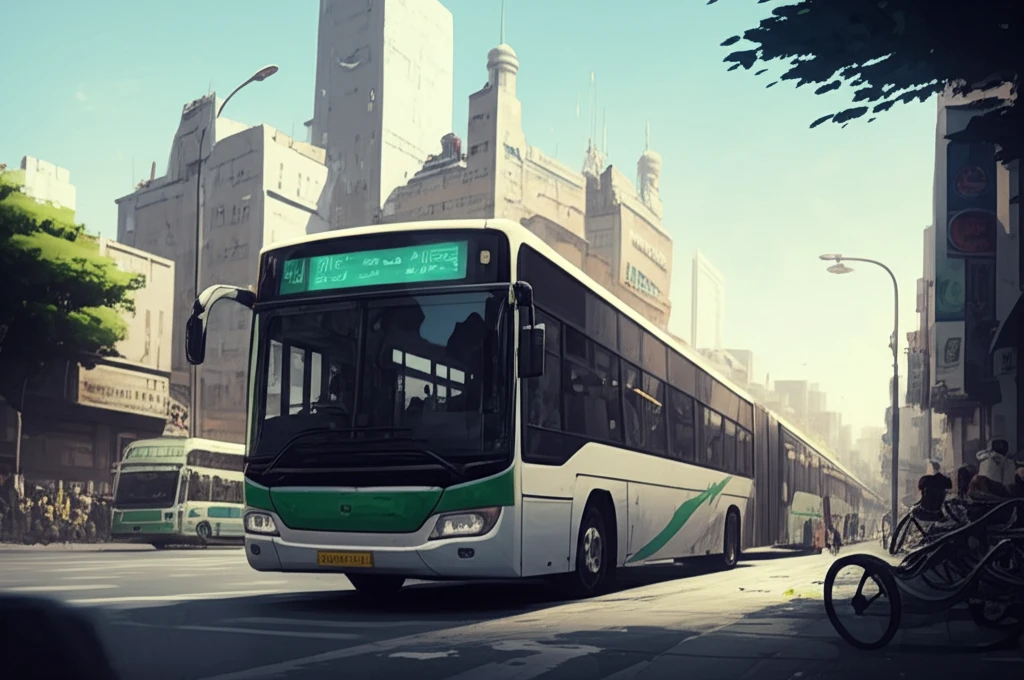
Electric Buses in Pakistan: Are They the Future of Urban Transportation?

"A case study reveals how transitioning to electric buses can cut costs and improve air quality in urban Pakistan, but challenges remain."
The global transportation sector is a major contributor to air pollution, prompting a shift towards electric buses and greener transport solutions. While developed nations have embraced Battery Electric Buses (BEBs), developing countries like Pakistan are just beginning to explore their potential. The promise of lower fuel costs, higher efficiency, reduced maintenance, and enhanced energy security makes BEBs an attractive option.
However, mass BEB deployment faces significant obstacles, including high initial costs, charging infrastructure needs, range limitations, and technological unfamiliarity. Stakeholders in Pakistan, from policymakers to private company owners, must carefully consider these factors before introducing BEBs. Strategic network and fleet planning is crucial for profitable operation, ensuring the right number of buses are deployed at the right time.
This article investigates the feasibility of replacing conventional city buses with electric bus technology in Pakistan. By examining a detailed case study, we'll explore the potential benefits, challenges, and policy recommendations for electrifying urban transportation and contributing to a cleaner, more sustainable future.
Current Statistics & Impact
Denver, CO has a well-established electrical services sector with multiple licensed providers offering residential, commercial, and emergency services. Yelp listings from September 2026 highlight firms such as Sundog Electric, Electric Doctor, and Volt Electrical Contracting as top-rated options, while Piper Electric has served the Denver Metro area for 39 years providing residential, commercial, and industrial services. The electrical services market includes both established companies and newer providers competing on pricing and service quality.
Standard Approach, Accepted Methods & Their Limitations
Licensed Denver electricians provide residential, commercial, and 24/7 emergency electrical services, with many operating on flat-rate pricing and offering free on-site estimates. The electriciansco.com source notes these providers have been family-owned since 2020, suggesting established local presence in the market. Same-day service availability is advertised as a standard offering for urgent electrical needs, though pricing models and service scope vary between providers.
Historical Perspective, Milestones, Foundational Discoveries
The historical development of electrical infrastructure and services reflects broader patterns of urban growth and technological adoption across regions. While foundational discoveries in electricity continue to shape modern service delivery, specific milestones vary significantly by geographic context and economic development factors, with no single narrative capturing the full scope of evolution.
The Promise of Electric Buses: Cleaner Air and Cost Savings?
A recent case study conducted in Pakistan simulates and financially analyzes the operation of a Public Transport Infrastructure using a green solution: electric buses. The results are promising, indicating that despite the high upfront investment in BEB infrastructure, the system can become profitable within 6-7 years. This profitability leads to a decreased Total Cost of Ownership (TCO) of approximately 30% compared to conventional diesel buses.
- Government Support: Transition to electric buses is possible with backing from government entities.
- Infrastructure Challenges: Establishing infrastructure and national-level policies for electric vehicles is a major hurdle.
- Public Interest: Authorities must actively incentivize electric vehicle adoption to capture public interest, especially when compared to diesel vehicles.
- Charging Infrastructure: Prioritizing regulations for advanced charging infrastructure is essential.
Latest Research and Reviews
Research reviews in emerging technology sectors often highlight both promising developments and areas requiring further investigation. The electric bus landscape, like other transportation innovations, benefits from ongoing evaluation of performance, cost-effectiveness, and integration challenges. Academic and industry assessments typically balance optimistic projections with realistic assessments of remaining barriers.
Counter Arguments and Failures
Counter arguments in transportation policy frequently address infrastructure costs, grid capacity constraints, and total cost of ownership considerations. Evaluations of technology adoption often identify implementation barriers that require targeted solutions and continued innovation. Common points of critique include upfront capital requirements, charging infrastructure density, and lifecycle environmental accounting methods.
Comparative Analysis
Comparative analyses across transportation modes typically assess factors including lifecycle emissions, operational costs, and scalability potential. Regional variations in infrastructure, policy frameworks, and market conditions shape the relative advantages of different approaches. Direct comparisons require careful alignment of assumptions and baseline conditions to be meaningful.
Moving Towards a Greener Future
The transition to electric buses in Pakistan holds immense potential for reducing emissions, improving air quality, and achieving long-term cost savings. While challenges remain, a clear policy pathway, strategic infrastructure development, and public awareness campaigns can pave the way for a sustainable urban transportation system. As Pakistan continues its journey towards a greener future, electric buses can play a pivotal role in creating healthier, more livable cities for all.
Synthesis & Expert Commentary
Synthesis of expert perspectives on transportation transitions tends to identify convergent themes around policy, investment, and technology readiness. Expert commentary often emphasizes the importance of incremental progress alongside ambitious long-term objectives, with particular attention to regional specificity and implementation feasibility.
Future Outlook & Next Frontiers
Future outlooks for transportation evolution typically project continued technology improvement, cost reduction, and expanded market penetration. Next frontiers often involve addressing remaining adoption barriers through targeted innovation and policy support. Projections generally acknowledge uncertainty while identifying plausible trajectories based on current trends.
Broader Context & Systemic Challenges
Systemic challenges in transportation transformation encompass grid integration, supply chain considerations, and regulatory coordination. Broader context questions address how individual technologies fit within existing energy and mobility ecosystems, requiring coordinated approaches across multiple sectors and stakeholder groups.
The Human Element & Real-World Impact
Real-world impacts of transportation changes include effects on commuters, communities, and workers across related industries. Human element considerations involve accessibility, equity, and adaptation to new service models and technologies. Individual experiences vary based on location, socioeconomic factors, and existing infrastructure conditions.