
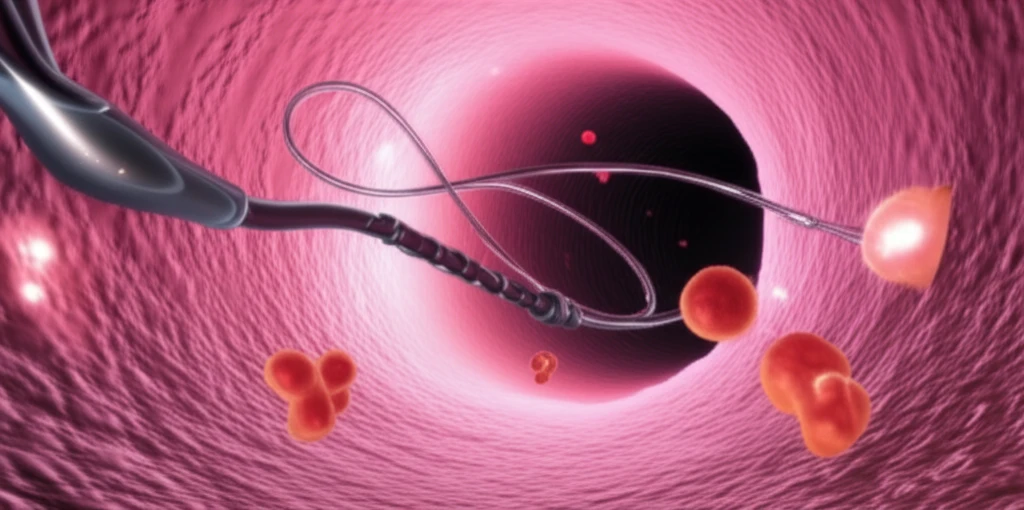
Early Detection: Your Best Defense Against Colon Cancer

"Discover how colonoscopy and advanced imaging are revolutionizing early-stage colon cancer treatment, offering hope and better outcomes."
Colon cancer remains a significant health concern, but advancements in screening and treatment are changing the landscape. Colonoscopy, in particular, has emerged as a powerful tool in preventing and detecting early-stage colon cancer, thanks to its ability to identify and remove precancerous polyps.
The effectiveness of colonoscopy in reducing colon cancer risk has led to increased emphasis on surveillance programs. These programs not only help in the initial detection of malignant polyps but also play a vital role in identifying and removing asymptomatic, high-risk adenomas and new, early-stage metachronous cancers.
Early-stage colon cancer is defined as cancer that has been completely removed, with no evidence of spread to nearby organs, lymph nodes, or distant sites. Regular check-ups and advanced detection methods are crucial for those at high risk, as well as for anyone with a history of colon polyps or cancer.
The Burden of Colorectal Cancer
Colorectal cancer remains a significant global health concern, ranking among the most commonly diagnosed cancers worldwide. It is the third most prevalent cancer globally, posing a substantial threat to public health. Early detection is crucial for improving patient outcomes and reducing disease burden.
Conventional Screening Methods
Colonoscopy has long been considered the gold standard for colorectal cancer screening, allowing direct visualization and removal of precancerous polyps. However, existing screening methods remain limited in terms of sensitivity, specificity, and patient compliance. The invasive nature of some tests and preparation requirements can deter individuals from undergoing recommended screening.
Evolution of Cancer Screening
The development of colorectal cancer screening has evolved significantly over the past several decades, with recognition that cancer develops through precursor stages over many years. This understanding has made colorectal cancer an attractive target for prevention and early detection through population screening programs. The availability of procedures to detect and remove polyps with relatively little patient harm has been a foundational advancement in the field.
How Early Detection is Changing Colon Cancer Outcomes
Traditionally, cancer staging—determining the extent of the disease—occurred after surgical removal of the tumor. Now, in some instances, staging can happen after an endoscopic resection, particularly if the malignant polyp has minimal invasion. This approach emphasizes the importance of advanced imaging techniques.
- Colonoscopy: Remains a cornerstone of early detection, allowing for polyp removal and direct visualization of the colon.
- Fecal Immunochemical Testing (FIT): While useful, it has limitations in detecting early-stage cancers, highlighting the need for more sensitive methods.
- Computed Tomography (CT): Shows low sensitivity in diagnosing early T1 or T2 cancers, emphasizing the importance of other diagnostic tools.
- Magnification Chromoendoscopy and Endoscopic Ultrasound: These techniques offer improved accuracy in estimating the depth of invasion but are not yet standard practice.
- Confocal Endomicroscopy: A promising technology that allows for rapid differentiation of neoplastic from non-neoplastic colonic disease, potentially improving early diagnosis and treatment decisions.
Innovations in Early Detection
Recent research has focused on emerging detection methods including gut microbiota analysis, metabolites, genetic markers, and artificial intelligence-based technologies for early screening. Current screening methods are being evaluated for their sensitivity, specificity, and compliance rates, with systematic reviews comparing cutting-edge approaches. Public health campaigns emphasizing preventive medicine and early detection are proving effective strategies to reduce cancer risk and improve patient outcomes.
Challenges and Limitations
Despite advances in screening technology, significant challenges remain in implementation and effectiveness. Barriers to screening include patient reluctance, resource limitations, and disparities in access to care. The effectiveness of screening programs largely depends on public health campaign success and individual adherence to recommended screening guidelines.
Comparing Screening Approaches
Multiple screening options now exist beyond traditional colonoscopy, including stool-based tests and virtual colonoscopy, each with varying accuracy, convenience, and safety profiles. Blood- and stool-based tests are becoming less invasive and may increase adherence to screening recommendations. The value of early detection is well-established, significantly improving early-stage tumor detection rates and boosting survival rates and quality of life for patients.
Looking Ahead: Improving Colon Cancer Outcomes
Continued advancements in colonoscopy techniques, coupled with innovative imaging technologies, promise to further refine the detection and management of early-stage colon cancer. Pathological staging is also evolving, with increased recognition of risk factors for lymph node disease and the use of immunohistochemical methods for lymph node evaluation. These improvements offer hope for earlier diagnosis, more effective treatment, and improved outcomes for individuals at risk of colon cancer.
Integrating Evidence and Practice
The consensus among experts is that colorectal cancer screening represents one of the most effective cancer prevention strategies available. Combining multiple screening approaches and tailoring recommendations to individual risk profiles may optimize outcomes. Continued investment in research and public health infrastructure remains essential for maximizing the benefits of early detection programs.
Emerging Technologies and Approaches
The future of colorectal cancer screening is likely to incorporate more sophisticated biomarker analyses and AI-driven diagnostic tools. Research into liquid biopsies and other minimally invasive techniques promises to make screening more accessible and acceptable to patients. Personalized screening strategies based on genetic and environmental risk factors may further improve detection rates.
Systemic Issues in Cancer Prevention
Addressing colorectal cancer requires a comprehensive approach that considers healthcare system capacity, insurance coverage, and health equity. Disparities in screening access and outcomes persist across different populations and geographic regions. Coordinated efforts between healthcare providers, policymakers, and community organizations are needed to overcome systemic barriers to effective screening.
Translating Research into Real-World Outcomes
Real-world evidence demonstrates that earlier detection depends on more than just access to a test, requiring consideration of the entire care pathway from screening to treatment. Studies show colonoscopy screening can reduce risks of colorectal cancer and related death, though its full effect continues to be evaluated. Combining data from randomized controlled trials with real-world evidence helps validate treatment guidelines and improve patient outcomes.