
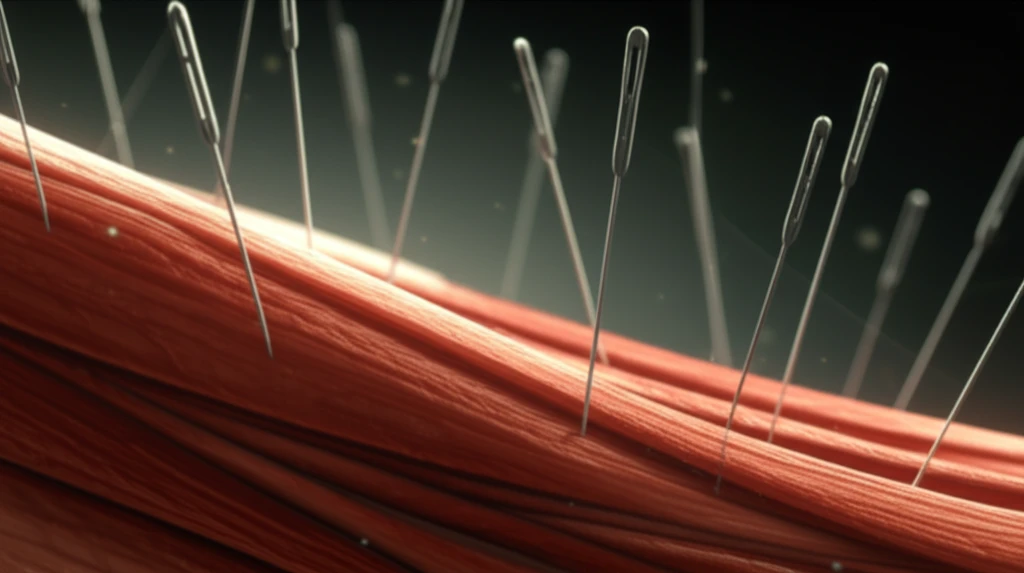
Dry Needling: Is It Right for You? A Balanced Look at Benefits and Risks

"Explore the effectiveness and safety of dry needling, a popular treatment for muscle pain and dysfunction, to make an informed decision about your healthcare."
In the quest for effective pain relief and improved musculoskeletal function, many individuals are exploring various treatment options. Among these, dry needling has emerged as a popular technique used by physiotherapists. It involves the insertion of thin needles into specific points in the muscles to alleviate pain and improve function. But with its increasing popularity, it's essential to understand what dry needling is, how effective it is, and what potential risks are involved.
Dry needling is an invasive procedure that utilizes solid filament needles to target myofascial pain and dysfunction. It's become a common addition to traditional physiotherapy. However, despite its growth, important questions remain about its true effectiveness and potential for causing adverse events.
This article provides a balanced commentary on dry needling, examining the latest evidence regarding its effectiveness, safety profile, and the necessary levels of professional competence required to administer it safely. It aims to equip you with the knowledge to discuss dry needling options with your healthcare provider.
Research and Short-Term Impact
A 2026 review reports that dry needling research examines neural responses and pain-signaling modulation at the neuromuscular level. Another evidence summary reports short-term pain relief across most body regions, with moderate support over sham treatments for up to 12 weeks. The reported effects are strongest for muscular pain and trigger points, more modest for headaches, and smaller at follow-up beyond six months.
From Trigger Points to Modern Therapy
Dry needling developed through the search for effective treatments for painful musculoskeletal disorders. Research into injections that caused or relieved muscular pain helped establish trigger point theory, which later contributed to dry needling. The historical timeline described by Messina traces the field from ancient needle therapies through Dr. Janet Travell’s mid-century trigger point research, Dr. Chan Gunn’s work in the 1970s, and the modern research era.
What is Dry Needling and How Does It Work?
Dry needling involves inserting thin, solid needles into trigger points—those irritable, tight bands of muscle that can cause pain and restricted movement. One theory suggests that these trigger points develop from chronic muscle shortening and reduced blood flow, leading to inflammation and nerve sensitization. When compressed, these points cause pain responses.
- Myofascial Trigger Points (MTP): These are areas of hyperirritability in a taut band of muscle that can cause pain, tenderness, and altered motor function.
- Theories of MTP Development: One theory suggests that chronic shortening of muscle fibers, along with autonomic changes, leads to localized ischemia. This results in the release of inflammatory substances that sensitize the nervous system.
- Local Twitch Response (LTR): Many practitioners aim to elicit a local twitch response during dry needling, which is a visible contraction of the muscle. While some studies suggest this improves pain reduction, the evidence is still debated.
Evidence and Safety Reviews
A systematic review of hamstring flexibility reports that dry needling may not be better than stretching, although it could still be used to improve flexibility. Research on adverse events emphasizes that understanding these events is essential for risk management in physical therapy practice. A 2026 systematic review is also evaluating neurophysiological effects through pain-related biomarkers, conditioned pain modulation, and temporal summation.
Common Drawbacks
Dry needling uses thin needles inserted into muscular trigger points to address pain and range of motion. Sources report that soreness and bruising can occur even when the treatment is effective for many people. The procedure should therefore be understood as a technique with potential benefits and adverse effects, not as a risk-free intervention.
Ultrasound-Guided Treatment
One literature review examined ultrasound-guided trigger point dry needling for myofascial pain. The study included a group of 91 patients with myofascial pain in different locations. This source presents ultrasound guidance as a technological approach within the literature on treating myofascial pain.
Making Informed Decisions About Dry Needling
Dry needling is a rising method that, when accompanied by physiotherapy, may provide short-term pain relief. However, more research is needed to fully understand its long-term benefits. It is important to discuss with your healthcare provider whether dry needling aligns with your health needs.
Market Growth and Expansion
Market coverage identifies trigger point dry needling, manual trigger point therapy, intramuscular dry needling, intramuscular manual therapy, and intramuscular stimulation as therapy types. Reported application areas include low back pain, knee pain, neck pain, migraines and headaches, labor pains, and smoking cessation across North America, Europe, Asia Pacific, and South and Central America. One forecast estimates that the dry needling treatment market was over USD 3.23 billion in 2025 and could reach USD 4.83 billion by 2035, with about 4.1% CAGR from 2026 to 2035.
Benefits, Uses, and Reported Harms
Dry needling is described as a treatment for musculoskeletal conditions including chronic low back pain, tension headaches, jaw disorders, and repetitive strain injuries. It targets tight bands of muscle tissue called trigger points, with proposed effects including releasing tension, restoring blood flow, and reducing pain signals. A review of systematic reviews found that reported harms were mostly minor and temporary, although moderate harms included syncope in four patients, hospital presentation with fever, chills and systemic upset in one patient, chest pain in one patient, and severe pain in one patient.